
Oskar Werner
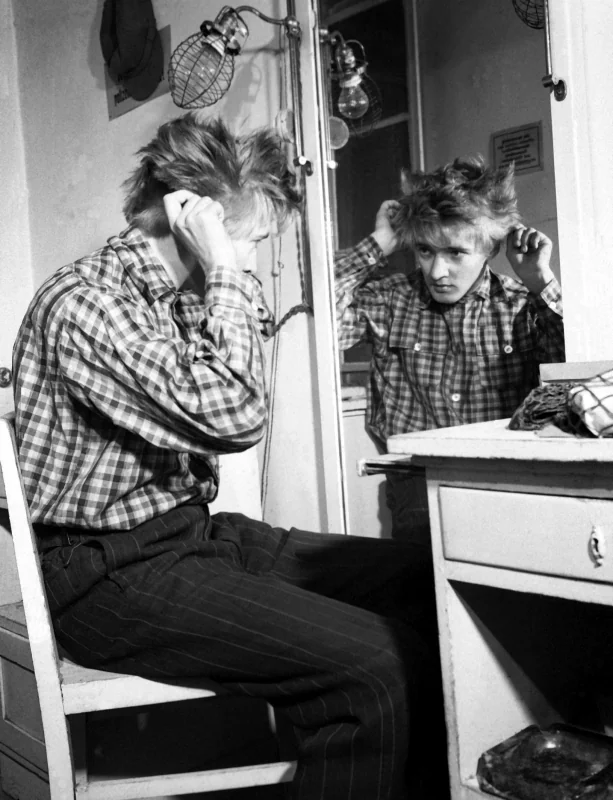
Image from Wikipedia
Image from Wikipedia
Oskar Werner – The Fragile Intensity of a Great European Actor
A Viennese Exceptional Talent Between Stage, Film, and International Fame
Oskar Werner, born on November 13, 1922, in Vienna and passed away on October 23, 1984, in Marburg, was one of the most remarkable Austrian film and stage actors of the 20th century. Under his stage name, the native Oskar Josef Bschließmayer developed a career that took him from the Viennese theatre to major German-speaking stages and into international film productions. His roles were often characterized by inner tension, vulnerability, and an exceptionally present voice, which also granted him a unique artistic profile in radio plays and readings. (en.wikipedia.org)
Early Years: Vienna, Passion for Theatre, and First Steps in Front of the Camera
Werner grew up in Vienna with his mother and grandmother after his parents' divorce in 1928. Even as a student, he appeared on stage, receiving his first odds jobs as an extra, minor actor, and voice actor starting in 1938, and he performed in the cabaret “Der Beißkorb” under the name Oskar Werner in mid-November 1940. In 1941, he made his theatre debut in “Die Komödie,” followed shortly by his debut at the Burgtheater, showcasing early on that an actor with great stage energy was emerging. (deutsche-biographie.de)
His first film was “Der Engel mit der Posaune,” in which he already played a contradictory, psychologically ambivalent character. This early character arc became typical for his later career: Werner often embodied outsiders, fragile intellectuals, or emotionally wounded characters. The combination of external restraint and inner intensity became a core aspect of his acting craft. (deutsche-biographie.de)
The International Breakthrough: From London to Hollywood
In 1949, Werner lost his permanent engagement at the Burgtheater after independently participating in the English version of “The Angel with the Trumpet.” However, this very cut marked the beginning of his international film career. In 1950, he took on his first leading role in “Das gestohlene Jahr,” and in 1951, he signed a contract with 20th Century Fox for “Decision Before Dawn,” committing him to 14 films over seven years. Although this Hollywood phase ended prematurely due to a fallout with Darryl F. Zanuck, Werner's extraordinary performance as “Happy” permanently opened the doors to an international career. (deutsche-biographie.de)
His voice also had a strong impact beyond the screen. Max Ophüls utilized it in 1953/54 in a radio play adaptation of Goethe's “Novelle,” and in 1955, he cast Werner in “Lola Montès” as a naive student who falls for the title character. These roles showcased the breadth of his performance: psychological precision, subtle melancholy, and an almost musical articulation of language. (deutsche-biographie.de)
“Jules and Jim”: The Role That Made His Name Immortal
In 1961, François Truffaut cast Oskar Werner in “Jules and Jim” in the brilliant role of Jules, a sensitive Austrian writer in Paris. The film is regarded as a key work of the Nouvelle Vague and a classic of European cinema; it has been described as a defining example of the French New Wave and remains firmly anchored in film history today. Werner's performance significantly contributed to the quiet power of this character, who is torn between friendship, passion, and loss. (en.wikipedia.org)
The impact of this role extends far beyond the individual film. Critics continue to emphasize the emotional strength of the work and the magnetic presence of the ensemble; “Jules and Jim” is also considered a cult film and a stylistically defining example of Nouvelle Vague storytelling. For Werner, the character of Jules became a kind of artistic signature: intellectual, reserved, sensitive, yet filled with great inner dynamism. (en.wikipedia.org)
Stage Star with Tours, Hamlet, and Personal Theatre Work
While there were repeatedly longer breaks between films, Werner established himself as an eccentric star of the German-speaking theatre. His breakthrough on stage came in 1953 with a guest performance as Hamlet in Frankfurt am Main, and this title role became his most successful character on stage. He later played it many times on tours and at festivals, further solidifying his status as a serious and highly respected theatre artist. (deutsche-biographie.de)
As a founder of an ensemble, Werner also left his mark: from 1959 to 1963, he performed with his own “Theater Ensemble Oskar Werner.” In 1961, he prematurely and definitively announced the end of his engagement with the Burgtheater, highlighting his break with institutional structures. This independence is part of the myth of his artistic life: Werner did not seek comfortable success but rather the role where voice, text, and psychological tension could converge. (deutsche-biographie.de)
Late Film Highlights, Awards, and Artistic Decline
Significant film roles for Werner also include “Ship of Fools” and “The Spy Who Came in from the Cold.” For his performance in “Ship of Fools,” he received the New York Film Critics Award in 1965 and the Étoile du crystal from the Paris Académie du Cinéma in 1966; he was also nominated for a Golden Globe. For “The Spy Who Came in from the Cold,” he won the Golden Globe for Best Supporting Actor in 1966, and he received another Golden Globe nomination for “Voyage of the Damned” in 1976. (deutsche-biographie.de)
The later years were overshadowed by personal crises. Sources describe an increasing alcohol addiction, failed comebacks, and an Oskar Werner Festival held in Krems in 1983, which was received negatively by critics. At the same time, his readings of poetry since 1962 remained very successful with audiences, confirming his status as a great reciter and language artist until the end. His last performance took place on October 15, 1984, at the Salzburg Mozarteum. (deutsche-biographie.de)
Acting Style, Voice, and Cultural Influence
Oskar Werner represented an acting style that did not rely on outward pose but on inner tension, fine nuances, and a nearly chamber musical treatment of text. His characters often appeared as vulnerable intellectuals or driven outsiders; therein lay their modernity. The German biography highlights his outstanding impact as an actor, while film critiques especially emphasize the emotional and stylistic clarity of his performances. (deutsche-biographie.de)
His influence reaches into the reception of European cinema. “Jules and Jim” is considered a reference point for later filmmakers, and the combination of narrative lightness, melancholic depth, and stylistic tempo has often been described as formative. In this, Werner embodied not a loud star presence but an internalized, highly musical form of acting that made the emotional core of a character visible. (en.wikipedia.org)
Discography, Fan Voices, and Current Projects
In a musical sense, Oskar Werner has no discography. As an actor, he was shaped by film, stage, radio play, and readings; thus, his artistic "soundtrack" emerged through voice, speech rhythm, and interpretation, not through albums, singles, or charts. There are no current music projects or new releases, as Werner passed away in 1984. This is a conclusion drawn from the biographically documented life dates. (en.wikipedia.org)
No official social media channels could be verified in the course of the search. No clearly official profiles for Instagram, Facebook, YouTube, Spotify, or TikTok were found for Oskar Werner. Therefore, a section entitled "Fan Voices" is consciously omitted here, as there is no reliable basis for such quotes without verifiable official channels. (linktr.ee)
Conclusion: An Artist of Rare Intensity
Oskar Werner remains captivating because he shaped European post-war cinema and German-speaking theatre with a distinctive blend of vulnerability, intelligence, and presence. His roles were never merely representations but rather emotional states that he shaped with extraordinary precision. Those who wish to discover his work will find in his films and stage roles an actor of rare concentration and lasting impact. (deutsche-biographie.de)
Anyone who could have experienced Oskar Werner live would have seen an artist who condensed text, voice, and gaze into a dense stage truth. Today, his films and recordings continue this presence. For this reason, looking at his work remains worthwhile today: not as nostalgia but as an encounter with one of the great shapers of European acting art. (deutsche-biographie.de)
Official Channels of Oskar Werner:
- Instagram: no official profile found
- Facebook: no official profile found
- YouTube: no official profile found
- Spotify: no official profile found
- TikTok: no official profile found
Sources:
Upcoming Events
Oscar Werner – Uncompromisingly into Rebirth