
Jamaram
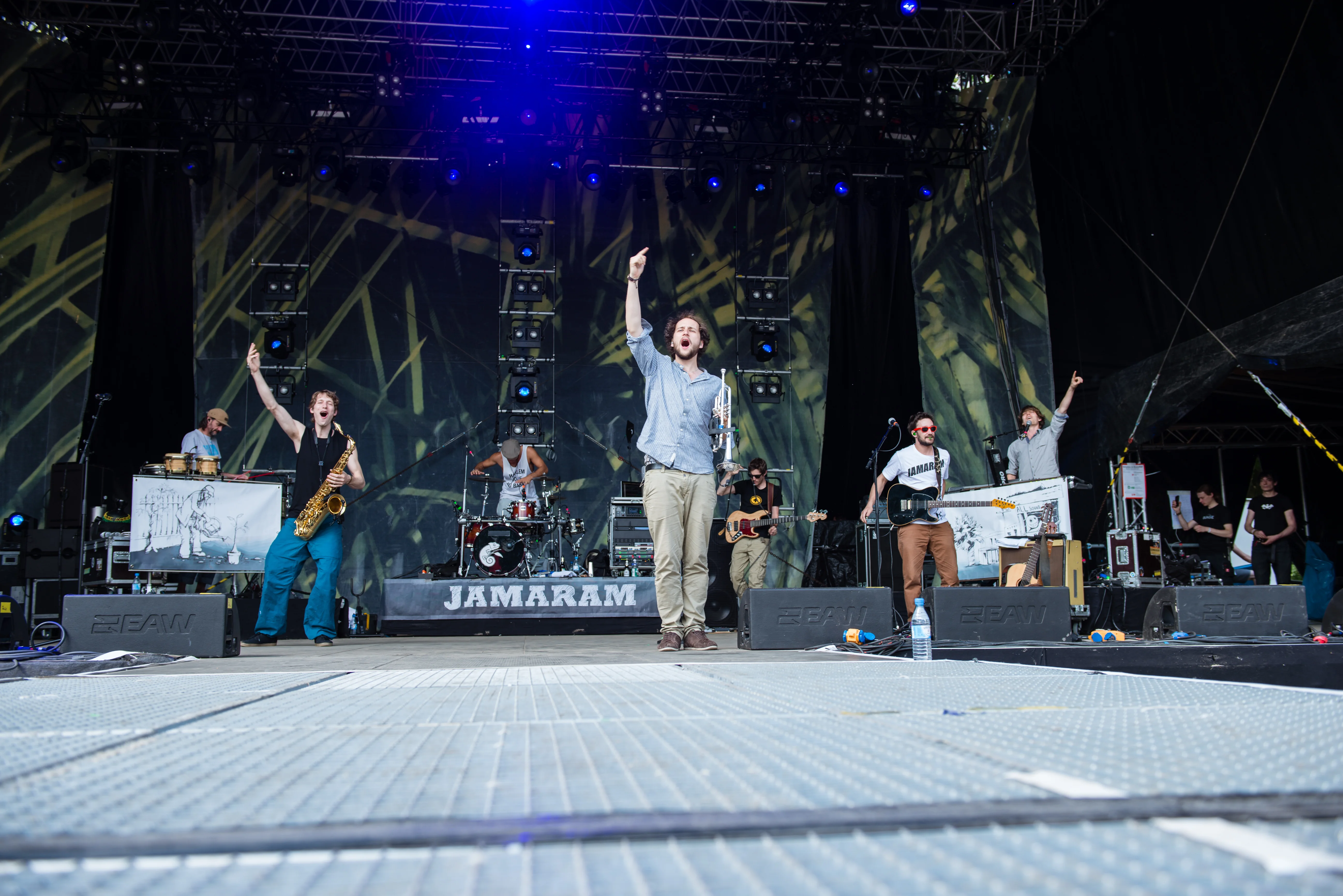
Image from Wikipedia
Image from Wikipedia
Jamaram – Munich's Reggae & Rock’n’Roll Circus with an International Pulse
Jamaram: A Band that Understands Reggae as a Movement and the Stage as Home
Jamaram is a Munich-based band founded in 2000, originating from Aubing and Munich. Its core lies in reggae and dub, which the band blends with ska, Latin, pop, Balkan beats, Afrobeat, funk, and blues, creating a unique sound. From its original trio consisting of Tom Lugo, Max Alberti, and Sam Hopf, it has evolved into an eight-member formation, which stands for an extensive music career and intense stage presence. The band positions itself clearly for peace, openness to the world, respect, and cultural diversity—values that shape both their artistic development and live performances. ([de.wikipedia.org](https://de.wikipedia.org/wiki/Jamaram))
The Beginnings: From Jamming in Munich to a Solid Band Identity
The name Jamaram refers to the jam roots of the group, and it was from this open, collective music-making that an ensemble developed early on that focused on independence. According to Wikipedia, the band participated in the international newcomer festival Emergenza in 2002, achieving two first places in the preliminaries and a second place in the finals. This early success garnered Jamaram the necessary attention to play over 100 concerts by 2005 and perform at festivals like the Chiemsee Reggae Summer. ([de.wikipedia.org](https://de.wikipedia.org/wiki/Jamaram))
In 2004, they released their first album Kalahassi through Soulfire Artists / Rough Trade. In the following year, the band embarked on its first European tour, laying the groundwork for a touring life that would eventually span Europe, Africa, and South America. The official website today refers to thousands of live shows and a stage journey lasting 25 years, describing Jamaram as a consistently working live act. ([de.wikipedia.org](https://de.wikipedia.org/wiki/Jamaram))
The Sound: Reggae as the Center, Stylistic Diversity as a Trademark
Musically, Jamaram represents an open, genre-crossing approach that does not see reggae and dub as a static template, but rather as a starting point. In live shows, ska, Latin, pop, Balkan beats, and Afrobeat are added; on the website, the band expands this spectrum to include bass-heavy modern roots, dubwise, hip hop, urban grooves, and ballads with a singer-songwriter character. It is this mixture that explains why Jamaram is often described in reviews as an energetic, “handmade” live act. ([de.wikipedia.org](https://de.wikipedia.org/wiki/Jamaram))
The soundscape thrives on a strong rhythmic foundation, distinct brass work, and a production that emphasizes groove and dynamism. The band describes itself on the website as a “Reggae & Rock’n’Roll” circus, a wandering formation that cannot be reduced to a single genre. This multifacetedness is central to Jamaram's musical development and ensures that the group maintains a recognizable identity despite stylistic openness. ([jamaram.de](https://www.jamaram.de/index))
Career Path: Tours, Festivals, and International Reach
Jamaram's career is closely tied to the live business. Wikipedia notes over 100 concerts as early as 2005; later reports and the band's website state around 2,000 or thousands of performances and a presence on stages in Europe, Africa, and South America. Such numbers are more than mere statistics for a band of this style: they represent a refined stage routine, sophisticated arrangements, and a performance practice where improvisation and audience proximity come together. ([de.wikipedia.org](https://de.wikipedia.org/wiki/Jamaram))
Interviews and portraits reveal that Jamaram functions as a collective entity. Lionel Wharton explained in 2022 that the band is more like an “8-headed hydra” than a hierarchy with only one artistic leader; in older interviews, the group emphasizes that groove and shared impulse take precedence over stylistic pigeonholes. This way of working explains why Jamaram has preserved a high musical agility over the years while being perceived as a well-coordinated unit. ([luganoeventi.ch](https://luganoeventi.ch/en/magazine/we-love-to-play-what-we-love-interview-with-lionel-lazer-wharton-of-jamaram/?utm_source=openai))
Discography: From Kalahassi to Mor:ning
The discography of Jamaram clearly traces the development of the band. Key albums include Kalahassi (2004), Ookuchaka! (2006), Shout It from the Rooftops (2008), Jameleon (2010), Jamaram in Dub (2011), La Famille (2012), Heavy Heavy (2015), Freedom of Screech (2017), To the Moon and the Sun (2019), El Peor (2023), and Mor:ning (2024). This body of work is complemented by EPs like Never Too Late (2005) and various singles as well as live and remix releases. ([de.wikipedia.org](https://de.wikipedia.org/wiki/Jamaram))
Particularly notable is the recent phase in which Jamaram increasingly collaborates with guest artists and in partnership formats. In 2024, for instance, releases on Bandcamp include El Rio as a single by Jamaram & Paco Mendoza feat. Raggabund and Mor:ning as an EP by Jamaram meets Jahcoustix. Prior to that, releases like El Peor by Jamaram meets Jah Chango and others documented that the band does not see collaboration as a side project, but as an integral part of their artistic development. ([jamaram.bandcamp.com](https://jamaram.bandcamp.com/music))
Current Projects and New Releases
The most recent documented release in the current sources is Mor:ning from 2024 on Oneness Records / Turban Records, while the website highlights the singles Run Run Run, El Peor, Better Than That, and Easy Life in the media section. Additionally, live dates for 2026 are announced, including a performance at the Chiemsee Reggae Summer in Übersee, mentioned on the official homepage. This indicates that Jamaram is still active after 25 years, focusing on future endeavors rather than past achievements. ([de.wikipedia.org](https://de.wikipedia.org/wiki/Jamaram))
Official band and press sections also refer to materials related to Jamaram, Jamaram meets Jahcoustix, and Jamaram unplugged, as well as a management structure with Jamaram GbR and booking through Soulfire Artists. For music journalism and event promoters, this is an important indication of the professional infrastructure behind the band, which systematically organizes its live presence and release policies. Specific chart placements or major music awards are not documented in the sources evaluated here. ([jamaram.de](https://www.jamaram.de/))
Line-Up and Collective Dynamic
The current lineup includes Tom Lugo, Samuel “Sam I Am” “Samy Danger” Hopf, Max Alberti, Benjamin Beblo, Lionel Wharton, Dominik “Nik” Thäle, Johannes “Peppi” Beblo, and Daniel Noske. This lineup explains the band’s broad sonic palette: vocals, guitar, drums, bass, keyboard, percussion, as well as saxophone and trumpet interweave to create the characteristic, physically engaging Jamaram sound. Particularly the brass section and rhythmic interplay significantly contribute to the energy of the live concerts. ([de.wikipedia.org](https://de.wikipedia.org/wiki/Jamaram))
The historically grown openness of the band is also reflected in changing collaborators and side projects. The discography points to solo works by Samy Danger and Tom Lugo, as well as collaborations with the Acoustic Night Allstars or Cisco Pema. As such, Jamaram does not appear to be a rigid brand figure but rather a vibrant network of voices, grooves, and musical perspectives. ([de.wikipedia.org](https://de.wikipedia.org/wiki/Jamaram))
Cultural Influence: Diversity, Attitude, and Festival Energy
Jamaram is more than just a reggae band from Munich. The group embodies a form of German pop and world music where stylistic openness is combined with a clear stance: against intolerance, against isolationism, for peace and cultural mixing. In a scene where reggae is often perceived either as a retro formula or a niche style, Jamaram demonstrates how alive and relevant this sound idiom can remain in the 21st century. ([jamaram.de](https://www.jamaram.de/index))
The critical perception also reflects this role. Local and regional music press describes the band as a guarantee for good vibes, captivating shows, and a sound cocktail of reggae, ska, funk, and pop. At the same time, reviews emphasize the high recognizability and handmade quality of the songs. It is precisely here that the cultural value of Jamaram lies: in a music career that takes clubs, festivals, and community seriously. ([kultur-kritik.net](https://www.kultur-kritik.net/2021/09/29/jamaram-sonne-mond-und-reggae/?utm_source=openai))
Conclusion: Why Jamaram Remains Exciting
Jamaram combines musical experience, stylistic breadth, and a remarkably consistent live energy into a band identity that has been increasingly refined over more than two decades. Between reggae, dub, ska, Latin, and Afrobeat, a sound emerges that cannot be reduced to single hits but convinces in its stage presence and dynamism. Anyone who experiences Jamaram live does not receive a nostalgic look back, but a fully charged present of groove, attitude, and collective joy in playing. ([jamaram.de](https://www.jamaram.de/index))
For this reason, attending a concert is particularly rewarding: Jamaram is strongest on stage when rhythm, brass, vocals, and audience energy interlock. The band remains exciting because it stays true to itself without becoming predictable. Live, that mixture of openness to the world, danceable production, and charismatic stage presence unfolds, making Jamaram one of the longest-lasting reggae formations from Munich. ([jamaram.de](https://www.jamaram.de/index))
Official Channels of Jamaram:
- Instagram: https://www.instagram.com/JamaramBand
- Facebook: http://facebook.com/JamaramBand
- YouTube: http://youtube.com/JamaramBand
- Spotify: No official profile found
- TikTok: No official profile found
- X: https://x.com/JamaramBand
- Vimeo: https://vimeo.com/Jamaram
Sources:
- Wikipedia – Jamaram
- Jamaram – Official Website
- Jamaram – Homepage / Band Description
- Jamaram – Music & Media
- Jamaram – Privacy Policy Social Media
- Jamaram – Imprint Social Media
- Jamaram – Gig History
- Jamaram – Bandcamp / Music Overview
- Lautschrift – Culture Returns: Reggae Band Jamaram in Interview
- Kulturfalter Halle – Munich Band Jamaram in Interview
- kultur-kritik – Jamaram: Sun, Moon, and Reggae
- Chiemgau24 – Concert: Jamaram - Freedom of Screech
- Jamaram – Related Links
Upcoming Events
Jamaram meets Jahcoustix: Welcome To Arunga in Starnberg
Chiemsee Reggae Summer 2026 in Übersee: The Comeback at Chiemsee
Jamaram Live at Colos-Saal Aschaffenburg
Open Air Concert – Jamaram
Jamaram - Energetic Club Show
Open Air Concert – Jamaram
Open Air: JAMARAM – Welcome to Arunga Tour
Jamaram Open-Air Concert
Open Air: JAMARAM - Welcome to Arunga Tour