
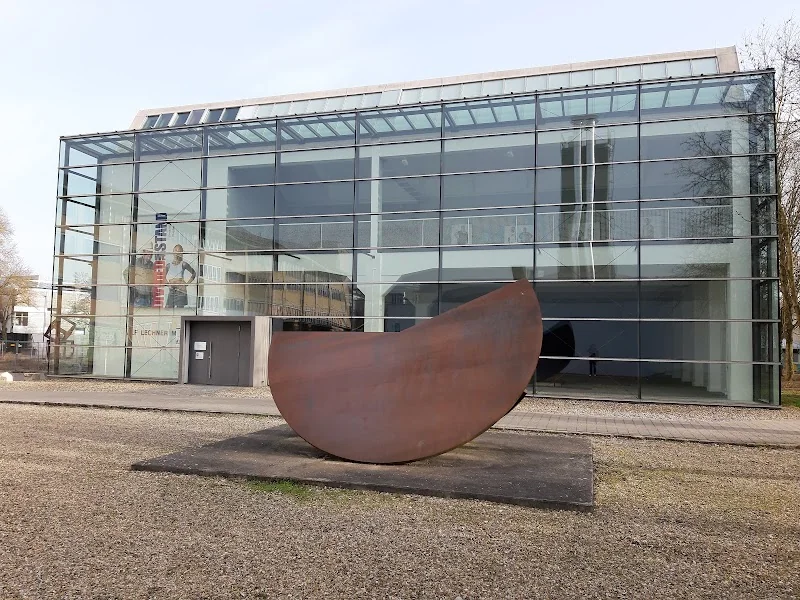
Esplanade 9, Ingolstadt-Altstadt Nordost
Esplanade 9, 85049 Ingolstadt, Germany
Lechner Museum | Opening Hours & Directions
The Lechner Museum in Ingolstadt is much more than a classic city museum or a quiet exhibition space for art on the go. It is a place where material, space, and perception collide and make each other visible. Those searching for Lechner Museum Ingolstadt, Alf Lechner Museum, or Lechner Museum opening hours usually want to find practical information, but even the first impression of the building shows why a visit is worthwhile: The museum is dedicated to the work of steel sculptor Alf Lechner, located in a converted former factory hall in the heart of Ingolstadt, and has been presenting changing exhibitions with a strong focus on contemporary art, form, and material since 2000. Covering approximately 1800 square meters, the museum develops a clear, concentrated, and surprisingly open character. The official website emphasizes the intensive engagement with art since 1960, as well as the connection between internationally renowned positions and young, forward-looking artists. Those looking for photos of the museum quickly recognize the special atmosphere of a building that does not hide industrial architecture but makes it part of the experience. Visitors interested in reviews often seek this mix of clarity, tranquility, and depth of content. The Lechner Museum is not a loud experience center but a deliberately designed place for concentrated perception, for material experience, and for art that asks questions instead of providing quick answers. This is precisely its strength, and that is why it frequently appears in search queries together with opening hours, directions, parking, photos, and reviews. ([lechner-museum.de](https://www.lechner-museum.de/de))
Opening Hours, Admission, and Current Exhibition at the Lechner Museum
Anyone wishing to visit the Lechner Museum should know the opening hours well, as they are clear but not daily. The museum is currently open from Thursday to Sunday from 10:00 AM to 5:00 PM. It is closed on certain days, namely January 1, Shrove Tuesday, Good Friday, November 1, and December 24, 25, and 31. At the same time, the museum explicitly points out that it is open on all other holidays. This is particularly practical for planning, as a visit can easily be combined with a weekend trip to Ingolstadt. The admission prices are also transparent: Adults pay €6.00, reduced admission costs €4.00, and children, youths up to 17 years, as well as students, trainees, and students up to 21 years receive free admission. An additional advantage is the ticket benefit: Anyone who buys an admission ticket for the current exhibition can also visit the Museum of Concrete Art for free on the same day, and vice versa. The museum thrives on its changing exhibitions. Currently, A Matter of Perspective is running until April 12, 2026, an exhibition that places Alf Lechner's work in the context of international positions and highlights the aesthetic and social dimension of material. Previously, the major retrospective 100 Years of Alf Lechner: Matter Steel was on the program in the anniversary year 2025, tracing his development from the 1960s until his death in 2017. This shows that the Lechner Museum is not about a rigid permanent collection, but about curated perspectives, changing viewpoints, and an exhibition practice that regularly creates new incentives for a return visit. ([lechner-museum.de](https://www.lechner-museum.de/de))
Directions, Parking, and Accessible Visit
The search for Lechner Museum directions or Lechner Museum parking is among the most common questions, and the answer is pleasantly concrete. The museum is located at Esplanade 9 in 85049 Ingolstadt and is easily accessible by both train and car. If you arrive by train, you will travel to Ingolstadt Nord; from there, it is about a seven-minute walk or around two minutes by taxi, according to the museum. From Ingolstadt main station, the taxi ride takes about ten minutes, or you can take the bus to the ZOB, from where it is only about a three-minute walk. By car, take the A9 to the Ingolstadt Nord exit, then follow the B16a westward and then the B13 until it merges into Heydeckstraße. At the end of Heydeckstraße, turn left into Esplanade; after about 150 meters, the museum is on the right side. For visitors, there is a bike rack directly in front of the building and two designated parking spaces for cars. Additional parking options are available nearby, such as at the Haydeck parking lot at Esplanade 5 or in the underground garage at the castle at Esplanade 1a. The issue of accessibility is also very well addressed. The museum has an elevator that provides access to all exhibition levels. Wheelchair users can visit the rooms, and accessible restrooms are available. Additionally, there are parking options for people with special permits, who can coordinate with the supervision on-site. This makes the museum suitable not only for art enthusiasts but also for families, older visitors, and anyone who appreciates a planned, uncomplicated museum visit. The combination of central location, walking distance from the train station, clear highway access, and barrier-free interior shows why the Lechner Museum is so accessible despite its specialized profile. ([lechner-museum.de](https://www.lechner-museum.de/de))
Alf Lechner, History, and Architecture of the Museum
The Lechner Museum is closely associated with the artist Alf Lechner, one of the most important German steel sculptors of the 20th and early 21st centuries. The official museum presentation names him as the central reference person of the house and describes his long artistic journey with more than 800 sculptural works and over 4500 drawings. For the museum itself, it is particularly important that Alf Lechner founded the Alf Lechner Foundation in 1999 and opened the Lechner Museum Ingolstadt in 2000. The house is thus not just any municipal gallery but the result of a clear cultural founding idea: work, material, and artistic research should remain permanently visible and experienceable. Architecturally, the museum is also remarkable. It was created by architects Erhard and Florian Fischer together with civil engineer Walter Muck through the conversion of a former factory hall. The Sheddachhalle from the 1950s, located near the Ingolstadt old town, was originally used for automobile production by Audi. Inside, the building was stripped back to its load-bearing structure, the cubic body clad with raw aluminum composite panels, and a glass extension added to the north, which now serves as a foyer. In 2001, the architects received the German Facade Award for the conversion of Hall IV into the Lechner Museum. This history explains much of the building's impact: The museum not only shows art, but it is also an example of how industrial spaces can be transformed into precise, contemplative exhibition venues. This connection between technology and art, between rationality and emotionality, between calculation and chance is also central to Alf Lechner's work. The fact that the museum operates on around 1800 square meters of exhibition space further enhances this impression: The space remains generous but not anonymous, and the architecture accompanies the works instead of overshadowing them. ([lechner-museum.de](https://www.lechner-museum.de/de))
Exhibitions, Art Program, and Why a Visit is Worthwhile
Those searching for Lechner Museum exhibitions or Alf Lechner Museum Ingolstadt are usually interested in the current thematic focus of the house. This is where the museum shows its particular strength, as the program is deliberately changing, discursive, and internationally oriented. Since its opening in 2000, the house has established itself as a place for engagement with art since 1960 and presents not only Lechner's work but also contemporary artistic positions that deal with material, space, seriality, form, and perception. The current exhibition A Matter of Perspective runs until April 12, 2026, and places Alf Lechner's work in the context of international positions, including Phyllida Barlow, Robert Morris, Fred Sandback, Charlotte Posenenske, Reiner Ruthenbeck, Carl Andre, Donald Judd, Richard Serra, and other significant names from post-war and minimal art. This is not just a juxtaposition of works but a curatorial setting: Visitors should recognize how differently material can be interpreted and how strongly the idea of form in space changes when steel, body, and perception enter into a dialogue. In the anniversary year 2025, the museum also presented 100 Years of Alf Lechner: Matter Steel, a retrospective that traced Lechner's artistic development from the 1960s until his death in 2017 and emphasized the tension between matter and form. Additionally, the museum offers guided tours, workshops, lectures, concerts, and a children's program. This makes the visit interesting even for those who initially planned only a short museum break: You not only get an exhibition but a whole cultural field with multiple access points. The fact that the museum is located in a former factory hall further enhances this effect, as the industrial origin of the place resonates with the themes of many works. Therefore, anyone looking for a museum for concrete, reduced, and material-related art will find one of the most exciting addresses in Bavaria here. ([lechner-museum.de](https://www.lechner-museum.de/de))
Photos, Reviews, and What Impressions Visitors Can Expect
When searching for Lechner Museum photos or Lechner Museum reviews, it often revolves around the same question: What does this place really feel like? The answer emerges from several sources. The official website shows the museum in clear, bright views that emphasize the character of the former factory hall, the exhibition situations, and the precisely placed works. Even the architecture conveys an impression of industrial origin and museum restraint, which fits the profile of the house. It is not a museum that works with opulent staging but one that consciously uses material, light, and distance. This is also reflected in visitor reactions that become visible in the available reviews: A very interesting exhibition, a worthwhile visit, and friendly staff are praised. At the same time, a single critical voice shows that the house can seem very reduced to some people. However, this is more an indication of the curatorial concept than a deficiency. Those interested in steel sculpture, minimalist attitudes, contemporary art, and reduced spatial dramaturgy will perceive the clarity of the house as a strength. For those searching for photos, this is particularly exciting because the museum does not rely on spectacular effects but on an atmosphere that can be well captured in images: the contrast between industrial architecture and art, the visible expanse of the halls, and the focus on the materiality of the works. Content-wise, this also supports the Lechner Museum brand, as Alf Lechner's art thrives on structure, surface, and physical presence. Therefore, anyone wanting to see pictures before their visit receives not only a beautiful preview but a quite precise visual language that prepares them well for the later experience in the house. This is precisely why the search terms photos, reviews, and opening hours fit so well together: They show that many interested parties want to gain an impression before making their way to Esplanade. ([lechner-museum.de](https://www.lechner-museum.de/de))
Accessibility, Guided Tours, and Offers for Families, Children, and Groups
The Lechner Museum is not only a place for quiet individual visits but also a house with concrete educational offerings. Accessibility is particularly important, which is clearly considered in the museum: An elevator provides access to all levels, wheelchairs can use the exhibition spaces, accessible restrooms are available, and visitors with special permits can park in coordination with the supervision in front of the museum. For those specifically searching for Lechner Museum accessibility, this is a strong plus. The guided tours are also interesting. The museum offers public combined tours through the Lechner Museum and the Sculpture Park Obereichstätt on the last Sunday of each month. No registration is required for these tours, but the transfer between Ingolstadt and Obereichstätt must be organized independently by car and takes about 30 to 35 minutes; public transport is not provided for this. Additionally, there is an active art education program for children and families. The Open Studio takes place every first Saturday of the month from 10 AM to 12 PM, costs €8 per participant, and is suitable for children aged 6 and up; accompanying persons receive free admission. Children's birthdays can be booked upon request, costing a flat rate of €120 for two hours and limited to 12 participants. For kindergartens and schools, there are guided tours and workshops on Thursdays and Fridays between 10 AM and 12 PM with staggered fees depending on the institution. These offerings show that the museum does not only appeal to collectors, professionals, or architecture enthusiasts but consciously invites different target groups. Therefore, anyone arriving with family, a school class, or a travel group will find not only a beautiful exhibition but a well-thought-out educational format. The connection to Obereichstätt also expands the visit experience, as the Sculpture Park, the exhibition hall, and the Paper House are located there. The Lechner Museum is thus significantly broader in content and organization than one might initially assume. ([lechner-museum.de](https://www.lechner-museum.de/de))
Sources:
Show moreShow less
Lechner Museum | Opening Hours & Directions
The Lechner Museum in Ingolstadt is much more than a classic city museum or a quiet exhibition space for art on the go. It is a place where material, space, and perception collide and make each other visible. Those searching for Lechner Museum Ingolstadt, Alf Lechner Museum, or Lechner Museum opening hours usually want to find practical information, but even the first impression of the building shows why a visit is worthwhile: The museum is dedicated to the work of steel sculptor Alf Lechner, located in a converted former factory hall in the heart of Ingolstadt, and has been presenting changing exhibitions with a strong focus on contemporary art, form, and material since 2000. Covering approximately 1800 square meters, the museum develops a clear, concentrated, and surprisingly open character. The official website emphasizes the intensive engagement with art since 1960, as well as the connection between internationally renowned positions and young, forward-looking artists. Those looking for photos of the museum quickly recognize the special atmosphere of a building that does not hide industrial architecture but makes it part of the experience. Visitors interested in reviews often seek this mix of clarity, tranquility, and depth of content. The Lechner Museum is not a loud experience center but a deliberately designed place for concentrated perception, for material experience, and for art that asks questions instead of providing quick answers. This is precisely its strength, and that is why it frequently appears in search queries together with opening hours, directions, parking, photos, and reviews. ([lechner-museum.de](https://www.lechner-museum.de/de))
Opening Hours, Admission, and Current Exhibition at the Lechner Museum
Anyone wishing to visit the Lechner Museum should know the opening hours well, as they are clear but not daily. The museum is currently open from Thursday to Sunday from 10:00 AM to 5:00 PM. It is closed on certain days, namely January 1, Shrove Tuesday, Good Friday, November 1, and December 24, 25, and 31. At the same time, the museum explicitly points out that it is open on all other holidays. This is particularly practical for planning, as a visit can easily be combined with a weekend trip to Ingolstadt. The admission prices are also transparent: Adults pay €6.00, reduced admission costs €4.00, and children, youths up to 17 years, as well as students, trainees, and students up to 21 years receive free admission. An additional advantage is the ticket benefit: Anyone who buys an admission ticket for the current exhibition can also visit the Museum of Concrete Art for free on the same day, and vice versa. The museum thrives on its changing exhibitions. Currently, A Matter of Perspective is running until April 12, 2026, an exhibition that places Alf Lechner's work in the context of international positions and highlights the aesthetic and social dimension of material. Previously, the major retrospective 100 Years of Alf Lechner: Matter Steel was on the program in the anniversary year 2025, tracing his development from the 1960s until his death in 2017. This shows that the Lechner Museum is not about a rigid permanent collection, but about curated perspectives, changing viewpoints, and an exhibition practice that regularly creates new incentives for a return visit. ([lechner-museum.de](https://www.lechner-museum.de/de))
Directions, Parking, and Accessible Visit
The search for Lechner Museum directions or Lechner Museum parking is among the most common questions, and the answer is pleasantly concrete. The museum is located at Esplanade 9 in 85049 Ingolstadt and is easily accessible by both train and car. If you arrive by train, you will travel to Ingolstadt Nord; from there, it is about a seven-minute walk or around two minutes by taxi, according to the museum. From Ingolstadt main station, the taxi ride takes about ten minutes, or you can take the bus to the ZOB, from where it is only about a three-minute walk. By car, take the A9 to the Ingolstadt Nord exit, then follow the B16a westward and then the B13 until it merges into Heydeckstraße. At the end of Heydeckstraße, turn left into Esplanade; after about 150 meters, the museum is on the right side. For visitors, there is a bike rack directly in front of the building and two designated parking spaces for cars. Additional parking options are available nearby, such as at the Haydeck parking lot at Esplanade 5 or in the underground garage at the castle at Esplanade 1a. The issue of accessibility is also very well addressed. The museum has an elevator that provides access to all exhibition levels. Wheelchair users can visit the rooms, and accessible restrooms are available. Additionally, there are parking options for people with special permits, who can coordinate with the supervision on-site. This makes the museum suitable not only for art enthusiasts but also for families, older visitors, and anyone who appreciates a planned, uncomplicated museum visit. The combination of central location, walking distance from the train station, clear highway access, and barrier-free interior shows why the Lechner Museum is so accessible despite its specialized profile. ([lechner-museum.de](https://www.lechner-museum.de/de))
Alf Lechner, History, and Architecture of the Museum
The Lechner Museum is closely associated with the artist Alf Lechner, one of the most important German steel sculptors of the 20th and early 21st centuries. The official museum presentation names him as the central reference person of the house and describes his long artistic journey with more than 800 sculptural works and over 4500 drawings. For the museum itself, it is particularly important that Alf Lechner founded the Alf Lechner Foundation in 1999 and opened the Lechner Museum Ingolstadt in 2000. The house is thus not just any municipal gallery but the result of a clear cultural founding idea: work, material, and artistic research should remain permanently visible and experienceable. Architecturally, the museum is also remarkable. It was created by architects Erhard and Florian Fischer together with civil engineer Walter Muck through the conversion of a former factory hall. The Sheddachhalle from the 1950s, located near the Ingolstadt old town, was originally used for automobile production by Audi. Inside, the building was stripped back to its load-bearing structure, the cubic body clad with raw aluminum composite panels, and a glass extension added to the north, which now serves as a foyer. In 2001, the architects received the German Facade Award for the conversion of Hall IV into the Lechner Museum. This history explains much of the building's impact: The museum not only shows art, but it is also an example of how industrial spaces can be transformed into precise, contemplative exhibition venues. This connection between technology and art, between rationality and emotionality, between calculation and chance is also central to Alf Lechner's work. The fact that the museum operates on around 1800 square meters of exhibition space further enhances this impression: The space remains generous but not anonymous, and the architecture accompanies the works instead of overshadowing them. ([lechner-museum.de](https://www.lechner-museum.de/de))
Exhibitions, Art Program, and Why a Visit is Worthwhile
Those searching for Lechner Museum exhibitions or Alf Lechner Museum Ingolstadt are usually interested in the current thematic focus of the house. This is where the museum shows its particular strength, as the program is deliberately changing, discursive, and internationally oriented. Since its opening in 2000, the house has established itself as a place for engagement with art since 1960 and presents not only Lechner's work but also contemporary artistic positions that deal with material, space, seriality, form, and perception. The current exhibition A Matter of Perspective runs until April 12, 2026, and places Alf Lechner's work in the context of international positions, including Phyllida Barlow, Robert Morris, Fred Sandback, Charlotte Posenenske, Reiner Ruthenbeck, Carl Andre, Donald Judd, Richard Serra, and other significant names from post-war and minimal art. This is not just a juxtaposition of works but a curatorial setting: Visitors should recognize how differently material can be interpreted and how strongly the idea of form in space changes when steel, body, and perception enter into a dialogue. In the anniversary year 2025, the museum also presented 100 Years of Alf Lechner: Matter Steel, a retrospective that traced Lechner's artistic development from the 1960s until his death in 2017 and emphasized the tension between matter and form. Additionally, the museum offers guided tours, workshops, lectures, concerts, and a children's program. This makes the visit interesting even for those who initially planned only a short museum break: You not only get an exhibition but a whole cultural field with multiple access points. The fact that the museum is located in a former factory hall further enhances this effect, as the industrial origin of the place resonates with the themes of many works. Therefore, anyone looking for a museum for concrete, reduced, and material-related art will find one of the most exciting addresses in Bavaria here. ([lechner-museum.de](https://www.lechner-museum.de/de))
Photos, Reviews, and What Impressions Visitors Can Expect
When searching for Lechner Museum photos or Lechner Museum reviews, it often revolves around the same question: What does this place really feel like? The answer emerges from several sources. The official website shows the museum in clear, bright views that emphasize the character of the former factory hall, the exhibition situations, and the precisely placed works. Even the architecture conveys an impression of industrial origin and museum restraint, which fits the profile of the house. It is not a museum that works with opulent staging but one that consciously uses material, light, and distance. This is also reflected in visitor reactions that become visible in the available reviews: A very interesting exhibition, a worthwhile visit, and friendly staff are praised. At the same time, a single critical voice shows that the house can seem very reduced to some people. However, this is more an indication of the curatorial concept than a deficiency. Those interested in steel sculpture, minimalist attitudes, contemporary art, and reduced spatial dramaturgy will perceive the clarity of the house as a strength. For those searching for photos, this is particularly exciting because the museum does not rely on spectacular effects but on an atmosphere that can be well captured in images: the contrast between industrial architecture and art, the visible expanse of the halls, and the focus on the materiality of the works. Content-wise, this also supports the Lechner Museum brand, as Alf Lechner's art thrives on structure, surface, and physical presence. Therefore, anyone wanting to see pictures before their visit receives not only a beautiful preview but a quite precise visual language that prepares them well for the later experience in the house. This is precisely why the search terms photos, reviews, and opening hours fit so well together: They show that many interested parties want to gain an impression before making their way to Esplanade. ([lechner-museum.de](https://www.lechner-museum.de/de))
Accessibility, Guided Tours, and Offers for Families, Children, and Groups
The Lechner Museum is not only a place for quiet individual visits but also a house with concrete educational offerings. Accessibility is particularly important, which is clearly considered in the museum: An elevator provides access to all levels, wheelchairs can use the exhibition spaces, accessible restrooms are available, and visitors with special permits can park in coordination with the supervision in front of the museum. For those specifically searching for Lechner Museum accessibility, this is a strong plus. The guided tours are also interesting. The museum offers public combined tours through the Lechner Museum and the Sculpture Park Obereichstätt on the last Sunday of each month. No registration is required for these tours, but the transfer between Ingolstadt and Obereichstätt must be organized independently by car and takes about 30 to 35 minutes; public transport is not provided for this. Additionally, there is an active art education program for children and families. The Open Studio takes place every first Saturday of the month from 10 AM to 12 PM, costs €8 per participant, and is suitable for children aged 6 and up; accompanying persons receive free admission. Children's birthdays can be booked upon request, costing a flat rate of €120 for two hours and limited to 12 participants. For kindergartens and schools, there are guided tours and workshops on Thursdays and Fridays between 10 AM and 12 PM with staggered fees depending on the institution. These offerings show that the museum does not only appeal to collectors, professionals, or architecture enthusiasts but consciously invites different target groups. Therefore, anyone arriving with family, a school class, or a travel group will find not only a beautiful exhibition but a well-thought-out educational format. The connection to Obereichstätt also expands the visit experience, as the Sculpture Park, the exhibition hall, and the Paper House are located there. The Lechner Museum is thus significantly broader in content and organization than one might initially assume. ([lechner-museum.de](https://www.lechner-museum.de/de))
Sources:
Lechner Museum | Opening Hours & Directions
The Lechner Museum in Ingolstadt is much more than a classic city museum or a quiet exhibition space for art on the go. It is a place where material, space, and perception collide and make each other visible. Those searching for Lechner Museum Ingolstadt, Alf Lechner Museum, or Lechner Museum opening hours usually want to find practical information, but even the first impression of the building shows why a visit is worthwhile: The museum is dedicated to the work of steel sculptor Alf Lechner, located in a converted former factory hall in the heart of Ingolstadt, and has been presenting changing exhibitions with a strong focus on contemporary art, form, and material since 2000. Covering approximately 1800 square meters, the museum develops a clear, concentrated, and surprisingly open character. The official website emphasizes the intensive engagement with art since 1960, as well as the connection between internationally renowned positions and young, forward-looking artists. Those looking for photos of the museum quickly recognize the special atmosphere of a building that does not hide industrial architecture but makes it part of the experience. Visitors interested in reviews often seek this mix of clarity, tranquility, and depth of content. The Lechner Museum is not a loud experience center but a deliberately designed place for concentrated perception, for material experience, and for art that asks questions instead of providing quick answers. This is precisely its strength, and that is why it frequently appears in search queries together with opening hours, directions, parking, photos, and reviews. ([lechner-museum.de](https://www.lechner-museum.de/de))
Opening Hours, Admission, and Current Exhibition at the Lechner Museum
Anyone wishing to visit the Lechner Museum should know the opening hours well, as they are clear but not daily. The museum is currently open from Thursday to Sunday from 10:00 AM to 5:00 PM. It is closed on certain days, namely January 1, Shrove Tuesday, Good Friday, November 1, and December 24, 25, and 31. At the same time, the museum explicitly points out that it is open on all other holidays. This is particularly practical for planning, as a visit can easily be combined with a weekend trip to Ingolstadt. The admission prices are also transparent: Adults pay €6.00, reduced admission costs €4.00, and children, youths up to 17 years, as well as students, trainees, and students up to 21 years receive free admission. An additional advantage is the ticket benefit: Anyone who buys an admission ticket for the current exhibition can also visit the Museum of Concrete Art for free on the same day, and vice versa. The museum thrives on its changing exhibitions. Currently, A Matter of Perspective is running until April 12, 2026, an exhibition that places Alf Lechner's work in the context of international positions and highlights the aesthetic and social dimension of material. Previously, the major retrospective 100 Years of Alf Lechner: Matter Steel was on the program in the anniversary year 2025, tracing his development from the 1960s until his death in 2017. This shows that the Lechner Museum is not about a rigid permanent collection, but about curated perspectives, changing viewpoints, and an exhibition practice that regularly creates new incentives for a return visit. ([lechner-museum.de](https://www.lechner-museum.de/de))
Directions, Parking, and Accessible Visit
The search for Lechner Museum directions or Lechner Museum parking is among the most common questions, and the answer is pleasantly concrete. The museum is located at Esplanade 9 in 85049 Ingolstadt and is easily accessible by both train and car. If you arrive by train, you will travel to Ingolstadt Nord; from there, it is about a seven-minute walk or around two minutes by taxi, according to the museum. From Ingolstadt main station, the taxi ride takes about ten minutes, or you can take the bus to the ZOB, from where it is only about a three-minute walk. By car, take the A9 to the Ingolstadt Nord exit, then follow the B16a westward and then the B13 until it merges into Heydeckstraße. At the end of Heydeckstraße, turn left into Esplanade; after about 150 meters, the museum is on the right side. For visitors, there is a bike rack directly in front of the building and two designated parking spaces for cars. Additional parking options are available nearby, such as at the Haydeck parking lot at Esplanade 5 or in the underground garage at the castle at Esplanade 1a. The issue of accessibility is also very well addressed. The museum has an elevator that provides access to all exhibition levels. Wheelchair users can visit the rooms, and accessible restrooms are available. Additionally, there are parking options for people with special permits, who can coordinate with the supervision on-site. This makes the museum suitable not only for art enthusiasts but also for families, older visitors, and anyone who appreciates a planned, uncomplicated museum visit. The combination of central location, walking distance from the train station, clear highway access, and barrier-free interior shows why the Lechner Museum is so accessible despite its specialized profile. ([lechner-museum.de](https://www.lechner-museum.de/de))
Alf Lechner, History, and Architecture of the Museum
The Lechner Museum is closely associated with the artist Alf Lechner, one of the most important German steel sculptors of the 20th and early 21st centuries. The official museum presentation names him as the central reference person of the house and describes his long artistic journey with more than 800 sculptural works and over 4500 drawings. For the museum itself, it is particularly important that Alf Lechner founded the Alf Lechner Foundation in 1999 and opened the Lechner Museum Ingolstadt in 2000. The house is thus not just any municipal gallery but the result of a clear cultural founding idea: work, material, and artistic research should remain permanently visible and experienceable. Architecturally, the museum is also remarkable. It was created by architects Erhard and Florian Fischer together with civil engineer Walter Muck through the conversion of a former factory hall. The Sheddachhalle from the 1950s, located near the Ingolstadt old town, was originally used for automobile production by Audi. Inside, the building was stripped back to its load-bearing structure, the cubic body clad with raw aluminum composite panels, and a glass extension added to the north, which now serves as a foyer. In 2001, the architects received the German Facade Award for the conversion of Hall IV into the Lechner Museum. This history explains much of the building's impact: The museum not only shows art, but it is also an example of how industrial spaces can be transformed into precise, contemplative exhibition venues. This connection between technology and art, between rationality and emotionality, between calculation and chance is also central to Alf Lechner's work. The fact that the museum operates on around 1800 square meters of exhibition space further enhances this impression: The space remains generous but not anonymous, and the architecture accompanies the works instead of overshadowing them. ([lechner-museum.de](https://www.lechner-museum.de/de))
Exhibitions, Art Program, and Why a Visit is Worthwhile
Those searching for Lechner Museum exhibitions or Alf Lechner Museum Ingolstadt are usually interested in the current thematic focus of the house. This is where the museum shows its particular strength, as the program is deliberately changing, discursive, and internationally oriented. Since its opening in 2000, the house has established itself as a place for engagement with art since 1960 and presents not only Lechner's work but also contemporary artistic positions that deal with material, space, seriality, form, and perception. The current exhibition A Matter of Perspective runs until April 12, 2026, and places Alf Lechner's work in the context of international positions, including Phyllida Barlow, Robert Morris, Fred Sandback, Charlotte Posenenske, Reiner Ruthenbeck, Carl Andre, Donald Judd, Richard Serra, and other significant names from post-war and minimal art. This is not just a juxtaposition of works but a curatorial setting: Visitors should recognize how differently material can be interpreted and how strongly the idea of form in space changes when steel, body, and perception enter into a dialogue. In the anniversary year 2025, the museum also presented 100 Years of Alf Lechner: Matter Steel, a retrospective that traced Lechner's artistic development from the 1960s until his death in 2017 and emphasized the tension between matter and form. Additionally, the museum offers guided tours, workshops, lectures, concerts, and a children's program. This makes the visit interesting even for those who initially planned only a short museum break: You not only get an exhibition but a whole cultural field with multiple access points. The fact that the museum is located in a former factory hall further enhances this effect, as the industrial origin of the place resonates with the themes of many works. Therefore, anyone looking for a museum for concrete, reduced, and material-related art will find one of the most exciting addresses in Bavaria here. ([lechner-museum.de](https://www.lechner-museum.de/de))
Photos, Reviews, and What Impressions Visitors Can Expect
When searching for Lechner Museum photos or Lechner Museum reviews, it often revolves around the same question: What does this place really feel like? The answer emerges from several sources. The official website shows the museum in clear, bright views that emphasize the character of the former factory hall, the exhibition situations, and the precisely placed works. Even the architecture conveys an impression of industrial origin and museum restraint, which fits the profile of the house. It is not a museum that works with opulent staging but one that consciously uses material, light, and distance. This is also reflected in visitor reactions that become visible in the available reviews: A very interesting exhibition, a worthwhile visit, and friendly staff are praised. At the same time, a single critical voice shows that the house can seem very reduced to some people. However, this is more an indication of the curatorial concept than a deficiency. Those interested in steel sculpture, minimalist attitudes, contemporary art, and reduced spatial dramaturgy will perceive the clarity of the house as a strength. For those searching for photos, this is particularly exciting because the museum does not rely on spectacular effects but on an atmosphere that can be well captured in images: the contrast between industrial architecture and art, the visible expanse of the halls, and the focus on the materiality of the works. Content-wise, this also supports the Lechner Museum brand, as Alf Lechner's art thrives on structure, surface, and physical presence. Therefore, anyone wanting to see pictures before their visit receives not only a beautiful preview but a quite precise visual language that prepares them well for the later experience in the house. This is precisely why the search terms photos, reviews, and opening hours fit so well together: They show that many interested parties want to gain an impression before making their way to Esplanade. ([lechner-museum.de](https://www.lechner-museum.de/de))
Accessibility, Guided Tours, and Offers for Families, Children, and Groups
The Lechner Museum is not only a place for quiet individual visits but also a house with concrete educational offerings. Accessibility is particularly important, which is clearly considered in the museum: An elevator provides access to all levels, wheelchairs can use the exhibition spaces, accessible restrooms are available, and visitors with special permits can park in coordination with the supervision in front of the museum. For those specifically searching for Lechner Museum accessibility, this is a strong plus. The guided tours are also interesting. The museum offers public combined tours through the Lechner Museum and the Sculpture Park Obereichstätt on the last Sunday of each month. No registration is required for these tours, but the transfer between Ingolstadt and Obereichstätt must be organized independently by car and takes about 30 to 35 minutes; public transport is not provided for this. Additionally, there is an active art education program for children and families. The Open Studio takes place every first Saturday of the month from 10 AM to 12 PM, costs €8 per participant, and is suitable for children aged 6 and up; accompanying persons receive free admission. Children's birthdays can be booked upon request, costing a flat rate of €120 for two hours and limited to 12 participants. For kindergartens and schools, there are guided tours and workshops on Thursdays and Fridays between 10 AM and 12 PM with staggered fees depending on the institution. These offerings show that the museum does not only appeal to collectors, professionals, or architecture enthusiasts but consciously invites different target groups. Therefore, anyone arriving with family, a school class, or a travel group will find not only a beautiful exhibition but a well-thought-out educational format. The connection to Obereichstätt also expands the visit experience, as the Sculpture Park, the exhibition hall, and the Paper House are located there. The Lechner Museum is thus significantly broader in content and organization than one might initially assume. ([lechner-museum.de](https://www.lechner-museum.de/de))
Sources:
Upcoming Events
No events found
Frequently Asked Questions
Reviews
Alix Chambaud
27. October 2024
Very interesting exhibition and event! Worth the visit :)
Sanne De Lange
25. February 2022
Kind staff and interesting art work
Taha
9. March 2020
I think there is nothing to see :(((
Как то так было
27. March 2022
Top
Maria Nißl
17. January 2026
A Matter of Perspective – Exhibition at the Lechner Museum in Ingolstadt, on view until April 12, 2026. The current exhibition showcases a multifaceted collection of works by various artists, whose creative output dates primarily from the 1960s onward, and in some cases continues to the present day. The diverse qualities of the materials – from solid titanium to steel, glass, wood, fabric, felt, and even pencil on paper – create a beautiful unity across the open floors, despite their contrasting elements. There's something exciting to discover in every piece. This is something the children who attend the Children's Studio, held every first Saturday of the month, also recognize. Children are still so wonderfully open and curious about all forms of art, and I very much enjoy following their latest artwork on the Lechner Instagram channel @lechnermuseum.