
Ingolstadt
Paradepl. 4, 85049 Ingolstadt, Deutschland
Bavarian Army Museum - New Castle | Tickets & Prices
The Bavarian Army Museum in the New Castle at Paradeplatz 4 in Ingolstadt is one of the major military history museums in Europe. In the late medieval residence of the Wittelsbach family, permanent exhibitions from the 17th to the early 20th century can be experienced, featuring rare originals, staged displays, and media-supported stations. Notable highlights include the magnificent 'Tent of the Grand Vizier', detailed tin figure dioramas of major battles, and the exhibition area 'War and Peace – Military in Bavaria 1870–1914', which will open in 2025. Additionally, the Museum of the First World War in Reduit Tilly and the Bavarian Police Museum in the Triva Tower are part of the network. For those arriving by car, the most convenient parking is in the underground garage of the castle directly at Paradeplatz; additional spaces are available, including in Reduit Tilly. Opening hours, admission, and combination tickets are designed to be visitor-friendly, with particularly low admission on Sundays. ([ndm.ingolstadt.de](https://ndm.ingolstadt.de/veranstaltungsorte/bayerisches-armeemuseum/?utm_source=openai))
Overview of Tickets, Prices, and Opening Hours
For good planning of the visit, the times and rates are clearly regulated: The New Castle is open from Tuesday to Friday from 9:00 AM to 5:30 PM, and on weekends and public holidays from 10:00 AM to 5:30 PM. Monday is a rest day; however, if a public holiday falls on a Monday, the museum will also open. This regulation makes visits around public holidays particularly flexible – especially for city or family outings. The ticketing follows a streamlined, easily understandable pricing system: Admission to the New Castle is 5 euros for adults, reduced 4 euros. Children and teenagers up to and including 17 years can visit the exhibition free of charge. A special tip is Sunday: Admission then costs only 1 euro, making it attractive for spontaneous visits. For those who want to experience the complete offer, there is a worthwhile combination ticket that allows access to the New Castle as well as the Museum of the First World War in Reduit Tilly and the Bavarian Police Museum in the Triva Tower; it costs 10 euros, reduced 8 euros. Common cashless payment methods (EC and credit card) are accepted, making entry uncomplicated. Those who wish to repeat their visit can find annual passes and other formats through the network information – useful if one wants to spread exhibitions or programs over several dates. This combination of fair pricing, family-friendliness, and broad access to Bavarian military and contemporary history is successful. ([museum.de](https://www.museum.de/en/museen/bayerisches-armeemuseum?utm_source=openai))
For visitors who plan to extend their stay beyond the museum visit, it is advisable to combine the opening hours with exploring the city center. The location at Paradeplatz allows for short distances to other cultural sites, dining, and shopping. Those who take advantage of Sunday as a cheap museum day will find numerous cafés and restaurants within walking distance afterward. It is also worth checking the opening hours of the Police Museum and Reduit Tilly if one wants to make the most of the combination ticket; these locations are accessible on foot or via the bridge. This combination of clear times, favorable Sunday conditions, and combination offers makes the Army Museum in the New Castle a reliably planned destination – whether alone, with family, or as a group. ([museum.de](https://www.museum.de/en/museen/bayerisches-armeemuseum?utm_source=openai))
Directions and Parking at Paradeplatz: How to Reach the New Castle
The New Castle is centrally located in the Ingolstadt old town at Paradeplatz 4 and is easily accessible by both public transport and car. Those coming by bus from the main train station go to Rathausplatz or Paradeplatz; from there, it is just a few steps to the castle entrance. For visiting the other locations: Reduit Tilly and the Triva Tower are located on the southern bank of the Danube in Klenzepark and can be most easily reached from the Brückenkopf bus stop. These tips simplify route planning when using the combination ticket and wanting to connect both sides of the Danube. ([familienausflug.info](https://familienausflug.info/ausflugsziel/bayerisches-armeemuseum?utm_source=openai))
For those traveling by car, the underground garage of the castle is the closest parking option; it is located directly at Paradeplatz and just a few minutes from the museum entrance. The city of Ingolstadt provides real-time parking information showing the currently available spaces in all downtown garages – including 'Schloss', 'Münster', 'Reduit Tilly', and the Congress garage. This is particularly useful on weekends or during events when demand increases. Historically, the underground garage of the castle was reopened in 2020 after extensive renovation; since then, numerous parking spaces have been available, and access is depending on traffic conditions via the Esplanade. Alternatively, one can park in the underground garage of Reduit Tilly – useful if one wants to explore the Museum of the First World War or Klenzepark afterward. Those traveling electrically will find designated charging points in municipal garages; details and availability are communicated through the city portals. Additionally, digital parking portals are available for convenient navigation, where the occupancy of parking facilities can be accessed. ([ingolstadt.de](https://www.ingolstadt.de/Wirtschaft/parkIN/Derzeit-freie-Parkpl%C3%A4tze?utm_source=openai))
The central location of the New Castle saves travel time: Those who want to combine several cultural points in one day – such as the Museum of Concrete Art, the Medical History Museum, or a detour to the Audi museum mobile – benefit from short distances within the city. Visitors arriving from Munich can reach Ingolstadt by train in about 40–60 minutes (depending on the connection) and easily switch to city buses to Paradeplatz at the main train station. This makes museum visits feasible even on day trips. The clarity on site, clear signage, and Paradeplatz as a distinctive landmark make navigation intuitive. ([blutana.de](https://www.blutana.de/sehenswuerdigkeiten/Bayerisches%2BArmeemuseum-Ingolstadt-6611.html?utm_source=openai))
Exhibitions in the New Castle: Forms of War, Tent of the Grand Vizier, and 'War and Peace 1870–1914'
Content-wise, the Bavarian Army Museum in the New Castle spans from the early 17th to the early 20th century. A central permanent exhibition area is 'Forms of War 1600–1815' – an overview of battle and siege warfare of the early modern period with a focus on the experiences of soldiers and civilians. Visitors gain insight into tactics, equipment, and daily life in field camps, supported by objects and displays that come from archival contexts. This is complemented by thematic focuses that make political developments and conflict lines of that time visible. ([ndm.ingolstadt.de](https://ndm.ingolstadt.de/veranstaltungsorte/bayerisches-armeemuseum/?utm_source=openai))
Among the most iconic exhibits is the 'Tent of the Grand Vizier'. This richly decorated ceremonial tent from the context of the Ottoman Wars is presented in its own room in Ingolstadt and is one of the most photographed objects in the museum. The display vividly illustrates the symbolic and material significance of such trophies in early modern Europe – not only as trophies but also as testimonies of cultural contact, representation, and technical craftsmanship. Through the combination of original textiles, reconstructed spatial atmospheres, and explanatory texts, the historical context can be understood without overshadowing the aesthetic impression. ([ndm.ingolstadt.de](https://ndm.ingolstadt.de/veranstaltungsorte/bayerisches-armeemuseum/?utm_source=openai))
Since June 2025, the newly opened presentation 'War and Peace – Military in Bavaria 1870–1914' expands the permanent exhibition. It highlights the period from the Franco-Prussian War 1870/71 to the eve of the First World War and shows the dynamics of these decades between militarization, technical innovation, and social change through uniforms, flags, equipment, large-scale displays, and media stations. Particularly impressive are life-sized scenes and digitally supported access points that lead visitors into the ambivalence of the era: Between optimism for progress, nation-building, and increasing arms logic, a multifaceted picture of the European security order emerges – with Bavaria as the common thread. ([ndm.ingolstadt.de](https://ndm.ingolstadt.de/veranstaltungsorte/bayerisches-armeemuseum/?utm_source=openai))
Another specialty of the museum is the large dioramas with tin figures that depict famous battles in meticulous arrangement. Such installations, which can feature well over ten thousand figures, vividly illustrate the interplay of formation, terrain, command, and chance that shaped the outcomes of early modern and Napoleonic battles. In addition to their visual appeal, the dioramas have educational strength: They condense complex battle sequences, troop formations, and tactical maneuvers into a model that visitors can intuitively grasp – an advantage over pure text panels. Supplementary descriptions critically contextualize the visual worlds. ([bayern-im-web.de](https://www.bayern-im-web.de/bayerisches-armeemuseum-ingolstadt/?utm_source=openai))
Connected: Museum of the First World War (Reduit Tilly) and Bavarian Police Museum (Triva Tower)
The network of the Bavarian Army Museum includes two additional locations that expand and deepen the thematic spectrum. The Museum of the First World War is housed in Reduit Tilly, a historic fortress on the southern bank of the Danube. It offers one of the most comprehensive exhibitions in Germany on the history of the First World War, showcasing the events from 1914–1918 in their military, political, and social dimensions. The connection between the New Castle and Reduit Tilly makes the Ingolstadt museum network unique: While the New Castle covers the epochs up to 1914, Reduit focuses on the global conflict and its consequences. For visitors with a combination ticket, the transition between both buildings is straightforward – the paths are short, and the themes interconnect. ([bayern-im-web.de](https://www.bayern-im-web.de/bayerisches-armeemuseum-ingolstadt/?utm_source=openai))
The Bavarian Police Museum has been established as a department in the network since 2007 and has been located in the Triva Tower in Klenzepark since December 19, 2011. It documents the development of the Bavarian police since the revolution of 1918/19 and presents exhibits ranging from uniforms to vehicles to communication and operational technology. In its thematic orientation, it complements the military historical perspective of the Army Museum by illuminating domestic order, security, and state monopolies of violence in the 20th century. The Triva Tower, as a historical fortress tower, creates a special atmosphere that harmoniously combines form and content. Those who visit both houses gain a broad panorama of Bavarian security history: from the standing army and its traditions to modern police work in democracy and dictatorship. ([de.wikipedia.org](https://de.wikipedia.org/wiki/Bayerisches_Polizeimuseum?utm_source=openai))
Practical: The established parking facilities in Ingolstadt also apply to Reduit Tilly and the Triva Tower. Those who cross the Danube after visiting the New Castle will find additional parking spaces around Klenzepark and Brückenkopf, including the underground garage of Reduit Tilly. For public transport users, the stops on both sides of the Danube provide short access to the entrances. This makes a day program that connects all three locations suitable – a plus for culturally interested individual travelers, school classes, and families. ([ingolstadt.de](https://www.ingolstadt.de/Wirtschaft/parkIN/Derzeit-freie-Parkpl%C3%A4tze?utm_source=openai))
Services, Facilities, and Visitor Tips: Accessibility, Lockers, Café, and Photo Spots
A pleasant museum visit thrives not only on the content but also on reliable services. In the New Castle, lockers are available – practical for backpacks or jackets, especially in changeable weather. A museum shop offers publications, catalogs, and thematic souvenirs that deepen the experience. Additionally, there is a café in the New Castle that invites visitors to take a break between exhibition areas. Accessibility is a declared concern: Access points and floors are step-free, and there are accessible restrooms. This infrastructure allows people with mobility impairments, families with strollers, and seniors to enjoy a stress-free stay. ([museum.de](https://www.museum.de/museen/bayerisches-armeemuseum?utm_source=openai))
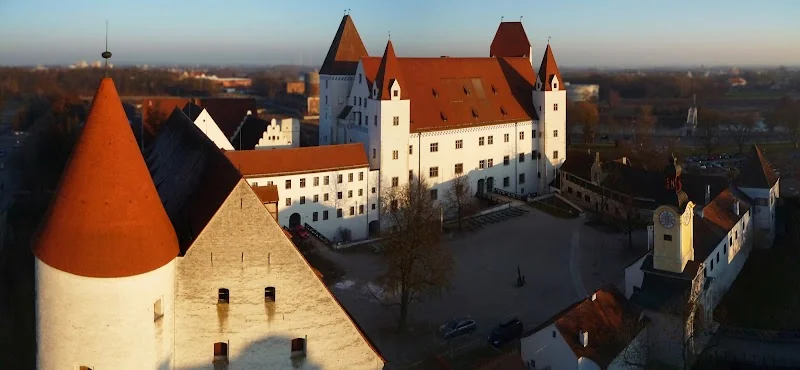
For photography and history enthusiasts, the New Castle offers several particularly impressive perspectives. The 'Tent of the Grand Vizier' is a popular motif with its rich colors and opulent ornamentation; respectfully photographed, it conveys an impression of the courtly splendor and political symbolism of the Ottoman Wars. The tin figure dioramas also present dense scenes where composition and narrative condense – ideal for explaining the logic of historical battles or reflecting on the visit at home. Those who love architecture should also take time for the courtyard and tower sections: Designed as a city fortress, the New Castle combines defensiveness and representation. The building history dates back to the 1430s when Duke Ludwig VII initiated the project; the palace was completed in the 1470s/80s according to modern concepts. Today, the complex also conveys an architectural historical experience independent of the exhibits. ([de.wikipedia.org](https://de.wikipedia.org/wiki/Neues_Schloss_%28Ingolstadt%29?utm_source=openai))
For those who want to combine their visit with events, keep an eye on municipal cultural formats such as the 'Night of the Museums'. In this context, the Army Museum in the New Castle regularly offers short tours on central themes of its exhibitions – from 'Forms of War 1600–1815' to the 'Tent of the Grand Vizier' to the new presentation 'War and Peace – Military in Bavaria 1870–1914'. Such evenings combine the desire to discover with low-threshold access and are consciously aimed at a broad audience. The location at Paradeplatz and the good accessibility make the New Castle an ideal venue for this. ([ndm.ingolstadt.de](https://ndm.ingolstadt.de/veranstaltungsorte/bayerisches-armeemuseum/?utm_source=openai))
History and Architecture of the New Castle: Context for the Collections
The New Castle is not just a shell but part of the narrative. Planned as a residence for the Bavarian dukes of Ingolstadt, it was built in the 15th century as part of an ambitious modernization project: After years in France, Duke Ludwig VII initiated construction in the southeast of the city around 1430, integrating existing structures – such as the Feldkirchner Gate – into the new 'city fortress'. The complex is located at the edge of the city wall; a deep, wide moat secured it from the inside and outside. In the 1470s, the construction of the palace began, which was largely completed around 1489. Later renovations increased the towers and accentuated the representative character. This biography makes the site a lesson in late medieval power architecture – an excellent stage for a museum that relates power, warfare, and society. ([de.wikipedia.org](https://de.wikipedia.org/wiki/Neues_Schloss_%28Ingolstadt%29?utm_source=openai))
In the following centuries, the New Castle survived with adaptations and repairs while the city of Ingolstadt was expanded into Bavaria's strongest state fortress. Bastions like the Eselsbastei reinforced the defense, although nothing remains of that today. The portal received its first contours around 1580; the bell tower was only added in the 18th century. This substance, which has grown over centuries, explains why a tour through the museum is also a journey through Bavarian building and urban history. When entering the exhibition rooms, one does not just enter a neutral white cube environment, but a building with its own significance. The curatorial teams consciously work out this dialogue: Objects, thematic rooms, and architecture speak to each other – from the battlements to the view into the courtyard. ([de.wikipedia.org](https://de.wikipedia.org/wiki/Neues_Schloss_%28Ingolstadt%29?utm_source=openai))
Against this background, it becomes clear why the Army Museum in the New Castle is regularly mentioned as one of the most prominent places for military and cultural history in Bavaria. The exhibitions rely on historically critical contextualization rather than unreflected glorification. Uniforms, weapons, flags, and trophies are embedded in narratives of violence, suffering, everyday life, technology, and politics – a tone that also engages visitors without prior knowledge. Those visiting with teenagers can discuss through the displays how order, state, and society are interconnected – and where the fractures lie. This attitude runs through all locations, from the New Castle to the Police Museum, making the museum network a relevant place for civic education. ([maps.adac.de](https://maps.adac.de/poi/bayerisches-armeemuseum-ingolstadt?utm_source=openai))
Sources:
- museum.de – Bavarian Army Museum
- museum.com – Bavarian Army Museum
- Night of the Museums Ingolstadt – Bavarian Army Museum (New Castle)
- Wikipedia – New Castle (Ingolstadt)
- Wikipedia – Bavarian Police Museum
- ADAC Maps – Bavarian Army Museum Ingolstadt
- City of Ingolstadt – Parking Information
- IFG Ingolstadt – Reopening of the Underground Garage Castle
- Your Ingolstadt – New Castle
- Bavaria in the Web – Bavarian Army Museum Ingolstadt
Show moreShow less
Bavarian Army Museum - New Castle | Tickets & Prices
The Bavarian Army Museum in the New Castle at Paradeplatz 4 in Ingolstadt is one of the major military history museums in Europe. In the late medieval residence of the Wittelsbach family, permanent exhibitions from the 17th to the early 20th century can be experienced, featuring rare originals, staged displays, and media-supported stations. Notable highlights include the magnificent 'Tent of the Grand Vizier', detailed tin figure dioramas of major battles, and the exhibition area 'War and Peace – Military in Bavaria 1870–1914', which will open in 2025. Additionally, the Museum of the First World War in Reduit Tilly and the Bavarian Police Museum in the Triva Tower are part of the network. For those arriving by car, the most convenient parking is in the underground garage of the castle directly at Paradeplatz; additional spaces are available, including in Reduit Tilly. Opening hours, admission, and combination tickets are designed to be visitor-friendly, with particularly low admission on Sundays. ([ndm.ingolstadt.de](https://ndm.ingolstadt.de/veranstaltungsorte/bayerisches-armeemuseum/?utm_source=openai))
Overview of Tickets, Prices, and Opening Hours
For good planning of the visit, the times and rates are clearly regulated: The New Castle is open from Tuesday to Friday from 9:00 AM to 5:30 PM, and on weekends and public holidays from 10:00 AM to 5:30 PM. Monday is a rest day; however, if a public holiday falls on a Monday, the museum will also open. This regulation makes visits around public holidays particularly flexible – especially for city or family outings. The ticketing follows a streamlined, easily understandable pricing system: Admission to the New Castle is 5 euros for adults, reduced 4 euros. Children and teenagers up to and including 17 years can visit the exhibition free of charge. A special tip is Sunday: Admission then costs only 1 euro, making it attractive for spontaneous visits. For those who want to experience the complete offer, there is a worthwhile combination ticket that allows access to the New Castle as well as the Museum of the First World War in Reduit Tilly and the Bavarian Police Museum in the Triva Tower; it costs 10 euros, reduced 8 euros. Common cashless payment methods (EC and credit card) are accepted, making entry uncomplicated. Those who wish to repeat their visit can find annual passes and other formats through the network information – useful if one wants to spread exhibitions or programs over several dates. This combination of fair pricing, family-friendliness, and broad access to Bavarian military and contemporary history is successful. ([museum.de](https://www.museum.de/en/museen/bayerisches-armeemuseum?utm_source=openai))
For visitors who plan to extend their stay beyond the museum visit, it is advisable to combine the opening hours with exploring the city center. The location at Paradeplatz allows for short distances to other cultural sites, dining, and shopping. Those who take advantage of Sunday as a cheap museum day will find numerous cafés and restaurants within walking distance afterward. It is also worth checking the opening hours of the Police Museum and Reduit Tilly if one wants to make the most of the combination ticket; these locations are accessible on foot or via the bridge. This combination of clear times, favorable Sunday conditions, and combination offers makes the Army Museum in the New Castle a reliably planned destination – whether alone, with family, or as a group. ([museum.de](https://www.museum.de/en/museen/bayerisches-armeemuseum?utm_source=openai))
Directions and Parking at Paradeplatz: How to Reach the New Castle
The New Castle is centrally located in the Ingolstadt old town at Paradeplatz 4 and is easily accessible by both public transport and car. Those coming by bus from the main train station go to Rathausplatz or Paradeplatz; from there, it is just a few steps to the castle entrance. For visiting the other locations: Reduit Tilly and the Triva Tower are located on the southern bank of the Danube in Klenzepark and can be most easily reached from the Brückenkopf bus stop. These tips simplify route planning when using the combination ticket and wanting to connect both sides of the Danube. ([familienausflug.info](https://familienausflug.info/ausflugsziel/bayerisches-armeemuseum?utm_source=openai))
For those traveling by car, the underground garage of the castle is the closest parking option; it is located directly at Paradeplatz and just a few minutes from the museum entrance. The city of Ingolstadt provides real-time parking information showing the currently available spaces in all downtown garages – including 'Schloss', 'Münster', 'Reduit Tilly', and the Congress garage. This is particularly useful on weekends or during events when demand increases. Historically, the underground garage of the castle was reopened in 2020 after extensive renovation; since then, numerous parking spaces have been available, and access is depending on traffic conditions via the Esplanade. Alternatively, one can park in the underground garage of Reduit Tilly – useful if one wants to explore the Museum of the First World War or Klenzepark afterward. Those traveling electrically will find designated charging points in municipal garages; details and availability are communicated through the city portals. Additionally, digital parking portals are available for convenient navigation, where the occupancy of parking facilities can be accessed. ([ingolstadt.de](https://www.ingolstadt.de/Wirtschaft/parkIN/Derzeit-freie-Parkpl%C3%A4tze?utm_source=openai))
The central location of the New Castle saves travel time: Those who want to combine several cultural points in one day – such as the Museum of Concrete Art, the Medical History Museum, or a detour to the Audi museum mobile – benefit from short distances within the city. Visitors arriving from Munich can reach Ingolstadt by train in about 40–60 minutes (depending on the connection) and easily switch to city buses to Paradeplatz at the main train station. This makes museum visits feasible even on day trips. The clarity on site, clear signage, and Paradeplatz as a distinctive landmark make navigation intuitive. ([blutana.de](https://www.blutana.de/sehenswuerdigkeiten/Bayerisches%2BArmeemuseum-Ingolstadt-6611.html?utm_source=openai))
Exhibitions in the New Castle: Forms of War, Tent of the Grand Vizier, and 'War and Peace 1870–1914'
Content-wise, the Bavarian Army Museum in the New Castle spans from the early 17th to the early 20th century. A central permanent exhibition area is 'Forms of War 1600–1815' – an overview of battle and siege warfare of the early modern period with a focus on the experiences of soldiers and civilians. Visitors gain insight into tactics, equipment, and daily life in field camps, supported by objects and displays that come from archival contexts. This is complemented by thematic focuses that make political developments and conflict lines of that time visible. ([ndm.ingolstadt.de](https://ndm.ingolstadt.de/veranstaltungsorte/bayerisches-armeemuseum/?utm_source=openai))
Among the most iconic exhibits is the 'Tent of the Grand Vizier'. This richly decorated ceremonial tent from the context of the Ottoman Wars is presented in its own room in Ingolstadt and is one of the most photographed objects in the museum. The display vividly illustrates the symbolic and material significance of such trophies in early modern Europe – not only as trophies but also as testimonies of cultural contact, representation, and technical craftsmanship. Through the combination of original textiles, reconstructed spatial atmospheres, and explanatory texts, the historical context can be understood without overshadowing the aesthetic impression. ([ndm.ingolstadt.de](https://ndm.ingolstadt.de/veranstaltungsorte/bayerisches-armeemuseum/?utm_source=openai))
Since June 2025, the newly opened presentation 'War and Peace – Military in Bavaria 1870–1914' expands the permanent exhibition. It highlights the period from the Franco-Prussian War 1870/71 to the eve of the First World War and shows the dynamics of these decades between militarization, technical innovation, and social change through uniforms, flags, equipment, large-scale displays, and media stations. Particularly impressive are life-sized scenes and digitally supported access points that lead visitors into the ambivalence of the era: Between optimism for progress, nation-building, and increasing arms logic, a multifaceted picture of the European security order emerges – with Bavaria as the common thread. ([ndm.ingolstadt.de](https://ndm.ingolstadt.de/veranstaltungsorte/bayerisches-armeemuseum/?utm_source=openai))
Another specialty of the museum is the large dioramas with tin figures that depict famous battles in meticulous arrangement. Such installations, which can feature well over ten thousand figures, vividly illustrate the interplay of formation, terrain, command, and chance that shaped the outcomes of early modern and Napoleonic battles. In addition to their visual appeal, the dioramas have educational strength: They condense complex battle sequences, troop formations, and tactical maneuvers into a model that visitors can intuitively grasp – an advantage over pure text panels. Supplementary descriptions critically contextualize the visual worlds. ([bayern-im-web.de](https://www.bayern-im-web.de/bayerisches-armeemuseum-ingolstadt/?utm_source=openai))
Connected: Museum of the First World War (Reduit Tilly) and Bavarian Police Museum (Triva Tower)
The network of the Bavarian Army Museum includes two additional locations that expand and deepen the thematic spectrum. The Museum of the First World War is housed in Reduit Tilly, a historic fortress on the southern bank of the Danube. It offers one of the most comprehensive exhibitions in Germany on the history of the First World War, showcasing the events from 1914–1918 in their military, political, and social dimensions. The connection between the New Castle and Reduit Tilly makes the Ingolstadt museum network unique: While the New Castle covers the epochs up to 1914, Reduit focuses on the global conflict and its consequences. For visitors with a combination ticket, the transition between both buildings is straightforward – the paths are short, and the themes interconnect. ([bayern-im-web.de](https://www.bayern-im-web.de/bayerisches-armeemuseum-ingolstadt/?utm_source=openai))
The Bavarian Police Museum has been established as a department in the network since 2007 and has been located in the Triva Tower in Klenzepark since December 19, 2011. It documents the development of the Bavarian police since the revolution of 1918/19 and presents exhibits ranging from uniforms to vehicles to communication and operational technology. In its thematic orientation, it complements the military historical perspective of the Army Museum by illuminating domestic order, security, and state monopolies of violence in the 20th century. The Triva Tower, as a historical fortress tower, creates a special atmosphere that harmoniously combines form and content. Those who visit both houses gain a broad panorama of Bavarian security history: from the standing army and its traditions to modern police work in democracy and dictatorship. ([de.wikipedia.org](https://de.wikipedia.org/wiki/Bayerisches_Polizeimuseum?utm_source=openai))
Practical: The established parking facilities in Ingolstadt also apply to Reduit Tilly and the Triva Tower. Those who cross the Danube after visiting the New Castle will find additional parking spaces around Klenzepark and Brückenkopf, including the underground garage of Reduit Tilly. For public transport users, the stops on both sides of the Danube provide short access to the entrances. This makes a day program that connects all three locations suitable – a plus for culturally interested individual travelers, school classes, and families. ([ingolstadt.de](https://www.ingolstadt.de/Wirtschaft/parkIN/Derzeit-freie-Parkpl%C3%A4tze?utm_source=openai))
Services, Facilities, and Visitor Tips: Accessibility, Lockers, Café, and Photo Spots
A pleasant museum visit thrives not only on the content but also on reliable services. In the New Castle, lockers are available – practical for backpacks or jackets, especially in changeable weather. A museum shop offers publications, catalogs, and thematic souvenirs that deepen the experience. Additionally, there is a café in the New Castle that invites visitors to take a break between exhibition areas. Accessibility is a declared concern: Access points and floors are step-free, and there are accessible restrooms. This infrastructure allows people with mobility impairments, families with strollers, and seniors to enjoy a stress-free stay. ([museum.de](https://www.museum.de/museen/bayerisches-armeemuseum?utm_source=openai))
For photography and history enthusiasts, the New Castle offers several particularly impressive perspectives. The 'Tent of the Grand Vizier' is a popular motif with its rich colors and opulent ornamentation; respectfully photographed, it conveys an impression of the courtly splendor and political symbolism of the Ottoman Wars. The tin figure dioramas also present dense scenes where composition and narrative condense – ideal for explaining the logic of historical battles or reflecting on the visit at home. Those who love architecture should also take time for the courtyard and tower sections: Designed as a city fortress, the New Castle combines defensiveness and representation. The building history dates back to the 1430s when Duke Ludwig VII initiated the project; the palace was completed in the 1470s/80s according to modern concepts. Today, the complex also conveys an architectural historical experience independent of the exhibits. ([de.wikipedia.org](https://de.wikipedia.org/wiki/Neues_Schloss_%28Ingolstadt%29?utm_source=openai))
For those who want to combine their visit with events, keep an eye on municipal cultural formats such as the 'Night of the Museums'. In this context, the Army Museum in the New Castle regularly offers short tours on central themes of its exhibitions – from 'Forms of War 1600–1815' to the 'Tent of the Grand Vizier' to the new presentation 'War and Peace – Military in Bavaria 1870–1914'. Such evenings combine the desire to discover with low-threshold access and are consciously aimed at a broad audience. The location at Paradeplatz and the good accessibility make the New Castle an ideal venue for this. ([ndm.ingolstadt.de](https://ndm.ingolstadt.de/veranstaltungsorte/bayerisches-armeemuseum/?utm_source=openai))
History and Architecture of the New Castle: Context for the Collections
The New Castle is not just a shell but part of the narrative. Planned as a residence for the Bavarian dukes of Ingolstadt, it was built in the 15th century as part of an ambitious modernization project: After years in France, Duke Ludwig VII initiated construction in the southeast of the city around 1430, integrating existing structures – such as the Feldkirchner Gate – into the new 'city fortress'. The complex is located at the edge of the city wall; a deep, wide moat secured it from the inside and outside. In the 1470s, the construction of the palace began, which was largely completed around 1489. Later renovations increased the towers and accentuated the representative character. This biography makes the site a lesson in late medieval power architecture – an excellent stage for a museum that relates power, warfare, and society. ([de.wikipedia.org](https://de.wikipedia.org/wiki/Neues_Schloss_%28Ingolstadt%29?utm_source=openai))
In the following centuries, the New Castle survived with adaptations and repairs while the city of Ingolstadt was expanded into Bavaria's strongest state fortress. Bastions like the Eselsbastei reinforced the defense, although nothing remains of that today. The portal received its first contours around 1580; the bell tower was only added in the 18th century. This substance, which has grown over centuries, explains why a tour through the museum is also a journey through Bavarian building and urban history. When entering the exhibition rooms, one does not just enter a neutral white cube environment, but a building with its own significance. The curatorial teams consciously work out this dialogue: Objects, thematic rooms, and architecture speak to each other – from the battlements to the view into the courtyard. ([de.wikipedia.org](https://de.wikipedia.org/wiki/Neues_Schloss_%28Ingolstadt%29?utm_source=openai))
Against this background, it becomes clear why the Army Museum in the New Castle is regularly mentioned as one of the most prominent places for military and cultural history in Bavaria. The exhibitions rely on historically critical contextualization rather than unreflected glorification. Uniforms, weapons, flags, and trophies are embedded in narratives of violence, suffering, everyday life, technology, and politics – a tone that also engages visitors without prior knowledge. Those visiting with teenagers can discuss through the displays how order, state, and society are interconnected – and where the fractures lie. This attitude runs through all locations, from the New Castle to the Police Museum, making the museum network a relevant place for civic education. ([maps.adac.de](https://maps.adac.de/poi/bayerisches-armeemuseum-ingolstadt?utm_source=openai))
Sources:
- museum.de – Bavarian Army Museum
- museum.com – Bavarian Army Museum
- Night of the Museums Ingolstadt – Bavarian Army Museum (New Castle)
- Wikipedia – New Castle (Ingolstadt)
- Wikipedia – Bavarian Police Museum
- ADAC Maps – Bavarian Army Museum Ingolstadt
- City of Ingolstadt – Parking Information
- IFG Ingolstadt – Reopening of the Underground Garage Castle
- Your Ingolstadt – New Castle
- Bavaria in the Web – Bavarian Army Museum Ingolstadt
Bavarian Army Museum - New Castle | Tickets & Prices
The Bavarian Army Museum in the New Castle at Paradeplatz 4 in Ingolstadt is one of the major military history museums in Europe. In the late medieval residence of the Wittelsbach family, permanent exhibitions from the 17th to the early 20th century can be experienced, featuring rare originals, staged displays, and media-supported stations. Notable highlights include the magnificent 'Tent of the Grand Vizier', detailed tin figure dioramas of major battles, and the exhibition area 'War and Peace – Military in Bavaria 1870–1914', which will open in 2025. Additionally, the Museum of the First World War in Reduit Tilly and the Bavarian Police Museum in the Triva Tower are part of the network. For those arriving by car, the most convenient parking is in the underground garage of the castle directly at Paradeplatz; additional spaces are available, including in Reduit Tilly. Opening hours, admission, and combination tickets are designed to be visitor-friendly, with particularly low admission on Sundays. ([ndm.ingolstadt.de](https://ndm.ingolstadt.de/veranstaltungsorte/bayerisches-armeemuseum/?utm_source=openai))
Overview of Tickets, Prices, and Opening Hours
For good planning of the visit, the times and rates are clearly regulated: The New Castle is open from Tuesday to Friday from 9:00 AM to 5:30 PM, and on weekends and public holidays from 10:00 AM to 5:30 PM. Monday is a rest day; however, if a public holiday falls on a Monday, the museum will also open. This regulation makes visits around public holidays particularly flexible – especially for city or family outings. The ticketing follows a streamlined, easily understandable pricing system: Admission to the New Castle is 5 euros for adults, reduced 4 euros. Children and teenagers up to and including 17 years can visit the exhibition free of charge. A special tip is Sunday: Admission then costs only 1 euro, making it attractive for spontaneous visits. For those who want to experience the complete offer, there is a worthwhile combination ticket that allows access to the New Castle as well as the Museum of the First World War in Reduit Tilly and the Bavarian Police Museum in the Triva Tower; it costs 10 euros, reduced 8 euros. Common cashless payment methods (EC and credit card) are accepted, making entry uncomplicated. Those who wish to repeat their visit can find annual passes and other formats through the network information – useful if one wants to spread exhibitions or programs over several dates. This combination of fair pricing, family-friendliness, and broad access to Bavarian military and contemporary history is successful. ([museum.de](https://www.museum.de/en/museen/bayerisches-armeemuseum?utm_source=openai))
For visitors who plan to extend their stay beyond the museum visit, it is advisable to combine the opening hours with exploring the city center. The location at Paradeplatz allows for short distances to other cultural sites, dining, and shopping. Those who take advantage of Sunday as a cheap museum day will find numerous cafés and restaurants within walking distance afterward. It is also worth checking the opening hours of the Police Museum and Reduit Tilly if one wants to make the most of the combination ticket; these locations are accessible on foot or via the bridge. This combination of clear times, favorable Sunday conditions, and combination offers makes the Army Museum in the New Castle a reliably planned destination – whether alone, with family, or as a group. ([museum.de](https://www.museum.de/en/museen/bayerisches-armeemuseum?utm_source=openai))
Directions and Parking at Paradeplatz: How to Reach the New Castle
The New Castle is centrally located in the Ingolstadt old town at Paradeplatz 4 and is easily accessible by both public transport and car. Those coming by bus from the main train station go to Rathausplatz or Paradeplatz; from there, it is just a few steps to the castle entrance. For visiting the other locations: Reduit Tilly and the Triva Tower are located on the southern bank of the Danube in Klenzepark and can be most easily reached from the Brückenkopf bus stop. These tips simplify route planning when using the combination ticket and wanting to connect both sides of the Danube. ([familienausflug.info](https://familienausflug.info/ausflugsziel/bayerisches-armeemuseum?utm_source=openai))
For those traveling by car, the underground garage of the castle is the closest parking option; it is located directly at Paradeplatz and just a few minutes from the museum entrance. The city of Ingolstadt provides real-time parking information showing the currently available spaces in all downtown garages – including 'Schloss', 'Münster', 'Reduit Tilly', and the Congress garage. This is particularly useful on weekends or during events when demand increases. Historically, the underground garage of the castle was reopened in 2020 after extensive renovation; since then, numerous parking spaces have been available, and access is depending on traffic conditions via the Esplanade. Alternatively, one can park in the underground garage of Reduit Tilly – useful if one wants to explore the Museum of the First World War or Klenzepark afterward. Those traveling electrically will find designated charging points in municipal garages; details and availability are communicated through the city portals. Additionally, digital parking portals are available for convenient navigation, where the occupancy of parking facilities can be accessed. ([ingolstadt.de](https://www.ingolstadt.de/Wirtschaft/parkIN/Derzeit-freie-Parkpl%C3%A4tze?utm_source=openai))
The central location of the New Castle saves travel time: Those who want to combine several cultural points in one day – such as the Museum of Concrete Art, the Medical History Museum, or a detour to the Audi museum mobile – benefit from short distances within the city. Visitors arriving from Munich can reach Ingolstadt by train in about 40–60 minutes (depending on the connection) and easily switch to city buses to Paradeplatz at the main train station. This makes museum visits feasible even on day trips. The clarity on site, clear signage, and Paradeplatz as a distinctive landmark make navigation intuitive. ([blutana.de](https://www.blutana.de/sehenswuerdigkeiten/Bayerisches%2BArmeemuseum-Ingolstadt-6611.html?utm_source=openai))
Exhibitions in the New Castle: Forms of War, Tent of the Grand Vizier, and 'War and Peace 1870–1914'
Content-wise, the Bavarian Army Museum in the New Castle spans from the early 17th to the early 20th century. A central permanent exhibition area is 'Forms of War 1600–1815' – an overview of battle and siege warfare of the early modern period with a focus on the experiences of soldiers and civilians. Visitors gain insight into tactics, equipment, and daily life in field camps, supported by objects and displays that come from archival contexts. This is complemented by thematic focuses that make political developments and conflict lines of that time visible. ([ndm.ingolstadt.de](https://ndm.ingolstadt.de/veranstaltungsorte/bayerisches-armeemuseum/?utm_source=openai))
Among the most iconic exhibits is the 'Tent of the Grand Vizier'. This richly decorated ceremonial tent from the context of the Ottoman Wars is presented in its own room in Ingolstadt and is one of the most photographed objects in the museum. The display vividly illustrates the symbolic and material significance of such trophies in early modern Europe – not only as trophies but also as testimonies of cultural contact, representation, and technical craftsmanship. Through the combination of original textiles, reconstructed spatial atmospheres, and explanatory texts, the historical context can be understood without overshadowing the aesthetic impression. ([ndm.ingolstadt.de](https://ndm.ingolstadt.de/veranstaltungsorte/bayerisches-armeemuseum/?utm_source=openai))
Since June 2025, the newly opened presentation 'War and Peace – Military in Bavaria 1870–1914' expands the permanent exhibition. It highlights the period from the Franco-Prussian War 1870/71 to the eve of the First World War and shows the dynamics of these decades between militarization, technical innovation, and social change through uniforms, flags, equipment, large-scale displays, and media stations. Particularly impressive are life-sized scenes and digitally supported access points that lead visitors into the ambivalence of the era: Between optimism for progress, nation-building, and increasing arms logic, a multifaceted picture of the European security order emerges – with Bavaria as the common thread. ([ndm.ingolstadt.de](https://ndm.ingolstadt.de/veranstaltungsorte/bayerisches-armeemuseum/?utm_source=openai))
Another specialty of the museum is the large dioramas with tin figures that depict famous battles in meticulous arrangement. Such installations, which can feature well over ten thousand figures, vividly illustrate the interplay of formation, terrain, command, and chance that shaped the outcomes of early modern and Napoleonic battles. In addition to their visual appeal, the dioramas have educational strength: They condense complex battle sequences, troop formations, and tactical maneuvers into a model that visitors can intuitively grasp – an advantage over pure text panels. Supplementary descriptions critically contextualize the visual worlds. ([bayern-im-web.de](https://www.bayern-im-web.de/bayerisches-armeemuseum-ingolstadt/?utm_source=openai))
Connected: Museum of the First World War (Reduit Tilly) and Bavarian Police Museum (Triva Tower)
The network of the Bavarian Army Museum includes two additional locations that expand and deepen the thematic spectrum. The Museum of the First World War is housed in Reduit Tilly, a historic fortress on the southern bank of the Danube. It offers one of the most comprehensive exhibitions in Germany on the history of the First World War, showcasing the events from 1914–1918 in their military, political, and social dimensions. The connection between the New Castle and Reduit Tilly makes the Ingolstadt museum network unique: While the New Castle covers the epochs up to 1914, Reduit focuses on the global conflict and its consequences. For visitors with a combination ticket, the transition between both buildings is straightforward – the paths are short, and the themes interconnect. ([bayern-im-web.de](https://www.bayern-im-web.de/bayerisches-armeemuseum-ingolstadt/?utm_source=openai))
The Bavarian Police Museum has been established as a department in the network since 2007 and has been located in the Triva Tower in Klenzepark since December 19, 2011. It documents the development of the Bavarian police since the revolution of 1918/19 and presents exhibits ranging from uniforms to vehicles to communication and operational technology. In its thematic orientation, it complements the military historical perspective of the Army Museum by illuminating domestic order, security, and state monopolies of violence in the 20th century. The Triva Tower, as a historical fortress tower, creates a special atmosphere that harmoniously combines form and content. Those who visit both houses gain a broad panorama of Bavarian security history: from the standing army and its traditions to modern police work in democracy and dictatorship. ([de.wikipedia.org](https://de.wikipedia.org/wiki/Bayerisches_Polizeimuseum?utm_source=openai))
Practical: The established parking facilities in Ingolstadt also apply to Reduit Tilly and the Triva Tower. Those who cross the Danube after visiting the New Castle will find additional parking spaces around Klenzepark and Brückenkopf, including the underground garage of Reduit Tilly. For public transport users, the stops on both sides of the Danube provide short access to the entrances. This makes a day program that connects all three locations suitable – a plus for culturally interested individual travelers, school classes, and families. ([ingolstadt.de](https://www.ingolstadt.de/Wirtschaft/parkIN/Derzeit-freie-Parkpl%C3%A4tze?utm_source=openai))
Services, Facilities, and Visitor Tips: Accessibility, Lockers, Café, and Photo Spots
A pleasant museum visit thrives not only on the content but also on reliable services. In the New Castle, lockers are available – practical for backpacks or jackets, especially in changeable weather. A museum shop offers publications, catalogs, and thematic souvenirs that deepen the experience. Additionally, there is a café in the New Castle that invites visitors to take a break between exhibition areas. Accessibility is a declared concern: Access points and floors are step-free, and there are accessible restrooms. This infrastructure allows people with mobility impairments, families with strollers, and seniors to enjoy a stress-free stay. ([museum.de](https://www.museum.de/museen/bayerisches-armeemuseum?utm_source=openai))
For photography and history enthusiasts, the New Castle offers several particularly impressive perspectives. The 'Tent of the Grand Vizier' is a popular motif with its rich colors and opulent ornamentation; respectfully photographed, it conveys an impression of the courtly splendor and political symbolism of the Ottoman Wars. The tin figure dioramas also present dense scenes where composition and narrative condense – ideal for explaining the logic of historical battles or reflecting on the visit at home. Those who love architecture should also take time for the courtyard and tower sections: Designed as a city fortress, the New Castle combines defensiveness and representation. The building history dates back to the 1430s when Duke Ludwig VII initiated the project; the palace was completed in the 1470s/80s according to modern concepts. Today, the complex also conveys an architectural historical experience independent of the exhibits. ([de.wikipedia.org](https://de.wikipedia.org/wiki/Neues_Schloss_%28Ingolstadt%29?utm_source=openai))
For those who want to combine their visit with events, keep an eye on municipal cultural formats such as the 'Night of the Museums'. In this context, the Army Museum in the New Castle regularly offers short tours on central themes of its exhibitions – from 'Forms of War 1600–1815' to the 'Tent of the Grand Vizier' to the new presentation 'War and Peace – Military in Bavaria 1870–1914'. Such evenings combine the desire to discover with low-threshold access and are consciously aimed at a broad audience. The location at Paradeplatz and the good accessibility make the New Castle an ideal venue for this. ([ndm.ingolstadt.de](https://ndm.ingolstadt.de/veranstaltungsorte/bayerisches-armeemuseum/?utm_source=openai))
History and Architecture of the New Castle: Context for the Collections
The New Castle is not just a shell but part of the narrative. Planned as a residence for the Bavarian dukes of Ingolstadt, it was built in the 15th century as part of an ambitious modernization project: After years in France, Duke Ludwig VII initiated construction in the southeast of the city around 1430, integrating existing structures – such as the Feldkirchner Gate – into the new 'city fortress'. The complex is located at the edge of the city wall; a deep, wide moat secured it from the inside and outside. In the 1470s, the construction of the palace began, which was largely completed around 1489. Later renovations increased the towers and accentuated the representative character. This biography makes the site a lesson in late medieval power architecture – an excellent stage for a museum that relates power, warfare, and society. ([de.wikipedia.org](https://de.wikipedia.org/wiki/Neues_Schloss_%28Ingolstadt%29?utm_source=openai))
In the following centuries, the New Castle survived with adaptations and repairs while the city of Ingolstadt was expanded into Bavaria's strongest state fortress. Bastions like the Eselsbastei reinforced the defense, although nothing remains of that today. The portal received its first contours around 1580; the bell tower was only added in the 18th century. This substance, which has grown over centuries, explains why a tour through the museum is also a journey through Bavarian building and urban history. When entering the exhibition rooms, one does not just enter a neutral white cube environment, but a building with its own significance. The curatorial teams consciously work out this dialogue: Objects, thematic rooms, and architecture speak to each other – from the battlements to the view into the courtyard. ([de.wikipedia.org](https://de.wikipedia.org/wiki/Neues_Schloss_%28Ingolstadt%29?utm_source=openai))
Against this background, it becomes clear why the Army Museum in the New Castle is regularly mentioned as one of the most prominent places for military and cultural history in Bavaria. The exhibitions rely on historically critical contextualization rather than unreflected glorification. Uniforms, weapons, flags, and trophies are embedded in narratives of violence, suffering, everyday life, technology, and politics – a tone that also engages visitors without prior knowledge. Those visiting with teenagers can discuss through the displays how order, state, and society are interconnected – and where the fractures lie. This attitude runs through all locations, from the New Castle to the Police Museum, making the museum network a relevant place for civic education. ([maps.adac.de](https://maps.adac.de/poi/bayerisches-armeemuseum-ingolstadt?utm_source=openai))
Sources:
- museum.de – Bavarian Army Museum
- museum.com – Bavarian Army Museum
- Night of the Museums Ingolstadt – Bavarian Army Museum (New Castle)
- Wikipedia – New Castle (Ingolstadt)
- Wikipedia – Bavarian Police Museum
- ADAC Maps – Bavarian Army Museum Ingolstadt
- City of Ingolstadt – Parking Information
- IFG Ingolstadt – Reopening of the Underground Garage Castle
- Your Ingolstadt – New Castle
- Bavaria in the Web – Bavarian Army Museum Ingolstadt
Upcoming Events
No events found
Frequently Asked Questions
Reviews
Christian Weiske
23. July 2025
Very nice exhibition with very well-written explanations and historical backgrounds. I think the price of 5 euros is also totally fine. We spent 3 hours there admiring the objects and studying the texts. The tin exhibition is also very worth seeing, and I wouldn't have known that it was mentioned in the advertising. The way the battles are depicted with such attention to detail and in such enormous size is impressive. Many thanks to the people who donated this to the public. Wishing everyone a lot of fun on site.
Bernd Hepp
13. September 2025
The museum is great. The four hours flew by. Very interesting and a lot of information. Highly recommended! A combo ticket for three museums – the Police Museum, the Museum of the First World War, and the Bavarian Army Museum – costs 10 €.
Stefan
30. August 2025
Great and interesting museum. There are several floors where the exhibitions are located. There are lockers in the basement where you can secure your personal belongings. A lot of security in the museum itself. There's also a knight costume to try on. It was worth the experience. Otherwise, the entrance isn't expensive. Good information boards. You learn quite a bit about the topic here. Bring some time, as there is a lot to see. Even before the entrance to the museum, there are artifacts to discover. Best regards, Stefan
Stefan Weisshappel
5. November 2025
On 5.11.2025, I found the refresh of the exhibition very successful with a compact presentation of Bavarian military history up to 1914 (my tour lasted about 2 hours). Very friendly staff. 5 euros admission is more than fair.
Andreas Jansen-Beckmann
11. August 2025
Nice museum. Quite large and worth seeing. However, there were quite a few guards on each floor. You always felt watched. The ground floor was positive; the older lady really put in effort. And the top two floors. Very impressive what was set up there craft-wise.