
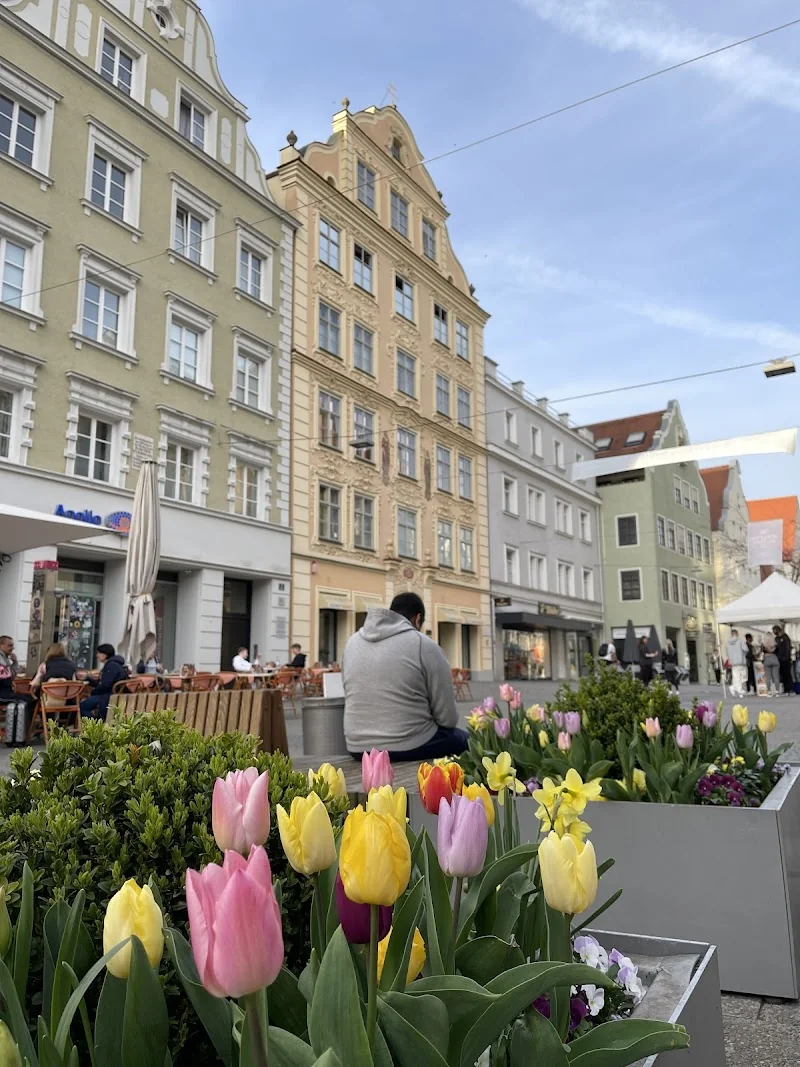
Altstadt, Ingolstadt
Altstadt, 85 Ingolstadt, Germany
Old Town Ingolstadt | Parking & Attractions
Old Town Ingolstadt is the historical core of the Danube city and at the same time a vibrant place for city strolls, culture, shopping, and short distances. Those who visit the Old Town experience a cityscape that has developed over centuries and is still characterized by medieval structures, significant architectural monuments, and a clear enhancement of public space. The city of Ingolstadt describes the area itself as the focus of downtown development; the master plan "Experience Old Town" connects location promotion, retail, quality of stay, and monument protection into a common concept. At the same time, the Old Town remains practical for everyday life: parking garages, underground garages, bicycle parking facilities, and the Tourist Information are located in close proximity or directly in the historical center. ([stadtplanungsamt.ingolstadt.de](https://stadtplanungsamt.ingolstadt.de/stadtentwicklung/altstadt/altstadt-erleben-masterplan-fuer-die-ingolstaedter-altstadt))
For visitors, the Old Town is particularly exciting because history and the present cannot be separated here. The historical core is not just a backdrop but a lived urban space with squares, gastronomy, cultural institutions, and a strong pedestrian traffic. The city points out that the historical core has a pedestrian zone of about one kilometer in length in the west-east direction. This makes the Old Town compact, easily walkable, and particularly attractive for all those who want to discover sights on foot. In addition, there is a well-organized visitor guidance system with information pillars, parking regulations, and modernized squares such as the Town Hall Square and the Theater Square. ([ingolstadt.de](https://www.ingolstadt.de/media/custom/465_2954_1.PDF?utm_source=openai))
History and Monuments of Ingolstadt's Old Town
The Old Town of Ingolstadt is one of the areas in Bavaria where the historical layout remains particularly clearly perceivable. According to the city, there are more than 500 individual architectural monuments within the medieval city walls. This high density of protected buildings makes a walk through the Old Town a compact history lesson in the open air. Particularly defining are the New Castle, the Liebfrauenmünster, Maria de Victoria, the High School, and the City Theater. Together, they depict a city that has not only been a place of trade and administration for centuries but also held religious, military, and cultural significance. ([ingolstadt.de](https://www.ingolstadt.de/Rathaus/Planen-Bauen/Stadtplanung/Denkmalschutz-Stadtsanierung-Wohnungsbauf%C3%B6rderung/Denkmalschutz.php?FID=3052.21.1&La=1&ModID=7&NavID=2789.475&object=tx%2C2789.5&utm_source=openai))
Ingolstadt was later expanded into a state fortress, and this fact has shaped the present Old Town to this day. The city emphasizes that the expansion in the 19th century left one of the most impressive fortifications in Germany. For visitors, this is important because in the Old Town not only individual buildings but entire urban spaces can be read as historical layers. One can see in the street layouts, at square edges, and in the urban structure how strongly the development of the city was connected with protection, representation, and religious centers. This makes the Old Town not a detached museum site but a living memorial space with urban function. ([ingolstadt.de](https://www.ingolstadt.de/Rathaus/Planen-Bauen/Stadtplanung/Denkmalschutz-Stadtsanierung-Wohnungsbauf%C3%B6rderung/Denkmalschutz.php?FID=3052.21.1&La=1&ModID=7&NavID=2789.475&object=tx%2C2789.5&utm_source=openai))
Among the particularly noteworthy buildings is the High School. The city history describes the building as a prestigious residence built from 1434, which was later restored and modernized in accordance with monument protection. Such places show that the Old Town of Ingolstadt is not just made up of well-known postcard motifs but of substance that has been used, rebuilt, and protected over centuries. The City Theater also belongs in this context: the city calls it one of the youngest monuments in Bavaria. It is precisely this contrast between medieval and modern monuments that makes the charm of the Old Town. It is not a uniform museum ensemble but a multifaceted urban space where different eras remain visible. ([ingolstadt.de](https://www.ingolstadt.de/stadtmuseum/scheuerer/ing/denkmal1.htm?utm_source=openai))
An additional historical perspective is worthwhile regarding the development of watercourses and paths. The materials from the city museum describe that the Schutter was brought early to the settlement area and played an important role in the Old Town. This makes it clear that the Old Town is not only defined by walls and buildings but also by its former water and traffic structure. Such historical contexts explain why so many squares, alleys, and axes in Ingolstadt still fit together organically today. Therefore, walking through the Old Town means not only experiencing a beautiful city center but also a structure that has grown over centuries from topography, trade, administration, and city identity. ([ingolstadt.de](https://www.ingolstadt.de/stadtmuseum/scheuerer/donau/schutt07.htm?utm_source=openai))
For SEO-relevant search queries like Old Town Ingolstadt attractions, Old Town Ingolstadt monuments, or Cathedral Ingolstadt, it is important: The Old Town offers not only individual highlights but a whole density of significant places. For this reason, the historical core is ideally suited for visitors who want to experience culture and architecture in a short time. The paths are short, orientation has been improved by the urban master plan, and the most important buildings are close together. This creates an urban experience that is historically grounded and practical at the same time. ([stadtplanungsamt.ingolstadt.de](https://stadtplanungsamt.ingolstadt.de/stadtentwicklung/altstadt/altstadt-erleben-masterplan-fuer-die-ingolstaedter-altstadt))
Experience Old Town: Urban Development, Squares, and Quality of Stay
The Ingolstadt Old Town is not only preserved but actively developed. The master plan "Experience Old Town" was created according to the city's information with the aim of downtown development and location promotion. It is based on expert discussions and is backed by timelines, prioritization, and cost and financing frameworks. This is relevant for visitors because it shows that the Old Town does not function randomly but is strategically improved. The six fields of action of the concept range from "Building and Using the Old Town" to "Redesigning and Enhancing the Old Town" to "Strengthening Identity" and "Presenting the Old Town – Brand Old Town." ([stadtplanungsamt.ingolstadt.de](https://stadtplanungsamt.ingolstadt.de/stadtentwicklung/altstadt/altstadt-erleben-masterplan-fuer-die-ingolstaedter-altstadt))
This development is particularly noticeable in the public squares. The city mentions, among other things, the furnishing of the Town Hall Square with five planting islands and surrounding wooden benches, the furnishing of the Theater Square with tree platforms and wooden overlays, as well as new information pillars as a guidance system for tourism and retail. The new parking regulations for the western Theresienstraße are also included. Such measures may sound technical at first glance, but they are crucial for the quality of stay. They ensure that the Old Town becomes more readable, pleasant, and attractive. Especially in a historical center, this is important because visitors not only want to see sights but also like to sit, orient themselves, and linger. ([stadtplanungsamt.ingolstadt.de](https://stadtplanungsamt.ingolstadt.de/stadtentwicklung/altstadt/altstadt-erleben-masterplan-fuer-die-ingolstaedter-altstadt))
In everyday urban life, this means: The Old Town is an area where monument protection and modern use come together. The city speaks of identity, brand Old Town, and strengthening the location for property owners and retail. This is an indication that the Old Town is envisioned as a vibrant center, not just as a protected area. This mixture makes it attractive for city strolls, gastronomy, shopping, and cultural visits. Therefore, anyone searching for Old Town Ingolstadt, city stroll Ingolstadt, or experience Old Town Ingolstadt will find here not just an isolated attraction but an entire downtown area with a clear development strategy. ([stadtplanungsamt.ingolstadt.de](https://stadtplanungsamt.ingolstadt.de/stadtentwicklung/altstadt/altstadt-erleben-masterplan-fuer-die-ingolstaedter-altstadt))
Architectural projects in the vicinity also show how closely the Old Town is linked to urban future planning. In preparing competitions and special projects, the environment of the Old Town, New Castle, and Danube was considered. This clarifies that the Old Town is not understood as a closed block but as part of a larger cultural and urban context. This perspective is important for visitors because it explains why so many paths, squares, and construction projects aim for a better connection between history, public space, and quality of stay. ([stadtplanungsamt.ingolstadt.de](https://stadtplanungsamt.ingolstadt.de/stadtentwicklung/altstadt/wettbewerbe-und-sonderprojekte-in-der-altstadt?utm_source=openai))
The Old Town is thus also a good example of modern downtown maintenance in a historical environment. The public space is not only renovated but purposefully designed to appeal to different visitor groups. For families, day visitors, culture enthusiasts, and shopping visitors, this is an advantage because it allows the Old Town to be used in various ways. And this versatility makes the difference between a purely historical ensemble and a functioning urban center. Ingolstadt shows how Old Town maintenance, trade, culture, and everyday mobility can be thought of together. ([stadtplanungsamt.ingolstadt.de](https://stadtplanungsamt.ingolstadt.de/stadtentwicklung/altstadt/altstadt-erleben-masterplan-fuer-die-ingolstaedter-altstadt))
Parking and Access in the Old Town of Ingolstadt
For many visitors, the first question is quite practical: Where can I park in the Old Town of Ingolstadt? The city provides current parking information and names several parking facilities that provide good access to the historical center. These include, among others, the underground garages Münster, Schloss, Theater-Ost, Theater-West, Reduit Tilly, and the Congress garage. The parking overview is continuously updated because available spaces change depending on the time of day and occupancy. This is particularly important for a visit to the city center because the Old Town is a highly frequented area with high demand on weekends, event days, and during shopping hours. ([www2.ingolstadt.de](https://www2.ingolstadt.de/Rathaus/Verkehr/Parken/Derzeit-freie-Parkpl%C3%A4tze?utm_source=openai))
Parking in Ingolstadt is also well organized. The IFG Ingolstadt operates the parking portal and provides information about the parking facilities, usage, and current availability. For visitors, this means that the Old Town is not only well connected from a historical perspective but also from a traffic perspective. Those who plan their destination in the city center precisely can combine parking and walking well. This is especially sensible because the historical core is very compact as a pedestrian zone, and the actual Old Town is best experienced on foot. The urban structure thus supports short distances from the car to the city center and then a more relaxed exploration without a vehicle. ([parkportal.ingolstadt.de](https://www.parkportal.ingolstadt.de/?utm_source=openai))
Particularly relevant is the location of parking options in relation to the center. The mentioned garages are located so that the most important destinations in the Old Town can be reached quickly. This applies to the Town Hall Square as well as to the central cultural sites and retail. Therefore, those looking to park in Old Town Ingolstadt will find not only a parking space but a coordinated downtown logistics. The city also names Wagnerwirtsgasse 2 as a contact for the IFG parking facilities, which shows that the parking operation is centrally organized. For visitors arriving by car, this is an important comfort factor. ([www2.ingolstadt.de](https://www2.ingolstadt.de/Rathaus/Verkehr/Parken/Derzeit-freie-Parkpl%C3%A4tze?utm_source=openai))
In addition, the Old Town is also well prepared for bicycle traffic. The city publishes information on bicycle parking facilities in the Old Town area and lists 54 facilities with space for around 1,480 bicycles. This is a remarkable number for a historical city center and underscores that the Old Town is not only thought of from a car perspective. Therefore, those who want to travel sustainably can use the bicycle as a real alternative. This makes the Old Town accessible for day visitors, locals, and commuters alike. The combination of parking garages, bicycle parking facilities, and pedestrian-friendly Old Town makes the visit flexible. ([ingolstadt.de](https://www.ingolstadt.de/Rathaus/Verkehr/Radverkehr/Aktuelles-zum-Thema-Radverkehr/?utm_source=openai))
For the SEO topics Old Town Ingolstadt access and Old Town Ingolstadt parking, it is also important that the city actively understands the accessibility of the historical core as a mobility issue. In the Old Town framework plan, the Old Town is described as a center for mobility, and ensuring accessibility is explicitly highlighted there. This is a good indication for visitors: The Old Town is not a complicated special case but a deliberately organized downtown area that can be easily visited by car, bike, or on foot. However, those staying longer should check the current parking information because available spaces change dynamically. ([stadtplanungsamt.ingolstadt.de](https://stadtplanungsamt.ingolstadt.de/fileadmin/Stadtentwicklung/Altstadt/Altstadtrahmenplan.pdf?utm_source=openai))
Town Hall Square, Pedestrian Zone, and Public Spaces
The Town Hall Square is one of the most important places in the Old Town of Ingolstadt. It connects urban representation, quality of stay, and visitor orientation. The city has enhanced the square as part of the Old Town development and has implemented, among other things, planting islands with surrounding benches, additional trees, and improved square organization. For guests, this is particularly pleasant because the Town Hall Square is not just a passageway but a place to arrive and linger. Those who want to orient themselves in the Old Town will also find the Tourist Information at the Town Hall Square in Moritzstraße 19. ([stadtplanungsamt.ingolstadt.de](https://stadtplanungsamt.ingolstadt.de/stadtentwicklung/altstadt/altstadt-erleben-masterplan-fuer-die-ingolstaedter-altstadt))
The pedestrian zone of the Old Town is a central building block of the visitor experience. The city describes the historical core as a pedestrian zone in the west-east direction with about one kilometer in length. This shows how compact the Old Town actually is. Especially for city strolls, shopping, or a short cultural visit, this is a great advantage. One can reach several sights in a short time without constantly crossing traffic areas. For many guests, this is precisely the reason to visit the Old Town: One experiences history, architecture, retail, and gastronomy in a confined space. The planning of the public spaces follows the goal of keeping the urban space readable, safe, and attractive. ([ingolstadt.de](https://www.ingolstadt.de/media/custom/465_2954_1.PDF?utm_source=openai))
The Old Town is also a place where events, gastronomy, and urban infrastructure work closely together. According to city information, there is also a curfew regulation for outdoor gastronomy in the Old Town, which can be adjusted upon request during the summer months. This shows that the Old Town is not only a relevant urban space during the day but also in the evening, where living, staying, and gastronomy are balanced. For visitors, this means a lively city center with atmosphere but also with regulated conditions. It is precisely this mixture that makes the Old Town a credible and practical place to stay. ([ingolstadt.de](https://www.ingolstadt.de/Rathaus/Aktuelles/Aktuelle-Meldungen-Archiv/Sperrzeitverk%C3%BCrzung-f%C3%BCr-die-Au%C3%9Fengastronomie-in-der-Altstadt.php?FID=3052.21159.1&ModID=7&NavID=2789.411&mNavID=2789.3&object=tx%2C1641.1.1&sNavID=2789.411&utm_source=openai))
The connection with cultural and administrative functions is also strong. The Old Town Hall is located at Rathausplatz 2, making the square not only historically but also administratively a central point. In the Old Town, there are also stops and pathways that connect the public space with the rest of the city area. Therefore, anyone driving to Old Town Ingolstadt or searching for Old Town Ingolstadt attractions should plan the Town Hall Square as a starting point. From there, the most important destinations can usually be reached comfortably on foot, which makes the historical character of the center particularly well-experienced. ([ingolstadt.de](https://www.ingolstadt.de/output/download.php?fid=3052.3924.1.PDF&utm_source=openai))
The public design of the Old Town is also successful because it does not cover history but makes it more visible. Information pillars, seating areas, and new square furnishings are not trivial matters but part of visitor guidance. Those walking in an Old Town want not only to orient themselves but also to feel the atmosphere. This is precisely where Ingolstadt focuses: with a historical core that is simultaneously modernly organized. The result is an urban space that is easily accessible for visitors, usable for locals, and remains flexible for events. ([stadtplanungsamt.ingolstadt.de](https://stadtplanungsamt.ingolstadt.de/stadtentwicklung/altstadt/altstadt-erleben-masterplan-fuer-die-ingolstaedter-altstadt))
Bicycle Traffic, Short Distances, and Practical Visitor Tips
The Old Town of Ingolstadt is not only easily accessible for drivers but also attractive for cyclists and pedestrians. The city emphasizes on its bicycle traffic page that it wants to promote cycling and make it safer, more comfortable, and more attractive. This is particularly important for the Old Town because the historical core is compact and many destinations are located in close proximity. Those arriving by bicycle benefit from numerous parking options that are already available in the Old Town area. This supports both short visits and longer stays in the city center. ([ingolstadt.de](https://www.ingolstadt.de/fahrrad?utm_source=openai))
A particular practical advantage is the multitude of bicycle parking facilities. The city lists 54 bicycle parking facilities for around 1,480 bicycles in the Old Town area. At the same time, there are further measures to improve the cycling infrastructure, such as additional parking facilities and better orientation. This shows: The Old Town is not only a historical place but also a modern mobility space. Especially for those who prefer sustainable travel, good conditions are available here. For SEO search queries like Old Town Ingolstadt bicycle traffic or Old Town Ingolstadt access, this is a strong argument because visitor-friendliness is concretely demonstrable. ([ingolstadt.de](https://www.ingolstadt.de/Rathaus/Verkehr/Radverkehr/Aktuelles-zum-Thema-Radverkehr/?utm_source=openai))
Also, when planning a city stroll, the compact structure of the Old Town helps. Since the pedestrian zone is about one kilometer long, sights, squares, and cultural destinations can be well connected. This reduces travel times and creates space for spontaneous discoveries. It is precisely the combination of historical building substance, modernly upgraded squares, and central service points that makes the visit pleasant. Those coming for the first time should start the tour at the Town Hall Square, move from there into the pedestrian zone, and explore the most important monuments at leisure. This way, one experiences the Old Town not just as a passage but as a coherent urban space. ([ingolstadt.de](https://www.ingolstadt.de/media/custom/465_2954_1.PDF?utm_source=openai))
Another tip concerns visitor orientation. The Tourist Information at the Town Hall Square is the official point of contact for advice and information, making it an ideal starting point for guests looking for maps, tips, or additional information. Especially when visiting a historical Old Town, it is worthwhile to first secure orientation and then purposefully visit the sights. This way, one optimally utilizes the short distances in the Old Town and does not miss any of the most important stations. This is particularly practical for families, culture enthusiasts, day visitors, and groups. ([ingolstadt.de](https://www.ingolstadt.de/index.php?FID=465.1530.1&KatID=0&La=1&ModID=9&bn=0&call=0&ffsn=false&k_sub=0&kuo=1&object=tx%2C2789.1&sfkat=0&sfname=0&sfort=0&sfplz=0))
Those visiting the Old Town on foot or by bicycle also experience the balance between history and everyday life very directly. One sees not only architectural monuments but also how the city actively organizes and maintains the space. The Old Town is thus a place where one can understand both the past and the present of the city. For visitors, this is ideal because there is a clear structure, short distances, and many substantive anchor points. Precisely for this reason, the Old Town of Ingolstadt is so well suited for search intentions related to sights, parking, access, pedestrian zones, and city strolls. ([stadtplanungsamt.ingolstadt.de](https://stadtplanungsamt.ingolstadt.de/stadtentwicklung/altstadt/altstadt-erleben-masterplan-fuer-die-ingolstaedter-altstadt))
Sources:
Show moreShow less
Old Town Ingolstadt | Parking & Attractions
Old Town Ingolstadt is the historical core of the Danube city and at the same time a vibrant place for city strolls, culture, shopping, and short distances. Those who visit the Old Town experience a cityscape that has developed over centuries and is still characterized by medieval structures, significant architectural monuments, and a clear enhancement of public space. The city of Ingolstadt describes the area itself as the focus of downtown development; the master plan "Experience Old Town" connects location promotion, retail, quality of stay, and monument protection into a common concept. At the same time, the Old Town remains practical for everyday life: parking garages, underground garages, bicycle parking facilities, and the Tourist Information are located in close proximity or directly in the historical center. ([stadtplanungsamt.ingolstadt.de](https://stadtplanungsamt.ingolstadt.de/stadtentwicklung/altstadt/altstadt-erleben-masterplan-fuer-die-ingolstaedter-altstadt))
For visitors, the Old Town is particularly exciting because history and the present cannot be separated here. The historical core is not just a backdrop but a lived urban space with squares, gastronomy, cultural institutions, and a strong pedestrian traffic. The city points out that the historical core has a pedestrian zone of about one kilometer in length in the west-east direction. This makes the Old Town compact, easily walkable, and particularly attractive for all those who want to discover sights on foot. In addition, there is a well-organized visitor guidance system with information pillars, parking regulations, and modernized squares such as the Town Hall Square and the Theater Square. ([ingolstadt.de](https://www.ingolstadt.de/media/custom/465_2954_1.PDF?utm_source=openai))
History and Monuments of Ingolstadt's Old Town
The Old Town of Ingolstadt is one of the areas in Bavaria where the historical layout remains particularly clearly perceivable. According to the city, there are more than 500 individual architectural monuments within the medieval city walls. This high density of protected buildings makes a walk through the Old Town a compact history lesson in the open air. Particularly defining are the New Castle, the Liebfrauenmünster, Maria de Victoria, the High School, and the City Theater. Together, they depict a city that has not only been a place of trade and administration for centuries but also held religious, military, and cultural significance. ([ingolstadt.de](https://www.ingolstadt.de/Rathaus/Planen-Bauen/Stadtplanung/Denkmalschutz-Stadtsanierung-Wohnungsbauf%C3%B6rderung/Denkmalschutz.php?FID=3052.21.1&La=1&ModID=7&NavID=2789.475&object=tx%2C2789.5&utm_source=openai))
Ingolstadt was later expanded into a state fortress, and this fact has shaped the present Old Town to this day. The city emphasizes that the expansion in the 19th century left one of the most impressive fortifications in Germany. For visitors, this is important because in the Old Town not only individual buildings but entire urban spaces can be read as historical layers. One can see in the street layouts, at square edges, and in the urban structure how strongly the development of the city was connected with protection, representation, and religious centers. This makes the Old Town not a detached museum site but a living memorial space with urban function. ([ingolstadt.de](https://www.ingolstadt.de/Rathaus/Planen-Bauen/Stadtplanung/Denkmalschutz-Stadtsanierung-Wohnungsbauf%C3%B6rderung/Denkmalschutz.php?FID=3052.21.1&La=1&ModID=7&NavID=2789.475&object=tx%2C2789.5&utm_source=openai))
Among the particularly noteworthy buildings is the High School. The city history describes the building as a prestigious residence built from 1434, which was later restored and modernized in accordance with monument protection. Such places show that the Old Town of Ingolstadt is not just made up of well-known postcard motifs but of substance that has been used, rebuilt, and protected over centuries. The City Theater also belongs in this context: the city calls it one of the youngest monuments in Bavaria. It is precisely this contrast between medieval and modern monuments that makes the charm of the Old Town. It is not a uniform museum ensemble but a multifaceted urban space where different eras remain visible. ([ingolstadt.de](https://www.ingolstadt.de/stadtmuseum/scheuerer/ing/denkmal1.htm?utm_source=openai))
An additional historical perspective is worthwhile regarding the development of watercourses and paths. The materials from the city museum describe that the Schutter was brought early to the settlement area and played an important role in the Old Town. This makes it clear that the Old Town is not only defined by walls and buildings but also by its former water and traffic structure. Such historical contexts explain why so many squares, alleys, and axes in Ingolstadt still fit together organically today. Therefore, walking through the Old Town means not only experiencing a beautiful city center but also a structure that has grown over centuries from topography, trade, administration, and city identity. ([ingolstadt.de](https://www.ingolstadt.de/stadtmuseum/scheuerer/donau/schutt07.htm?utm_source=openai))
For SEO-relevant search queries like Old Town Ingolstadt attractions, Old Town Ingolstadt monuments, or Cathedral Ingolstadt, it is important: The Old Town offers not only individual highlights but a whole density of significant places. For this reason, the historical core is ideally suited for visitors who want to experience culture and architecture in a short time. The paths are short, orientation has been improved by the urban master plan, and the most important buildings are close together. This creates an urban experience that is historically grounded and practical at the same time. ([stadtplanungsamt.ingolstadt.de](https://stadtplanungsamt.ingolstadt.de/stadtentwicklung/altstadt/altstadt-erleben-masterplan-fuer-die-ingolstaedter-altstadt))
Experience Old Town: Urban Development, Squares, and Quality of Stay
The Ingolstadt Old Town is not only preserved but actively developed. The master plan "Experience Old Town" was created according to the city's information with the aim of downtown development and location promotion. It is based on expert discussions and is backed by timelines, prioritization, and cost and financing frameworks. This is relevant for visitors because it shows that the Old Town does not function randomly but is strategically improved. The six fields of action of the concept range from "Building and Using the Old Town" to "Redesigning and Enhancing the Old Town" to "Strengthening Identity" and "Presenting the Old Town – Brand Old Town." ([stadtplanungsamt.ingolstadt.de](https://stadtplanungsamt.ingolstadt.de/stadtentwicklung/altstadt/altstadt-erleben-masterplan-fuer-die-ingolstaedter-altstadt))
This development is particularly noticeable in the public squares. The city mentions, among other things, the furnishing of the Town Hall Square with five planting islands and surrounding wooden benches, the furnishing of the Theater Square with tree platforms and wooden overlays, as well as new information pillars as a guidance system for tourism and retail. The new parking regulations for the western Theresienstraße are also included. Such measures may sound technical at first glance, but they are crucial for the quality of stay. They ensure that the Old Town becomes more readable, pleasant, and attractive. Especially in a historical center, this is important because visitors not only want to see sights but also like to sit, orient themselves, and linger. ([stadtplanungsamt.ingolstadt.de](https://stadtplanungsamt.ingolstadt.de/stadtentwicklung/altstadt/altstadt-erleben-masterplan-fuer-die-ingolstaedter-altstadt))
In everyday urban life, this means: The Old Town is an area where monument protection and modern use come together. The city speaks of identity, brand Old Town, and strengthening the location for property owners and retail. This is an indication that the Old Town is envisioned as a vibrant center, not just as a protected area. This mixture makes it attractive for city strolls, gastronomy, shopping, and cultural visits. Therefore, anyone searching for Old Town Ingolstadt, city stroll Ingolstadt, or experience Old Town Ingolstadt will find here not just an isolated attraction but an entire downtown area with a clear development strategy. ([stadtplanungsamt.ingolstadt.de](https://stadtplanungsamt.ingolstadt.de/stadtentwicklung/altstadt/altstadt-erleben-masterplan-fuer-die-ingolstaedter-altstadt))
Architectural projects in the vicinity also show how closely the Old Town is linked to urban future planning. In preparing competitions and special projects, the environment of the Old Town, New Castle, and Danube was considered. This clarifies that the Old Town is not understood as a closed block but as part of a larger cultural and urban context. This perspective is important for visitors because it explains why so many paths, squares, and construction projects aim for a better connection between history, public space, and quality of stay. ([stadtplanungsamt.ingolstadt.de](https://stadtplanungsamt.ingolstadt.de/stadtentwicklung/altstadt/wettbewerbe-und-sonderprojekte-in-der-altstadt?utm_source=openai))
The Old Town is thus also a good example of modern downtown maintenance in a historical environment. The public space is not only renovated but purposefully designed to appeal to different visitor groups. For families, day visitors, culture enthusiasts, and shopping visitors, this is an advantage because it allows the Old Town to be used in various ways. And this versatility makes the difference between a purely historical ensemble and a functioning urban center. Ingolstadt shows how Old Town maintenance, trade, culture, and everyday mobility can be thought of together. ([stadtplanungsamt.ingolstadt.de](https://stadtplanungsamt.ingolstadt.de/stadtentwicklung/altstadt/altstadt-erleben-masterplan-fuer-die-ingolstaedter-altstadt))
Parking and Access in the Old Town of Ingolstadt
For many visitors, the first question is quite practical: Where can I park in the Old Town of Ingolstadt? The city provides current parking information and names several parking facilities that provide good access to the historical center. These include, among others, the underground garages Münster, Schloss, Theater-Ost, Theater-West, Reduit Tilly, and the Congress garage. The parking overview is continuously updated because available spaces change depending on the time of day and occupancy. This is particularly important for a visit to the city center because the Old Town is a highly frequented area with high demand on weekends, event days, and during shopping hours. ([www2.ingolstadt.de](https://www2.ingolstadt.de/Rathaus/Verkehr/Parken/Derzeit-freie-Parkpl%C3%A4tze?utm_source=openai))
Parking in Ingolstadt is also well organized. The IFG Ingolstadt operates the parking portal and provides information about the parking facilities, usage, and current availability. For visitors, this means that the Old Town is not only well connected from a historical perspective but also from a traffic perspective. Those who plan their destination in the city center precisely can combine parking and walking well. This is especially sensible because the historical core is very compact as a pedestrian zone, and the actual Old Town is best experienced on foot. The urban structure thus supports short distances from the car to the city center and then a more relaxed exploration without a vehicle. ([parkportal.ingolstadt.de](https://www.parkportal.ingolstadt.de/?utm_source=openai))
Particularly relevant is the location of parking options in relation to the center. The mentioned garages are located so that the most important destinations in the Old Town can be reached quickly. This applies to the Town Hall Square as well as to the central cultural sites and retail. Therefore, those looking to park in Old Town Ingolstadt will find not only a parking space but a coordinated downtown logistics. The city also names Wagnerwirtsgasse 2 as a contact for the IFG parking facilities, which shows that the parking operation is centrally organized. For visitors arriving by car, this is an important comfort factor. ([www2.ingolstadt.de](https://www2.ingolstadt.de/Rathaus/Verkehr/Parken/Derzeit-freie-Parkpl%C3%A4tze?utm_source=openai))
In addition, the Old Town is also well prepared for bicycle traffic. The city publishes information on bicycle parking facilities in the Old Town area and lists 54 facilities with space for around 1,480 bicycles. This is a remarkable number for a historical city center and underscores that the Old Town is not only thought of from a car perspective. Therefore, those who want to travel sustainably can use the bicycle as a real alternative. This makes the Old Town accessible for day visitors, locals, and commuters alike. The combination of parking garages, bicycle parking facilities, and pedestrian-friendly Old Town makes the visit flexible. ([ingolstadt.de](https://www.ingolstadt.de/Rathaus/Verkehr/Radverkehr/Aktuelles-zum-Thema-Radverkehr/?utm_source=openai))
For the SEO topics Old Town Ingolstadt access and Old Town Ingolstadt parking, it is also important that the city actively understands the accessibility of the historical core as a mobility issue. In the Old Town framework plan, the Old Town is described as a center for mobility, and ensuring accessibility is explicitly highlighted there. This is a good indication for visitors: The Old Town is not a complicated special case but a deliberately organized downtown area that can be easily visited by car, bike, or on foot. However, those staying longer should check the current parking information because available spaces change dynamically. ([stadtplanungsamt.ingolstadt.de](https://stadtplanungsamt.ingolstadt.de/fileadmin/Stadtentwicklung/Altstadt/Altstadtrahmenplan.pdf?utm_source=openai))
Town Hall Square, Pedestrian Zone, and Public Spaces
The Town Hall Square is one of the most important places in the Old Town of Ingolstadt. It connects urban representation, quality of stay, and visitor orientation. The city has enhanced the square as part of the Old Town development and has implemented, among other things, planting islands with surrounding benches, additional trees, and improved square organization. For guests, this is particularly pleasant because the Town Hall Square is not just a passageway but a place to arrive and linger. Those who want to orient themselves in the Old Town will also find the Tourist Information at the Town Hall Square in Moritzstraße 19. ([stadtplanungsamt.ingolstadt.de](https://stadtplanungsamt.ingolstadt.de/stadtentwicklung/altstadt/altstadt-erleben-masterplan-fuer-die-ingolstaedter-altstadt))
The pedestrian zone of the Old Town is a central building block of the visitor experience. The city describes the historical core as a pedestrian zone in the west-east direction with about one kilometer in length. This shows how compact the Old Town actually is. Especially for city strolls, shopping, or a short cultural visit, this is a great advantage. One can reach several sights in a short time without constantly crossing traffic areas. For many guests, this is precisely the reason to visit the Old Town: One experiences history, architecture, retail, and gastronomy in a confined space. The planning of the public spaces follows the goal of keeping the urban space readable, safe, and attractive. ([ingolstadt.de](https://www.ingolstadt.de/media/custom/465_2954_1.PDF?utm_source=openai))
The Old Town is also a place where events, gastronomy, and urban infrastructure work closely together. According to city information, there is also a curfew regulation for outdoor gastronomy in the Old Town, which can be adjusted upon request during the summer months. This shows that the Old Town is not only a relevant urban space during the day but also in the evening, where living, staying, and gastronomy are balanced. For visitors, this means a lively city center with atmosphere but also with regulated conditions. It is precisely this mixture that makes the Old Town a credible and practical place to stay. ([ingolstadt.de](https://www.ingolstadt.de/Rathaus/Aktuelles/Aktuelle-Meldungen-Archiv/Sperrzeitverk%C3%BCrzung-f%C3%BCr-die-Au%C3%9Fengastronomie-in-der-Altstadt.php?FID=3052.21159.1&ModID=7&NavID=2789.411&mNavID=2789.3&object=tx%2C1641.1.1&sNavID=2789.411&utm_source=openai))
The connection with cultural and administrative functions is also strong. The Old Town Hall is located at Rathausplatz 2, making the square not only historically but also administratively a central point. In the Old Town, there are also stops and pathways that connect the public space with the rest of the city area. Therefore, anyone driving to Old Town Ingolstadt or searching for Old Town Ingolstadt attractions should plan the Town Hall Square as a starting point. From there, the most important destinations can usually be reached comfortably on foot, which makes the historical character of the center particularly well-experienced. ([ingolstadt.de](https://www.ingolstadt.de/output/download.php?fid=3052.3924.1.PDF&utm_source=openai))
The public design of the Old Town is also successful because it does not cover history but makes it more visible. Information pillars, seating areas, and new square furnishings are not trivial matters but part of visitor guidance. Those walking in an Old Town want not only to orient themselves but also to feel the atmosphere. This is precisely where Ingolstadt focuses: with a historical core that is simultaneously modernly organized. The result is an urban space that is easily accessible for visitors, usable for locals, and remains flexible for events. ([stadtplanungsamt.ingolstadt.de](https://stadtplanungsamt.ingolstadt.de/stadtentwicklung/altstadt/altstadt-erleben-masterplan-fuer-die-ingolstaedter-altstadt))
Bicycle Traffic, Short Distances, and Practical Visitor Tips
The Old Town of Ingolstadt is not only easily accessible for drivers but also attractive for cyclists and pedestrians. The city emphasizes on its bicycle traffic page that it wants to promote cycling and make it safer, more comfortable, and more attractive. This is particularly important for the Old Town because the historical core is compact and many destinations are located in close proximity. Those arriving by bicycle benefit from numerous parking options that are already available in the Old Town area. This supports both short visits and longer stays in the city center. ([ingolstadt.de](https://www.ingolstadt.de/fahrrad?utm_source=openai))
A particular practical advantage is the multitude of bicycle parking facilities. The city lists 54 bicycle parking facilities for around 1,480 bicycles in the Old Town area. At the same time, there are further measures to improve the cycling infrastructure, such as additional parking facilities and better orientation. This shows: The Old Town is not only a historical place but also a modern mobility space. Especially for those who prefer sustainable travel, good conditions are available here. For SEO search queries like Old Town Ingolstadt bicycle traffic or Old Town Ingolstadt access, this is a strong argument because visitor-friendliness is concretely demonstrable. ([ingolstadt.de](https://www.ingolstadt.de/Rathaus/Verkehr/Radverkehr/Aktuelles-zum-Thema-Radverkehr/?utm_source=openai))
Also, when planning a city stroll, the compact structure of the Old Town helps. Since the pedestrian zone is about one kilometer long, sights, squares, and cultural destinations can be well connected. This reduces travel times and creates space for spontaneous discoveries. It is precisely the combination of historical building substance, modernly upgraded squares, and central service points that makes the visit pleasant. Those coming for the first time should start the tour at the Town Hall Square, move from there into the pedestrian zone, and explore the most important monuments at leisure. This way, one experiences the Old Town not just as a passage but as a coherent urban space. ([ingolstadt.de](https://www.ingolstadt.de/media/custom/465_2954_1.PDF?utm_source=openai))
Another tip concerns visitor orientation. The Tourist Information at the Town Hall Square is the official point of contact for advice and information, making it an ideal starting point for guests looking for maps, tips, or additional information. Especially when visiting a historical Old Town, it is worthwhile to first secure orientation and then purposefully visit the sights. This way, one optimally utilizes the short distances in the Old Town and does not miss any of the most important stations. This is particularly practical for families, culture enthusiasts, day visitors, and groups. ([ingolstadt.de](https://www.ingolstadt.de/index.php?FID=465.1530.1&KatID=0&La=1&ModID=9&bn=0&call=0&ffsn=false&k_sub=0&kuo=1&object=tx%2C2789.1&sfkat=0&sfname=0&sfort=0&sfplz=0))
Those visiting the Old Town on foot or by bicycle also experience the balance between history and everyday life very directly. One sees not only architectural monuments but also how the city actively organizes and maintains the space. The Old Town is thus a place where one can understand both the past and the present of the city. For visitors, this is ideal because there is a clear structure, short distances, and many substantive anchor points. Precisely for this reason, the Old Town of Ingolstadt is so well suited for search intentions related to sights, parking, access, pedestrian zones, and city strolls. ([stadtplanungsamt.ingolstadt.de](https://stadtplanungsamt.ingolstadt.de/stadtentwicklung/altstadt/altstadt-erleben-masterplan-fuer-die-ingolstaedter-altstadt))
Sources:
Old Town Ingolstadt | Parking & Attractions
Old Town Ingolstadt is the historical core of the Danube city and at the same time a vibrant place for city strolls, culture, shopping, and short distances. Those who visit the Old Town experience a cityscape that has developed over centuries and is still characterized by medieval structures, significant architectural monuments, and a clear enhancement of public space. The city of Ingolstadt describes the area itself as the focus of downtown development; the master plan "Experience Old Town" connects location promotion, retail, quality of stay, and monument protection into a common concept. At the same time, the Old Town remains practical for everyday life: parking garages, underground garages, bicycle parking facilities, and the Tourist Information are located in close proximity or directly in the historical center. ([stadtplanungsamt.ingolstadt.de](https://stadtplanungsamt.ingolstadt.de/stadtentwicklung/altstadt/altstadt-erleben-masterplan-fuer-die-ingolstaedter-altstadt))
For visitors, the Old Town is particularly exciting because history and the present cannot be separated here. The historical core is not just a backdrop but a lived urban space with squares, gastronomy, cultural institutions, and a strong pedestrian traffic. The city points out that the historical core has a pedestrian zone of about one kilometer in length in the west-east direction. This makes the Old Town compact, easily walkable, and particularly attractive for all those who want to discover sights on foot. In addition, there is a well-organized visitor guidance system with information pillars, parking regulations, and modernized squares such as the Town Hall Square and the Theater Square. ([ingolstadt.de](https://www.ingolstadt.de/media/custom/465_2954_1.PDF?utm_source=openai))
History and Monuments of Ingolstadt's Old Town
The Old Town of Ingolstadt is one of the areas in Bavaria where the historical layout remains particularly clearly perceivable. According to the city, there are more than 500 individual architectural monuments within the medieval city walls. This high density of protected buildings makes a walk through the Old Town a compact history lesson in the open air. Particularly defining are the New Castle, the Liebfrauenmünster, Maria de Victoria, the High School, and the City Theater. Together, they depict a city that has not only been a place of trade and administration for centuries but also held religious, military, and cultural significance. ([ingolstadt.de](https://www.ingolstadt.de/Rathaus/Planen-Bauen/Stadtplanung/Denkmalschutz-Stadtsanierung-Wohnungsbauf%C3%B6rderung/Denkmalschutz.php?FID=3052.21.1&La=1&ModID=7&NavID=2789.475&object=tx%2C2789.5&utm_source=openai))
Ingolstadt was later expanded into a state fortress, and this fact has shaped the present Old Town to this day. The city emphasizes that the expansion in the 19th century left one of the most impressive fortifications in Germany. For visitors, this is important because in the Old Town not only individual buildings but entire urban spaces can be read as historical layers. One can see in the street layouts, at square edges, and in the urban structure how strongly the development of the city was connected with protection, representation, and religious centers. This makes the Old Town not a detached museum site but a living memorial space with urban function. ([ingolstadt.de](https://www.ingolstadt.de/Rathaus/Planen-Bauen/Stadtplanung/Denkmalschutz-Stadtsanierung-Wohnungsbauf%C3%B6rderung/Denkmalschutz.php?FID=3052.21.1&La=1&ModID=7&NavID=2789.475&object=tx%2C2789.5&utm_source=openai))
Among the particularly noteworthy buildings is the High School. The city history describes the building as a prestigious residence built from 1434, which was later restored and modernized in accordance with monument protection. Such places show that the Old Town of Ingolstadt is not just made up of well-known postcard motifs but of substance that has been used, rebuilt, and protected over centuries. The City Theater also belongs in this context: the city calls it one of the youngest monuments in Bavaria. It is precisely this contrast between medieval and modern monuments that makes the charm of the Old Town. It is not a uniform museum ensemble but a multifaceted urban space where different eras remain visible. ([ingolstadt.de](https://www.ingolstadt.de/stadtmuseum/scheuerer/ing/denkmal1.htm?utm_source=openai))
An additional historical perspective is worthwhile regarding the development of watercourses and paths. The materials from the city museum describe that the Schutter was brought early to the settlement area and played an important role in the Old Town. This makes it clear that the Old Town is not only defined by walls and buildings but also by its former water and traffic structure. Such historical contexts explain why so many squares, alleys, and axes in Ingolstadt still fit together organically today. Therefore, walking through the Old Town means not only experiencing a beautiful city center but also a structure that has grown over centuries from topography, trade, administration, and city identity. ([ingolstadt.de](https://www.ingolstadt.de/stadtmuseum/scheuerer/donau/schutt07.htm?utm_source=openai))
For SEO-relevant search queries like Old Town Ingolstadt attractions, Old Town Ingolstadt monuments, or Cathedral Ingolstadt, it is important: The Old Town offers not only individual highlights but a whole density of significant places. For this reason, the historical core is ideally suited for visitors who want to experience culture and architecture in a short time. The paths are short, orientation has been improved by the urban master plan, and the most important buildings are close together. This creates an urban experience that is historically grounded and practical at the same time. ([stadtplanungsamt.ingolstadt.de](https://stadtplanungsamt.ingolstadt.de/stadtentwicklung/altstadt/altstadt-erleben-masterplan-fuer-die-ingolstaedter-altstadt))
Experience Old Town: Urban Development, Squares, and Quality of Stay
The Ingolstadt Old Town is not only preserved but actively developed. The master plan "Experience Old Town" was created according to the city's information with the aim of downtown development and location promotion. It is based on expert discussions and is backed by timelines, prioritization, and cost and financing frameworks. This is relevant for visitors because it shows that the Old Town does not function randomly but is strategically improved. The six fields of action of the concept range from "Building and Using the Old Town" to "Redesigning and Enhancing the Old Town" to "Strengthening Identity" and "Presenting the Old Town – Brand Old Town." ([stadtplanungsamt.ingolstadt.de](https://stadtplanungsamt.ingolstadt.de/stadtentwicklung/altstadt/altstadt-erleben-masterplan-fuer-die-ingolstaedter-altstadt))
This development is particularly noticeable in the public squares. The city mentions, among other things, the furnishing of the Town Hall Square with five planting islands and surrounding wooden benches, the furnishing of the Theater Square with tree platforms and wooden overlays, as well as new information pillars as a guidance system for tourism and retail. The new parking regulations for the western Theresienstraße are also included. Such measures may sound technical at first glance, but they are crucial for the quality of stay. They ensure that the Old Town becomes more readable, pleasant, and attractive. Especially in a historical center, this is important because visitors not only want to see sights but also like to sit, orient themselves, and linger. ([stadtplanungsamt.ingolstadt.de](https://stadtplanungsamt.ingolstadt.de/stadtentwicklung/altstadt/altstadt-erleben-masterplan-fuer-die-ingolstaedter-altstadt))
In everyday urban life, this means: The Old Town is an area where monument protection and modern use come together. The city speaks of identity, brand Old Town, and strengthening the location for property owners and retail. This is an indication that the Old Town is envisioned as a vibrant center, not just as a protected area. This mixture makes it attractive for city strolls, gastronomy, shopping, and cultural visits. Therefore, anyone searching for Old Town Ingolstadt, city stroll Ingolstadt, or experience Old Town Ingolstadt will find here not just an isolated attraction but an entire downtown area with a clear development strategy. ([stadtplanungsamt.ingolstadt.de](https://stadtplanungsamt.ingolstadt.de/stadtentwicklung/altstadt/altstadt-erleben-masterplan-fuer-die-ingolstaedter-altstadt))
Architectural projects in the vicinity also show how closely the Old Town is linked to urban future planning. In preparing competitions and special projects, the environment of the Old Town, New Castle, and Danube was considered. This clarifies that the Old Town is not understood as a closed block but as part of a larger cultural and urban context. This perspective is important for visitors because it explains why so many paths, squares, and construction projects aim for a better connection between history, public space, and quality of stay. ([stadtplanungsamt.ingolstadt.de](https://stadtplanungsamt.ingolstadt.de/stadtentwicklung/altstadt/wettbewerbe-und-sonderprojekte-in-der-altstadt?utm_source=openai))
The Old Town is thus also a good example of modern downtown maintenance in a historical environment. The public space is not only renovated but purposefully designed to appeal to different visitor groups. For families, day visitors, culture enthusiasts, and shopping visitors, this is an advantage because it allows the Old Town to be used in various ways. And this versatility makes the difference between a purely historical ensemble and a functioning urban center. Ingolstadt shows how Old Town maintenance, trade, culture, and everyday mobility can be thought of together. ([stadtplanungsamt.ingolstadt.de](https://stadtplanungsamt.ingolstadt.de/stadtentwicklung/altstadt/altstadt-erleben-masterplan-fuer-die-ingolstaedter-altstadt))
Parking and Access in the Old Town of Ingolstadt
For many visitors, the first question is quite practical: Where can I park in the Old Town of Ingolstadt? The city provides current parking information and names several parking facilities that provide good access to the historical center. These include, among others, the underground garages Münster, Schloss, Theater-Ost, Theater-West, Reduit Tilly, and the Congress garage. The parking overview is continuously updated because available spaces change depending on the time of day and occupancy. This is particularly important for a visit to the city center because the Old Town is a highly frequented area with high demand on weekends, event days, and during shopping hours. ([www2.ingolstadt.de](https://www2.ingolstadt.de/Rathaus/Verkehr/Parken/Derzeit-freie-Parkpl%C3%A4tze?utm_source=openai))
Parking in Ingolstadt is also well organized. The IFG Ingolstadt operates the parking portal and provides information about the parking facilities, usage, and current availability. For visitors, this means that the Old Town is not only well connected from a historical perspective but also from a traffic perspective. Those who plan their destination in the city center precisely can combine parking and walking well. This is especially sensible because the historical core is very compact as a pedestrian zone, and the actual Old Town is best experienced on foot. The urban structure thus supports short distances from the car to the city center and then a more relaxed exploration without a vehicle. ([parkportal.ingolstadt.de](https://www.parkportal.ingolstadt.de/?utm_source=openai))
Particularly relevant is the location of parking options in relation to the center. The mentioned garages are located so that the most important destinations in the Old Town can be reached quickly. This applies to the Town Hall Square as well as to the central cultural sites and retail. Therefore, those looking to park in Old Town Ingolstadt will find not only a parking space but a coordinated downtown logistics. The city also names Wagnerwirtsgasse 2 as a contact for the IFG parking facilities, which shows that the parking operation is centrally organized. For visitors arriving by car, this is an important comfort factor. ([www2.ingolstadt.de](https://www2.ingolstadt.de/Rathaus/Verkehr/Parken/Derzeit-freie-Parkpl%C3%A4tze?utm_source=openai))
In addition, the Old Town is also well prepared for bicycle traffic. The city publishes information on bicycle parking facilities in the Old Town area and lists 54 facilities with space for around 1,480 bicycles. This is a remarkable number for a historical city center and underscores that the Old Town is not only thought of from a car perspective. Therefore, those who want to travel sustainably can use the bicycle as a real alternative. This makes the Old Town accessible for day visitors, locals, and commuters alike. The combination of parking garages, bicycle parking facilities, and pedestrian-friendly Old Town makes the visit flexible. ([ingolstadt.de](https://www.ingolstadt.de/Rathaus/Verkehr/Radverkehr/Aktuelles-zum-Thema-Radverkehr/?utm_source=openai))
For the SEO topics Old Town Ingolstadt access and Old Town Ingolstadt parking, it is also important that the city actively understands the accessibility of the historical core as a mobility issue. In the Old Town framework plan, the Old Town is described as a center for mobility, and ensuring accessibility is explicitly highlighted there. This is a good indication for visitors: The Old Town is not a complicated special case but a deliberately organized downtown area that can be easily visited by car, bike, or on foot. However, those staying longer should check the current parking information because available spaces change dynamically. ([stadtplanungsamt.ingolstadt.de](https://stadtplanungsamt.ingolstadt.de/fileadmin/Stadtentwicklung/Altstadt/Altstadtrahmenplan.pdf?utm_source=openai))
Town Hall Square, Pedestrian Zone, and Public Spaces
The Town Hall Square is one of the most important places in the Old Town of Ingolstadt. It connects urban representation, quality of stay, and visitor orientation. The city has enhanced the square as part of the Old Town development and has implemented, among other things, planting islands with surrounding benches, additional trees, and improved square organization. For guests, this is particularly pleasant because the Town Hall Square is not just a passageway but a place to arrive and linger. Those who want to orient themselves in the Old Town will also find the Tourist Information at the Town Hall Square in Moritzstraße 19. ([stadtplanungsamt.ingolstadt.de](https://stadtplanungsamt.ingolstadt.de/stadtentwicklung/altstadt/altstadt-erleben-masterplan-fuer-die-ingolstaedter-altstadt))
The pedestrian zone of the Old Town is a central building block of the visitor experience. The city describes the historical core as a pedestrian zone in the west-east direction with about one kilometer in length. This shows how compact the Old Town actually is. Especially for city strolls, shopping, or a short cultural visit, this is a great advantage. One can reach several sights in a short time without constantly crossing traffic areas. For many guests, this is precisely the reason to visit the Old Town: One experiences history, architecture, retail, and gastronomy in a confined space. The planning of the public spaces follows the goal of keeping the urban space readable, safe, and attractive. ([ingolstadt.de](https://www.ingolstadt.de/media/custom/465_2954_1.PDF?utm_source=openai))
The Old Town is also a place where events, gastronomy, and urban infrastructure work closely together. According to city information, there is also a curfew regulation for outdoor gastronomy in the Old Town, which can be adjusted upon request during the summer months. This shows that the Old Town is not only a relevant urban space during the day but also in the evening, where living, staying, and gastronomy are balanced. For visitors, this means a lively city center with atmosphere but also with regulated conditions. It is precisely this mixture that makes the Old Town a credible and practical place to stay. ([ingolstadt.de](https://www.ingolstadt.de/Rathaus/Aktuelles/Aktuelle-Meldungen-Archiv/Sperrzeitverk%C3%BCrzung-f%C3%BCr-die-Au%C3%9Fengastronomie-in-der-Altstadt.php?FID=3052.21159.1&ModID=7&NavID=2789.411&mNavID=2789.3&object=tx%2C1641.1.1&sNavID=2789.411&utm_source=openai))
The connection with cultural and administrative functions is also strong. The Old Town Hall is located at Rathausplatz 2, making the square not only historically but also administratively a central point. In the Old Town, there are also stops and pathways that connect the public space with the rest of the city area. Therefore, anyone driving to Old Town Ingolstadt or searching for Old Town Ingolstadt attractions should plan the Town Hall Square as a starting point. From there, the most important destinations can usually be reached comfortably on foot, which makes the historical character of the center particularly well-experienced. ([ingolstadt.de](https://www.ingolstadt.de/output/download.php?fid=3052.3924.1.PDF&utm_source=openai))
The public design of the Old Town is also successful because it does not cover history but makes it more visible. Information pillars, seating areas, and new square furnishings are not trivial matters but part of visitor guidance. Those walking in an Old Town want not only to orient themselves but also to feel the atmosphere. This is precisely where Ingolstadt focuses: with a historical core that is simultaneously modernly organized. The result is an urban space that is easily accessible for visitors, usable for locals, and remains flexible for events. ([stadtplanungsamt.ingolstadt.de](https://stadtplanungsamt.ingolstadt.de/stadtentwicklung/altstadt/altstadt-erleben-masterplan-fuer-die-ingolstaedter-altstadt))
Bicycle Traffic, Short Distances, and Practical Visitor Tips
The Old Town of Ingolstadt is not only easily accessible for drivers but also attractive for cyclists and pedestrians. The city emphasizes on its bicycle traffic page that it wants to promote cycling and make it safer, more comfortable, and more attractive. This is particularly important for the Old Town because the historical core is compact and many destinations are located in close proximity. Those arriving by bicycle benefit from numerous parking options that are already available in the Old Town area. This supports both short visits and longer stays in the city center. ([ingolstadt.de](https://www.ingolstadt.de/fahrrad?utm_source=openai))
A particular practical advantage is the multitude of bicycle parking facilities. The city lists 54 bicycle parking facilities for around 1,480 bicycles in the Old Town area. At the same time, there are further measures to improve the cycling infrastructure, such as additional parking facilities and better orientation. This shows: The Old Town is not only a historical place but also a modern mobility space. Especially for those who prefer sustainable travel, good conditions are available here. For SEO search queries like Old Town Ingolstadt bicycle traffic or Old Town Ingolstadt access, this is a strong argument because visitor-friendliness is concretely demonstrable. ([ingolstadt.de](https://www.ingolstadt.de/Rathaus/Verkehr/Radverkehr/Aktuelles-zum-Thema-Radverkehr/?utm_source=openai))
Also, when planning a city stroll, the compact structure of the Old Town helps. Since the pedestrian zone is about one kilometer long, sights, squares, and cultural destinations can be well connected. This reduces travel times and creates space for spontaneous discoveries. It is precisely the combination of historical building substance, modernly upgraded squares, and central service points that makes the visit pleasant. Those coming for the first time should start the tour at the Town Hall Square, move from there into the pedestrian zone, and explore the most important monuments at leisure. This way, one experiences the Old Town not just as a passage but as a coherent urban space. ([ingolstadt.de](https://www.ingolstadt.de/media/custom/465_2954_1.PDF?utm_source=openai))
Another tip concerns visitor orientation. The Tourist Information at the Town Hall Square is the official point of contact for advice and information, making it an ideal starting point for guests looking for maps, tips, or additional information. Especially when visiting a historical Old Town, it is worthwhile to first secure orientation and then purposefully visit the sights. This way, one optimally utilizes the short distances in the Old Town and does not miss any of the most important stations. This is particularly practical for families, culture enthusiasts, day visitors, and groups. ([ingolstadt.de](https://www.ingolstadt.de/index.php?FID=465.1530.1&KatID=0&La=1&ModID=9&bn=0&call=0&ffsn=false&k_sub=0&kuo=1&object=tx%2C2789.1&sfkat=0&sfname=0&sfort=0&sfplz=0))
Those visiting the Old Town on foot or by bicycle also experience the balance between history and everyday life very directly. One sees not only architectural monuments but also how the city actively organizes and maintains the space. The Old Town is thus a place where one can understand both the past and the present of the city. For visitors, this is ideal because there is a clear structure, short distances, and many substantive anchor points. Precisely for this reason, the Old Town of Ingolstadt is so well suited for search intentions related to sights, parking, access, pedestrian zones, and city strolls. ([stadtplanungsamt.ingolstadt.de](https://stadtplanungsamt.ingolstadt.de/stadtentwicklung/altstadt/altstadt-erleben-masterplan-fuer-die-ingolstaedter-altstadt))
Sources:
Upcoming Events
No events found
Frequently Asked Questions
Reviews
No reviews found