
Dollnstein
Allee 3, 91795 Dollnstein, Deutschland
Alf Lechner Foundation | Sculpture Park & Photos
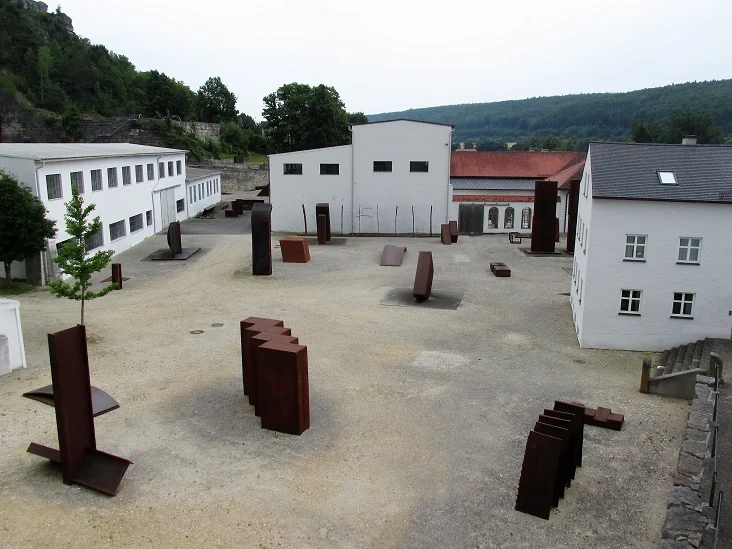
The Alf Lechner Foundation in Obereichstätt near Dollnstein is a special place for all who want to experience steel sculpture, industrial culture, and landscape as a unity. On the grounds of a former Royal Bavarian ironworks, a 23,000 square meter area, a limestone quarry from the Jurassic period, terraced plateaus, an exhibition hall, and the Paper House combine to form an ensemble that makes Alf Lechner's work directly tangible. The foundation was established in 1999 and aims to make the life and work of the artist accessible to a wide audience and future generations. In collaboration with the city of Ingolstadt, it also manages the Lechner Museum and is responsible for its exhibition program. Those searching for Alf Lechner Foundation photos, images from the foundation, or the sculpture in Obereichstätt will find not just a single sight but an entire art location with a strong character and clear thematic line. ([lechner-museum.de](https://www.lechner-museum.de/de))
The charm of this place lies in the connection of material, space, and history. Lechner did not want to hide his meter-high steel sculptures but to display them in an environment that enhances their power and precision. That is precisely why the rust-covered works in the quarry create an impact that goes far beyond classical museum spaces. The sculpture park is not a casual addition to the foundation but the place where Lechner's artistic thinking is most clearly expressed. Those looking for the Alf Foundation or the Alf Lechner Foundation are often searching for a place where art is not only viewed but experienced spatially. Obereichstätt offers exactly that: an interplay of nature, industrial history, and sculpture that is equally well understood through images, tours, and personal impressions. ([lechner-museum.de](https://www.lechner-museum.de/en))
Photos and Images of the Alf Lechner Foundation
When searching for Alf Lechner Foundation photos or images from the Alf Lechner Foundation, it is often not just about pure documentation but about the special atmosphere of the place. The official website shows current exhibition views, archival material, and image series related to the various stages of the house. This quickly makes it clear how strong the visual impression of this foundation is: large steel bodies, clear lines, rough material, open spaces, and a landscape that wraps around the works like a stage. Those who wish to inform themselves in advance will find on the official pages not only sober facts but also images that help to emotionally contextualize the place and understand the monumental impact of the works. Especially for people hearing about the foundation for the first time, these photos are an important introduction. They convey an impression of why the place in Obereichstätt is so often associated with terms like sculpture, quarry, and industrial architecture. ([lechner-museum.de](https://lechner-museum.de/))
The visual language of the foundation is closely linked to the art of Alf Lechner. His works thrive on materiality and volume, on edges, surfaces, and tension. Therefore, photographs here do not only function as a reminder of a visit but also as an independent access to the work. In the official exhibition views, it becomes visible how much the environment changes perception: the same sculpture appears differently in an indoor space than on a terrace in the quarry or in the exhibition hall. This interplay makes the search for alf lechner sculpture and images of the foundation so interesting. Those collecting visual impressions quickly recognize that here not a single work is shown but an entire artistic environment. The photos are therefore not just beautiful views but a way to read the relationship between art, space, and nature in advance and to plan the subsequent visit more purposefully. ([alflechner-stiftung.com](https://alflechner-stiftung.com/lechner-museum/))
Sculpture Park Obereichstätt: Grounds, History, and Special Features
The sculpture park in Obereichstätt is the heart of the Alf Lechner Foundation. It is located on the grounds of a former Royal Bavarian ironworks, whose historical roots reach back to the early records of the place. In the late 1990s, Alf Lechner was able to acquire the area along with the attached quarry; together with his wife Camilla, he restored the decommissioned halls and buildings from the 1830s. From an industrially shaped place, an art area has emerged that today places the dialogue between steel, stone, and landscape at its center on 23,000 square meters. The terraced plateaus and the massive rock wall of the quarry provide a frame for the sculptures that would be difficult to achieve in classical museum architecture. This makes the sculpture park a place where Lechner's material-related language becomes visible in all its grandeur. ([alflechner-stiftung.com](https://alflechner-stiftung.com/lechner-museum/))
Particularly impressive is that Lechner deliberately placed the sculptures outdoors. The heavy, rust-covered works do not stand in isolation but in a landscape that enhances their form and impact. The combination of terrain, architectural remnants, and quarry creates an atmosphere that is both rough and concentrated. This is precisely what makes Obereichstätt so attractive for search queries like Alf Lechner Foundation Obereichstätt or Sculpture Park Obereichstätt: visitors want to know not only where the place is located but also why it is so extraordinary. The official website describes it as an open-air museum that offers deep insights into the artist's work. This formulation hits the core very accurately, as it is not about decorative presentation but about a spatial experience of art. Those entering the sculpture park encounter a clear idea: material may have weight, space may resist, and art may assert itself in its surroundings. ([lechner-museum.de](https://www.lechner-museum.de/en))
Exhibition Hall and Paper House: Spaces for Steel, Graphics, and Context
The Alf Lechner Foundation includes not only the sculpture park but also the exhibition hall and the so-called Paper House. These additions are important because they showcase the artist's work from different perspectives. The large exhibition hall was opened in 2013 and extends the open sculpture park with an indoor space where Lechner's works can be experienced in different proximity and lighting. The official site emphasizes that it is the largest privately owned hall in Germany and that the floor is designed to support 100 tons per square meter. This is not just a technical footnote but an indication of how seriously the foundation takes the presentation of heavy steel sculptures. The architecture here does not serve as a backdrop but as a prerequisite for the works to be visible in this form. ([alflechner-stiftung.com](https://alflechner-stiftung.com/lechner-museum/))
The Paper House complements this impression in a very different but equally important way. There, the graphic work of the artist can be experienced, focusing more on drawing, ideas, and form-finding. This creates an exciting contrast: outside, the large bodies of steel; inside, the reduced, often very concentrated engagement with line and surface. It is precisely in this tension that much of what interests the audience about Alf Lechner lies. His work is never just monumental but always also analytical. It moves between planning and experiment, between construction and process. The exhibition hall and the Paper House make this breadth visible and help to understand the term Alf Lechner Foundation not merely as a museum address but as an ensemble of work, research, and mediation. Those interested in photography, architecture, and art history will therefore find several levels on which a visit is worthwhile. ([lechner-museum.de](https://lechner-museum.de/))
Guided Tours, Opening Hours, Directions, and Parking
For planning a visit, guided tours and directions are particularly important. The official website makes it clear that the sculpture park and the grounds of the foundation in Obereichstätt can only be visited as part of guided tours. Public combined tours of the Lechner Museum and the sculpture park take place on the last Sunday of each month and do not require registration. At the same time, the foundation points out that the journey from the museum in Ingolstadt to Obereichstätt is the visitor's responsibility and takes about 30 to 35 minutes by car, with public transport not being possible for this transfer. Therefore, those searching for directions to Lechner Sculpture Park or parking at Lechner Museum should consider the two locations separately: the museum in Ingolstadt and the grounds in Obereichstätt. This clear separation is crucial for visit planning as it prepares the time logic and the route to the art location cleanly. ([lechner-museum.de](https://lechner-museum.de/))
The Lechner Museum in Ingolstadt is open from Thursday to Sunday from 10 a.m. to 5 p.m.; the sculpture park itself remains a guided tour location. The website also mentions accessible parking spaces, elevators, and accessible restrooms. For parking in front of the museum, one should report to the supervision with a special permit; additionally, the website lists other car parking options in the vicinity, such as the Haydeck parking lot at Esplanade 5 and the underground garage at the castle at Esplanade 1a. These are practical details that are particularly helpful for visitors arriving by car and wishing to combine their trip to Obereichstätt with a visit to Ingolstadt. Therefore, those looking for the foundation should not only search for the address but also for the course of the tour, the urban parking solution, and the time window for the journey between both places. This turns a simple journey into a well-planned art trip. ([lechner-museum.de](https://lechner-museum.de/))
Alf Lechner, the Foundation, and the Artistic Legacy
Alf Lechner is one of the important German steel sculptors of the 20th and early 21st centuries. The official website lists more than 800 sculptural works and over 4500 drawings for his oeuvre, as well as nearly 80 sculptures in public spaces alone in Germany. These numbers are impressive because they show how broad and lasting his work is. Lechner was born in 1925 in Munich and lived from 2001 until his death in 2017 with his wife Camilla in Obereichstätt. For his art, the relationship between technique and art, rationality and emotionality, reflection and process, calculation and chance was central. It is precisely these tensions that make his work so distinctive and explain why the foundation is not just an exhibition space but also an institution for the scholarly processing of art. It organizes exhibitions, guided tours, and publications so that the oeuvre is not only preserved but actively conveyed. ([lechner-museum.de](https://lechner-museum.de/))
The establishment of the Alf Lechner Foundation in 1999 was therefore more than an organizational step. It created a framework in which work and place could be thought together. In conjunction with the Lechner Museum in Ingolstadt and the grounds in Obereichstätt, a double location emerged that makes the breadth of the artist visible. The museum shows the work in changing exhibitions, while the foundation at the historical site in Obereichstätt deepens the engagement with material, space, and landscape. Therefore, those searching for Alf Foundation or the Alf Lechner Foundation are often looking for more than just an address. They seek access to an artistic legacy that is designed for permanence while remaining open to new perspectives. This is precisely why the two locations are so important: Ingolstadt offers the institutional framework, while Obereichstätt provides the immediate experience of steel, stone, and expanse. Together, they create a picture of the artist that takes both his formal rigor and spatial imagination seriously. ([lechner-museum.de](https://lechner-museum.de/de))
Children, Art Education, and Group Offers
Even though the sculpture park in Obereichstätt is primarily perceived as a monumental art location, education for children and groups plays an important role. The Lechner Museum in Ingolstadt offers a children's studio for kindergartens and schools every Thursday and Friday between 10 a.m. and 12 p.m. with guided tours and workshops. The website lists fixed fees for this, and it is also noted that the maximum group size depends on the program and the respective exhibition. Accompanying persons have free admission. These offers are particularly interesting for families, school classes, and educational groups who come across the foundation through searches for Alf Lechner children, children's art, or art education. They show that the place is not only intended for professional audiences or art travelers but also for young visitors who should experientially engage with steel, form, and space. ([lechner-museum.de](https://lechner-museum.de/))
This is complemented by further formats that the foundation and the museum open for different age groups. Among other things, children's birthday parties are available upon request, as well as offers for school classes and kindergarten groups. It is important that the themes in the children's studio change regularly as the exhibitions in the museum are continuously renewed. This keeps the educational program vibrant and linked to the respective exhibition. From an SEO perspective, this is a strong signal: those searching for the connection between Alf Lechner and children will not find a random family attraction here but a museum and a foundation that take art as an experiential space seriously. Especially in connection with the sculpture park, it becomes clear how diverse the artist's legacy can be utilized: as a place for strong images, as a learning space for young people, and as a starting point for discussions about material, construction, and perception. This makes the Alf Lechner Foundation a very versatile destination in the Dollnstein region and the broader Ingolstadt-Altmühltal area. ([lechner-museum.de](https://lechner-museum.de/))
Sources:
Show moreShow less
Alf Lechner Foundation | Sculpture Park & Photos
The Alf Lechner Foundation in Obereichstätt near Dollnstein is a special place for all who want to experience steel sculpture, industrial culture, and landscape as a unity. On the grounds of a former Royal Bavarian ironworks, a 23,000 square meter area, a limestone quarry from the Jurassic period, terraced plateaus, an exhibition hall, and the Paper House combine to form an ensemble that makes Alf Lechner's work directly tangible. The foundation was established in 1999 and aims to make the life and work of the artist accessible to a wide audience and future generations. In collaboration with the city of Ingolstadt, it also manages the Lechner Museum and is responsible for its exhibition program. Those searching for Alf Lechner Foundation photos, images from the foundation, or the sculpture in Obereichstätt will find not just a single sight but an entire art location with a strong character and clear thematic line. ([lechner-museum.de](https://www.lechner-museum.de/de))
The charm of this place lies in the connection of material, space, and history. Lechner did not want to hide his meter-high steel sculptures but to display them in an environment that enhances their power and precision. That is precisely why the rust-covered works in the quarry create an impact that goes far beyond classical museum spaces. The sculpture park is not a casual addition to the foundation but the place where Lechner's artistic thinking is most clearly expressed. Those looking for the Alf Foundation or the Alf Lechner Foundation are often searching for a place where art is not only viewed but experienced spatially. Obereichstätt offers exactly that: an interplay of nature, industrial history, and sculpture that is equally well understood through images, tours, and personal impressions. ([lechner-museum.de](https://www.lechner-museum.de/en))
Photos and Images of the Alf Lechner Foundation
When searching for Alf Lechner Foundation photos or images from the Alf Lechner Foundation, it is often not just about pure documentation but about the special atmosphere of the place. The official website shows current exhibition views, archival material, and image series related to the various stages of the house. This quickly makes it clear how strong the visual impression of this foundation is: large steel bodies, clear lines, rough material, open spaces, and a landscape that wraps around the works like a stage. Those who wish to inform themselves in advance will find on the official pages not only sober facts but also images that help to emotionally contextualize the place and understand the monumental impact of the works. Especially for people hearing about the foundation for the first time, these photos are an important introduction. They convey an impression of why the place in Obereichstätt is so often associated with terms like sculpture, quarry, and industrial architecture. ([lechner-museum.de](https://lechner-museum.de/))
The visual language of the foundation is closely linked to the art of Alf Lechner. His works thrive on materiality and volume, on edges, surfaces, and tension. Therefore, photographs here do not only function as a reminder of a visit but also as an independent access to the work. In the official exhibition views, it becomes visible how much the environment changes perception: the same sculpture appears differently in an indoor space than on a terrace in the quarry or in the exhibition hall. This interplay makes the search for alf lechner sculpture and images of the foundation so interesting. Those collecting visual impressions quickly recognize that here not a single work is shown but an entire artistic environment. The photos are therefore not just beautiful views but a way to read the relationship between art, space, and nature in advance and to plan the subsequent visit more purposefully. ([alflechner-stiftung.com](https://alflechner-stiftung.com/lechner-museum/))
Sculpture Park Obereichstätt: Grounds, History, and Special Features
The sculpture park in Obereichstätt is the heart of the Alf Lechner Foundation. It is located on the grounds of a former Royal Bavarian ironworks, whose historical roots reach back to the early records of the place. In the late 1990s, Alf Lechner was able to acquire the area along with the attached quarry; together with his wife Camilla, he restored the decommissioned halls and buildings from the 1830s. From an industrially shaped place, an art area has emerged that today places the dialogue between steel, stone, and landscape at its center on 23,000 square meters. The terraced plateaus and the massive rock wall of the quarry provide a frame for the sculptures that would be difficult to achieve in classical museum architecture. This makes the sculpture park a place where Lechner's material-related language becomes visible in all its grandeur. ([alflechner-stiftung.com](https://alflechner-stiftung.com/lechner-museum/))
Particularly impressive is that Lechner deliberately placed the sculptures outdoors. The heavy, rust-covered works do not stand in isolation but in a landscape that enhances their form and impact. The combination of terrain, architectural remnants, and quarry creates an atmosphere that is both rough and concentrated. This is precisely what makes Obereichstätt so attractive for search queries like Alf Lechner Foundation Obereichstätt or Sculpture Park Obereichstätt: visitors want to know not only where the place is located but also why it is so extraordinary. The official website describes it as an open-air museum that offers deep insights into the artist's work. This formulation hits the core very accurately, as it is not about decorative presentation but about a spatial experience of art. Those entering the sculpture park encounter a clear idea: material may have weight, space may resist, and art may assert itself in its surroundings. ([lechner-museum.de](https://www.lechner-museum.de/en))
Exhibition Hall and Paper House: Spaces for Steel, Graphics, and Context
The Alf Lechner Foundation includes not only the sculpture park but also the exhibition hall and the so-called Paper House. These additions are important because they showcase the artist's work from different perspectives. The large exhibition hall was opened in 2013 and extends the open sculpture park with an indoor space where Lechner's works can be experienced in different proximity and lighting. The official site emphasizes that it is the largest privately owned hall in Germany and that the floor is designed to support 100 tons per square meter. This is not just a technical footnote but an indication of how seriously the foundation takes the presentation of heavy steel sculptures. The architecture here does not serve as a backdrop but as a prerequisite for the works to be visible in this form. ([alflechner-stiftung.com](https://alflechner-stiftung.com/lechner-museum/))
The Paper House complements this impression in a very different but equally important way. There, the graphic work of the artist can be experienced, focusing more on drawing, ideas, and form-finding. This creates an exciting contrast: outside, the large bodies of steel; inside, the reduced, often very concentrated engagement with line and surface. It is precisely in this tension that much of what interests the audience about Alf Lechner lies. His work is never just monumental but always also analytical. It moves between planning and experiment, between construction and process. The exhibition hall and the Paper House make this breadth visible and help to understand the term Alf Lechner Foundation not merely as a museum address but as an ensemble of work, research, and mediation. Those interested in photography, architecture, and art history will therefore find several levels on which a visit is worthwhile. ([lechner-museum.de](https://lechner-museum.de/))
Guided Tours, Opening Hours, Directions, and Parking
For planning a visit, guided tours and directions are particularly important. The official website makes it clear that the sculpture park and the grounds of the foundation in Obereichstätt can only be visited as part of guided tours. Public combined tours of the Lechner Museum and the sculpture park take place on the last Sunday of each month and do not require registration. At the same time, the foundation points out that the journey from the museum in Ingolstadt to Obereichstätt is the visitor's responsibility and takes about 30 to 35 minutes by car, with public transport not being possible for this transfer. Therefore, those searching for directions to Lechner Sculpture Park or parking at Lechner Museum should consider the two locations separately: the museum in Ingolstadt and the grounds in Obereichstätt. This clear separation is crucial for visit planning as it prepares the time logic and the route to the art location cleanly. ([lechner-museum.de](https://lechner-museum.de/))
The Lechner Museum in Ingolstadt is open from Thursday to Sunday from 10 a.m. to 5 p.m.; the sculpture park itself remains a guided tour location. The website also mentions accessible parking spaces, elevators, and accessible restrooms. For parking in front of the museum, one should report to the supervision with a special permit; additionally, the website lists other car parking options in the vicinity, such as the Haydeck parking lot at Esplanade 5 and the underground garage at the castle at Esplanade 1a. These are practical details that are particularly helpful for visitors arriving by car and wishing to combine their trip to Obereichstätt with a visit to Ingolstadt. Therefore, those looking for the foundation should not only search for the address but also for the course of the tour, the urban parking solution, and the time window for the journey between both places. This turns a simple journey into a well-planned art trip. ([lechner-museum.de](https://lechner-museum.de/))
Alf Lechner, the Foundation, and the Artistic Legacy
Alf Lechner is one of the important German steel sculptors of the 20th and early 21st centuries. The official website lists more than 800 sculptural works and over 4500 drawings for his oeuvre, as well as nearly 80 sculptures in public spaces alone in Germany. These numbers are impressive because they show how broad and lasting his work is. Lechner was born in 1925 in Munich and lived from 2001 until his death in 2017 with his wife Camilla in Obereichstätt. For his art, the relationship between technique and art, rationality and emotionality, reflection and process, calculation and chance was central. It is precisely these tensions that make his work so distinctive and explain why the foundation is not just an exhibition space but also an institution for the scholarly processing of art. It organizes exhibitions, guided tours, and publications so that the oeuvre is not only preserved but actively conveyed. ([lechner-museum.de](https://lechner-museum.de/))
The establishment of the Alf Lechner Foundation in 1999 was therefore more than an organizational step. It created a framework in which work and place could be thought together. In conjunction with the Lechner Museum in Ingolstadt and the grounds in Obereichstätt, a double location emerged that makes the breadth of the artist visible. The museum shows the work in changing exhibitions, while the foundation at the historical site in Obereichstätt deepens the engagement with material, space, and landscape. Therefore, those searching for Alf Foundation or the Alf Lechner Foundation are often looking for more than just an address. They seek access to an artistic legacy that is designed for permanence while remaining open to new perspectives. This is precisely why the two locations are so important: Ingolstadt offers the institutional framework, while Obereichstätt provides the immediate experience of steel, stone, and expanse. Together, they create a picture of the artist that takes both his formal rigor and spatial imagination seriously. ([lechner-museum.de](https://lechner-museum.de/de))
Children, Art Education, and Group Offers
Even though the sculpture park in Obereichstätt is primarily perceived as a monumental art location, education for children and groups plays an important role. The Lechner Museum in Ingolstadt offers a children's studio for kindergartens and schools every Thursday and Friday between 10 a.m. and 12 p.m. with guided tours and workshops. The website lists fixed fees for this, and it is also noted that the maximum group size depends on the program and the respective exhibition. Accompanying persons have free admission. These offers are particularly interesting for families, school classes, and educational groups who come across the foundation through searches for Alf Lechner children, children's art, or art education. They show that the place is not only intended for professional audiences or art travelers but also for young visitors who should experientially engage with steel, form, and space. ([lechner-museum.de](https://lechner-museum.de/))
This is complemented by further formats that the foundation and the museum open for different age groups. Among other things, children's birthday parties are available upon request, as well as offers for school classes and kindergarten groups. It is important that the themes in the children's studio change regularly as the exhibitions in the museum are continuously renewed. This keeps the educational program vibrant and linked to the respective exhibition. From an SEO perspective, this is a strong signal: those searching for the connection between Alf Lechner and children will not find a random family attraction here but a museum and a foundation that take art as an experiential space seriously. Especially in connection with the sculpture park, it becomes clear how diverse the artist's legacy can be utilized: as a place for strong images, as a learning space for young people, and as a starting point for discussions about material, construction, and perception. This makes the Alf Lechner Foundation a very versatile destination in the Dollnstein region and the broader Ingolstadt-Altmühltal area. ([lechner-museum.de](https://lechner-museum.de/))
Sources:
Alf Lechner Foundation | Sculpture Park & Photos
The Alf Lechner Foundation in Obereichstätt near Dollnstein is a special place for all who want to experience steel sculpture, industrial culture, and landscape as a unity. On the grounds of a former Royal Bavarian ironworks, a 23,000 square meter area, a limestone quarry from the Jurassic period, terraced plateaus, an exhibition hall, and the Paper House combine to form an ensemble that makes Alf Lechner's work directly tangible. The foundation was established in 1999 and aims to make the life and work of the artist accessible to a wide audience and future generations. In collaboration with the city of Ingolstadt, it also manages the Lechner Museum and is responsible for its exhibition program. Those searching for Alf Lechner Foundation photos, images from the foundation, or the sculpture in Obereichstätt will find not just a single sight but an entire art location with a strong character and clear thematic line. ([lechner-museum.de](https://www.lechner-museum.de/de))
The charm of this place lies in the connection of material, space, and history. Lechner did not want to hide his meter-high steel sculptures but to display them in an environment that enhances their power and precision. That is precisely why the rust-covered works in the quarry create an impact that goes far beyond classical museum spaces. The sculpture park is not a casual addition to the foundation but the place where Lechner's artistic thinking is most clearly expressed. Those looking for the Alf Foundation or the Alf Lechner Foundation are often searching for a place where art is not only viewed but experienced spatially. Obereichstätt offers exactly that: an interplay of nature, industrial history, and sculpture that is equally well understood through images, tours, and personal impressions. ([lechner-museum.de](https://www.lechner-museum.de/en))
Photos and Images of the Alf Lechner Foundation
When searching for Alf Lechner Foundation photos or images from the Alf Lechner Foundation, it is often not just about pure documentation but about the special atmosphere of the place. The official website shows current exhibition views, archival material, and image series related to the various stages of the house. This quickly makes it clear how strong the visual impression of this foundation is: large steel bodies, clear lines, rough material, open spaces, and a landscape that wraps around the works like a stage. Those who wish to inform themselves in advance will find on the official pages not only sober facts but also images that help to emotionally contextualize the place and understand the monumental impact of the works. Especially for people hearing about the foundation for the first time, these photos are an important introduction. They convey an impression of why the place in Obereichstätt is so often associated with terms like sculpture, quarry, and industrial architecture. ([lechner-museum.de](https://lechner-museum.de/))
The visual language of the foundation is closely linked to the art of Alf Lechner. His works thrive on materiality and volume, on edges, surfaces, and tension. Therefore, photographs here do not only function as a reminder of a visit but also as an independent access to the work. In the official exhibition views, it becomes visible how much the environment changes perception: the same sculpture appears differently in an indoor space than on a terrace in the quarry or in the exhibition hall. This interplay makes the search for alf lechner sculpture and images of the foundation so interesting. Those collecting visual impressions quickly recognize that here not a single work is shown but an entire artistic environment. The photos are therefore not just beautiful views but a way to read the relationship between art, space, and nature in advance and to plan the subsequent visit more purposefully. ([alflechner-stiftung.com](https://alflechner-stiftung.com/lechner-museum/))
Sculpture Park Obereichstätt: Grounds, History, and Special Features
The sculpture park in Obereichstätt is the heart of the Alf Lechner Foundation. It is located on the grounds of a former Royal Bavarian ironworks, whose historical roots reach back to the early records of the place. In the late 1990s, Alf Lechner was able to acquire the area along with the attached quarry; together with his wife Camilla, he restored the decommissioned halls and buildings from the 1830s. From an industrially shaped place, an art area has emerged that today places the dialogue between steel, stone, and landscape at its center on 23,000 square meters. The terraced plateaus and the massive rock wall of the quarry provide a frame for the sculptures that would be difficult to achieve in classical museum architecture. This makes the sculpture park a place where Lechner's material-related language becomes visible in all its grandeur. ([alflechner-stiftung.com](https://alflechner-stiftung.com/lechner-museum/))
Particularly impressive is that Lechner deliberately placed the sculptures outdoors. The heavy, rust-covered works do not stand in isolation but in a landscape that enhances their form and impact. The combination of terrain, architectural remnants, and quarry creates an atmosphere that is both rough and concentrated. This is precisely what makes Obereichstätt so attractive for search queries like Alf Lechner Foundation Obereichstätt or Sculpture Park Obereichstätt: visitors want to know not only where the place is located but also why it is so extraordinary. The official website describes it as an open-air museum that offers deep insights into the artist's work. This formulation hits the core very accurately, as it is not about decorative presentation but about a spatial experience of art. Those entering the sculpture park encounter a clear idea: material may have weight, space may resist, and art may assert itself in its surroundings. ([lechner-museum.de](https://www.lechner-museum.de/en))
Exhibition Hall and Paper House: Spaces for Steel, Graphics, and Context
The Alf Lechner Foundation includes not only the sculpture park but also the exhibition hall and the so-called Paper House. These additions are important because they showcase the artist's work from different perspectives. The large exhibition hall was opened in 2013 and extends the open sculpture park with an indoor space where Lechner's works can be experienced in different proximity and lighting. The official site emphasizes that it is the largest privately owned hall in Germany and that the floor is designed to support 100 tons per square meter. This is not just a technical footnote but an indication of how seriously the foundation takes the presentation of heavy steel sculptures. The architecture here does not serve as a backdrop but as a prerequisite for the works to be visible in this form. ([alflechner-stiftung.com](https://alflechner-stiftung.com/lechner-museum/))
The Paper House complements this impression in a very different but equally important way. There, the graphic work of the artist can be experienced, focusing more on drawing, ideas, and form-finding. This creates an exciting contrast: outside, the large bodies of steel; inside, the reduced, often very concentrated engagement with line and surface. It is precisely in this tension that much of what interests the audience about Alf Lechner lies. His work is never just monumental but always also analytical. It moves between planning and experiment, between construction and process. The exhibition hall and the Paper House make this breadth visible and help to understand the term Alf Lechner Foundation not merely as a museum address but as an ensemble of work, research, and mediation. Those interested in photography, architecture, and art history will therefore find several levels on which a visit is worthwhile. ([lechner-museum.de](https://lechner-museum.de/))
Guided Tours, Opening Hours, Directions, and Parking
For planning a visit, guided tours and directions are particularly important. The official website makes it clear that the sculpture park and the grounds of the foundation in Obereichstätt can only be visited as part of guided tours. Public combined tours of the Lechner Museum and the sculpture park take place on the last Sunday of each month and do not require registration. At the same time, the foundation points out that the journey from the museum in Ingolstadt to Obereichstätt is the visitor's responsibility and takes about 30 to 35 minutes by car, with public transport not being possible for this transfer. Therefore, those searching for directions to Lechner Sculpture Park or parking at Lechner Museum should consider the two locations separately: the museum in Ingolstadt and the grounds in Obereichstätt. This clear separation is crucial for visit planning as it prepares the time logic and the route to the art location cleanly. ([lechner-museum.de](https://lechner-museum.de/))
The Lechner Museum in Ingolstadt is open from Thursday to Sunday from 10 a.m. to 5 p.m.; the sculpture park itself remains a guided tour location. The website also mentions accessible parking spaces, elevators, and accessible restrooms. For parking in front of the museum, one should report to the supervision with a special permit; additionally, the website lists other car parking options in the vicinity, such as the Haydeck parking lot at Esplanade 5 and the underground garage at the castle at Esplanade 1a. These are practical details that are particularly helpful for visitors arriving by car and wishing to combine their trip to Obereichstätt with a visit to Ingolstadt. Therefore, those looking for the foundation should not only search for the address but also for the course of the tour, the urban parking solution, and the time window for the journey between both places. This turns a simple journey into a well-planned art trip. ([lechner-museum.de](https://lechner-museum.de/))
Alf Lechner, the Foundation, and the Artistic Legacy
Alf Lechner is one of the important German steel sculptors of the 20th and early 21st centuries. The official website lists more than 800 sculptural works and over 4500 drawings for his oeuvre, as well as nearly 80 sculptures in public spaces alone in Germany. These numbers are impressive because they show how broad and lasting his work is. Lechner was born in 1925 in Munich and lived from 2001 until his death in 2017 with his wife Camilla in Obereichstätt. For his art, the relationship between technique and art, rationality and emotionality, reflection and process, calculation and chance was central. It is precisely these tensions that make his work so distinctive and explain why the foundation is not just an exhibition space but also an institution for the scholarly processing of art. It organizes exhibitions, guided tours, and publications so that the oeuvre is not only preserved but actively conveyed. ([lechner-museum.de](https://lechner-museum.de/))
The establishment of the Alf Lechner Foundation in 1999 was therefore more than an organizational step. It created a framework in which work and place could be thought together. In conjunction with the Lechner Museum in Ingolstadt and the grounds in Obereichstätt, a double location emerged that makes the breadth of the artist visible. The museum shows the work in changing exhibitions, while the foundation at the historical site in Obereichstätt deepens the engagement with material, space, and landscape. Therefore, those searching for Alf Foundation or the Alf Lechner Foundation are often looking for more than just an address. They seek access to an artistic legacy that is designed for permanence while remaining open to new perspectives. This is precisely why the two locations are so important: Ingolstadt offers the institutional framework, while Obereichstätt provides the immediate experience of steel, stone, and expanse. Together, they create a picture of the artist that takes both his formal rigor and spatial imagination seriously. ([lechner-museum.de](https://lechner-museum.de/de))
Children, Art Education, and Group Offers
Even though the sculpture park in Obereichstätt is primarily perceived as a monumental art location, education for children and groups plays an important role. The Lechner Museum in Ingolstadt offers a children's studio for kindergartens and schools every Thursday and Friday between 10 a.m. and 12 p.m. with guided tours and workshops. The website lists fixed fees for this, and it is also noted that the maximum group size depends on the program and the respective exhibition. Accompanying persons have free admission. These offers are particularly interesting for families, school classes, and educational groups who come across the foundation through searches for Alf Lechner children, children's art, or art education. They show that the place is not only intended for professional audiences or art travelers but also for young visitors who should experientially engage with steel, form, and space. ([lechner-museum.de](https://lechner-museum.de/))
This is complemented by further formats that the foundation and the museum open for different age groups. Among other things, children's birthday parties are available upon request, as well as offers for school classes and kindergarten groups. It is important that the themes in the children's studio change regularly as the exhibitions in the museum are continuously renewed. This keeps the educational program vibrant and linked to the respective exhibition. From an SEO perspective, this is a strong signal: those searching for the connection between Alf Lechner and children will not find a random family attraction here but a museum and a foundation that take art as an experiential space seriously. Especially in connection with the sculpture park, it becomes clear how diverse the artist's legacy can be utilized: as a place for strong images, as a learning space for young people, and as a starting point for discussions about material, construction, and perception. This makes the Alf Lechner Foundation a very versatile destination in the Dollnstein region and the broader Ingolstadt-Altmühltal area. ([lechner-museum.de](https://lechner-museum.de/))
Sources:
Upcoming Events
No events found
Frequently Asked Questions
Reviews
Randolf Het
14. May 2021
Nice
Mister Peter
27. May 2025
This is a magical place, art combined with nature. You really should be able to stay longer than the 1.5-hour tour.
Justine Pixel
26. June 2023
A worthwhile destination, but only accessible on the last Sunday of the month. You can combine the visit with a tour at the Alf Lechner Museum in Ingolstadt.
Paul-G. B.
22. May 2024
Great sculpture park on the grounds of a former steelworks, visit only by appointment.
Silvia Müller
3. October 2025
Great exhibition with an informative tour.