
Hans Rosendahl
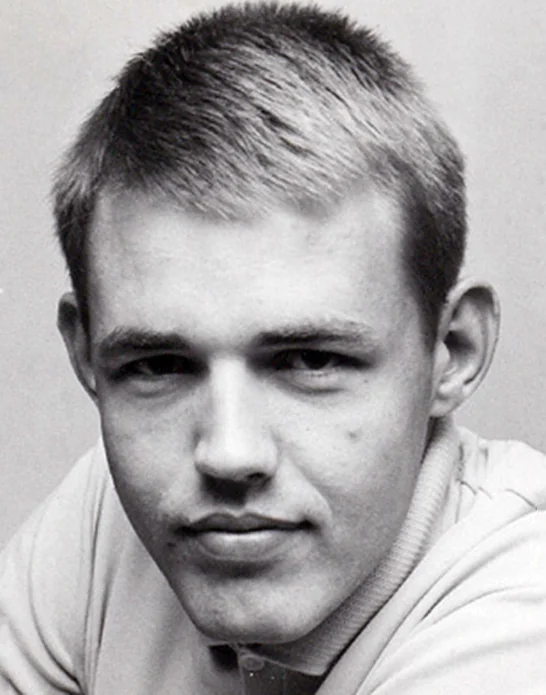
Image from Wikipedia
Image from Wikipedia
Hans Rosendahl – Sweden's Freestyle Ace with European Radiance
An Athlete from Katrineholm Who Made History with Speed and Precision
Hans Viktor Rosendahl was born on December 27, 1944, in Katrineholm and passed away there on November 23, 2021. He was among the best Swedish freestyle swimmers of his generation in the 1960s, and he significantly shaped both the national and international swimming landscape with a career that began at the highest level early on. His name is primarily associated with strong middle and long-distance events, with team performance in relays, and a remarkable transition from the competitive pool to a life of sport, movement, and educational responsibility. (olympedia.org)
Early Years and Athletic Influence
Rosendahl grew up in Katrineholm, Sweden, and started for Katrineholms SS, later also competing for Stockholms KK. These club affiliations already illustrate a career closely linked to Swedish swimming culture, where youth development, technical training, and competitive resilience were interconnected. With a height of 187 centimeters and a weight of 85 kilograms, he presented himself as a classic freestyle specialist whose physical presence was ideal for long distances. (olympedia.org)
In the 1960s, Rosendahl became one of those athletes who set standards not only nationally but also in the European context. Olympedia describes him during this phase as one of the best Swedish freestyle swimmers, and this classification accurately reflects his position in the international field. His career combined individual strength with the discipline of relay competition, an area where timing, racing discipline, and team harmony are crucial. (olympedia.org)
The Breakthrough on the European Stage
The decisive breakthrough came at the European Championships in 1962 in Leipzig. There, Rosendahl, alongside Per-Ola Lindberg, Mats Svensson, and Lars-Erik Bengtsson, won gold in the 4×200-meter freestyle relay and also secured silver in the 400 meters freestyle. This double strength in individual and team competitions made him one of the defining names of those championships. (olympedia.org)
In particular, the silver position in the 400-meter freestyle shows how competitive Rosendahl was even in individual events. In early 1960s European swimming, endurance, clean body position, and controlled race pace were critical factors, and Rosendahl fit this profile perfectly. Olympedia also refers to a European record performance by the relay, highlighting his role in an especially high-performing generation. (olympedia.org)
Olympic Experience in Tokyo
Two years after Leipzig, Rosendahl competed in the 1964 Olympic Games in Tokyo. He raced in the 400-meter freestyle and the 4×200-meter freestyle relay, where Sweden finished fifth in the relay and Rosendahl placed tenth in the individual race over 400 meters. Even without a medal, this appearance confirmed his belonging to the world elite, as Olympic final and top-ten placements are seen as proof of absolute international class in swimming. (olympedia.org)
The Olympic start marks the point in his biography where a successful European swimmer gained global visibility. For a freestyle specialist of his time, this meant racing tactics against the toughest competition, high resilience, and the ability to call upon that precision on the big stage, which determines seconds and placements in the pool. Rosendahl's Olympic performance permanently anchored his name in Swedish sports history. (olympedia.org)
Performance, Style, and Athletic Quality
Rosendahl was a classic freestyle swimmer focused on middle and longer distances. His successes in the 400 meters and in the 4×200-meter relay demonstrate an emphasis on endurance, rhythmic breath control, and economical technique rather than pure sprinting. This combination made him valuable in the 1960s when swimming increasingly evolved through professional training methods and finer race planning. (olympedia.org)
His athletic profile fits an era where freestyle was defined not only by raw strength but also by discipline and water feel. Rosendahl's career exemplifies a generation of European swimmers who were socialized in clubs, collected international titles, and defined themselves through consistent performance development. The connection of individual performance and relay strength adds particular depth to his career even today. (olympedia.org)
After the Active Career: Sport as a Principle of Life
After his swimming career, Rosendahl played water polo at an elite level and later worked as a physical education teacher. This second sporting phase shows that his relationship with competitive sports did not end with his last competition but shifted to new forms of movement, teaching, and practice. Particularly as an educator, he likely brought in the experience that stems from years of training, competitive pressure, and discipline. (olympedia.org)
Thus, Rosendahl represents an athlete's life that extends far beyond medals. His biography connects international successes, club loyalty, and the passing on of knowledge to the next generation. This makes him not only a figure in Swedish swimming history but also an example of sustainable sporting impact. (olympedia.org)
Cultural and Sports Historical Influence
Rosendahl's significance lies primarily in his role within a successful Swedish swimming era. His achievements at the European Championships in 1962 and at the Olympic Games in 1964 contributed to placing Sweden in the international swimming discourse of the time. Especially the relay gold medal from Leipzig possesses historical sports value as it confirmed the strength of the Swedish team on one of the most visible continental stages. (olympedia.org)
Even from today's perspective, his career serves as an exemplary tale: an athlete from the provinces who advanced to the top through club work, discipline, and international appearances. Such biographies form the backbone of sports history because they demonstrate how talent, training, and team structures interact. Hans Rosendahl thus remains a name that embodies performance not as a moment but as a process. (olympedia.org)
Conclusion: A Swimmer Who Convincingly Represents Substance
Hans Rosendahl is exciting because his career was clear, focused, and successful: European champion with the relay, EM silver in individual events, Olympic participant, and later a teacher and water polo player at a high level. He represents a generation where athletic excellence arose from technique, discipline, and team spirit. Anyone wanting to understand the history of European freestyle cannot overlook Rosendahl. (olympedia.org)
His life path shows how a talented swimmer can become a lasting part of sports history. Hans Rosendahl deserves to be remembered as a significant athlete, as a European champion, and as a representative of a Swedish swimming tradition that produced international class. His career invites us to rediscover the fascination of competition, the precision of freestyle, and the magic of great championships. (olympedia.org)
Official Channels of Hans Rosendahl:
- Instagram: no official profile found
- Facebook: no official profile found
- YouTube: no official profile found
- Spotify: no official profile found
- TikTok: no official profile found