
Manching
Im Erlet 2, 85077 Manching, Deutschland
Celtic & Roman Museum Manching | Tickets & Opening Hours
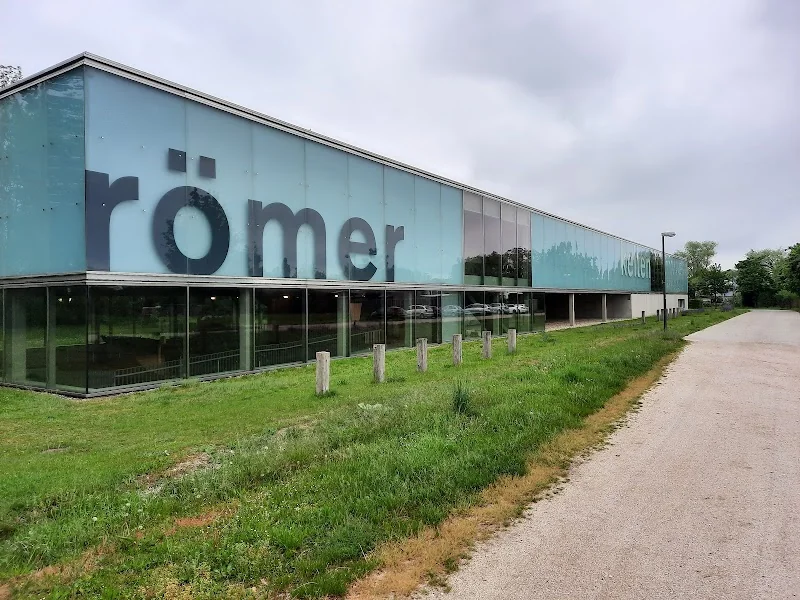
Between the Celtic town of Manching and the Roman fort of Oberstimm, this museum connects two historical worlds that are surprisingly close together in present-day Manching. The house sees itself as a showcase for outstanding finds from both sites and makes antiquity not a distant narrative, but a tangible, clearly staged archaeology. Those searching for Celtic origins, Celtic religion, Celtic appearance, or Celts Germans may not find a theoretical textbook page here, but rather a place where Celtic and Roman ways of life can be well understood through original objects, models, and illustrative reconstructions. This is precisely why the museum also fits inquiries related to photos, reviews, directions, tickets, and opening hours: it is a cultural-historical anchor point with practical visiting logic, good access, and an exhibition that works for both families and historically interested guests. ([museum-manching.de](https://www.museum-manching.de/))
Celtic Origins, Religion, and Everyday Life: What Manching Shows About It
In scientific terms, Manching is considered one of the best-researched Iron Age settlements in Central Europe and a central reference point for the classification of Celtic finds and evidence. This is of interest to anyone asking about the origins of the Celts, their everyday life, or their religion. The museum organizes the objects not merely by visual impact but by themes such as religion and burial practices, clothing and jewelry, as well as trade and craftsmanship. This quickly makes it clear that the Celtic world was multifaceted and cannot be reduced to a single cliché. Those who think of splendid garments, jewelry, and carefully crafted objects when considering Celtic appearance will find a solid archaeological foundation here: the museum displays glass jewelry, vessels, a miniature purse with contents, and the two bronze axle nails with bird of prey heads, which are considered the unofficial mascots of the house. This is not decorative embellishment, but material that allows for understanding of reality, status, craftsmanship, and symbolic ideas. The idea that seekers of Celts in Ireland or Celts in Scotland and Ireland often inquire about the great Celtic cultural world is indirectly answered here: Manching presents the Central European perspective on this culture particularly closely, precisely, and with originals. ([museum-manching.de](https://www.museum-manching.de/dauerausstellung/kelten-in-manching))
The permanent exhibition is particularly strong where real stories emerge from individual finds. The mysterious cult tree is the most famous example, as it stands for the connection of religion, ritual, and symbolism. Additionally, there is the miniature purse, just over four centimeters in size, along with other highlights that vividly illustrate the everyday life of the Celts and expand the archaeological view of the past. The exhibition is laid out over 1,200 square meters and works not only with original finds but also with models, interactive elements, and partial reconstructions at a scale of 1:1. This is important for visitors because the themes of origins, religion, jewelry, trade, and craftsmanship do not remain abstract. So, those searching for Celtic maps, Celtic crosses, or Celtic museums will not find a random mix here, but a clearly curated place where a readable overall picture emerges from the finds. Therefore, Manching is more than a regional museum: it is a reference point for Celtic prehistory in Southern Germany and at the same time a very accessible place for people who are engaging with the topic for the first time. ([museum-manching.de](https://www.museum-manching.de/))
Celtic Appearance? Clothing, Jewelry, and Special Finds in Manching
The question of what the Celts looked like is one of the most searched topics overall, as many people first have an image in their heads and then want to know what is actually archaeologically proven. In Manching, this point is intelligently captured: instead of working with stereotypes, the museum shows clothing, jewelry, vessels, and tools as concrete evidence of a vibrant society. The exhibition is organized thematically, allowing for recognition of how closely clothing and jewelry were connected to social roles, craftsmanship, and everyday culture. The famous objects of the house also contribute to visitors not only seeing individual pieces but also forming a picture of Celtic life. The cult tree, the miniature purse, the bronze axle nails, and other finds tell of rituals, mobility, values, and very practical questions of everyday life. This is where the added value lies for inquiries about Celtic appearance for women or Celtic crosses: the museum does not provide simplified visual templates but genuine archaeological clues about how people dressed, adorned themselves, and presented themselves. Those who look closely will also understand why Manching is so important for research: the finds are not only beautiful but particularly meaningful in their combination. They allow a glimpse into how identity materialized in the Iron Age and how complex Celtic culture truly was. ([museum-manching.de](https://www.museum-manching.de/dauerausstellung/kelten-in-manching))
Moreover, the exhibition combines modern exhibition design with a clear didactic line. This is particularly helpful for visitors who come from a general search intent and research topics like Celtic museum, Celtic appearance, or Celtic origins. Instead of providing a dry chronological list, the house guides guests through thematic islands and makes connections visible. Thus, a single shard becomes access to the history of craftsmanship, a piece of jewelry becomes a hint at social differentiation, and a ritual object provides insight into belief systems. The impression is therefore not museum-like and distant, but lively and vivid. Even very current topics such as environmental destruction, resources, or waste production are repeatedly addressed in the presentation and linked to the past. This is a clever approach because it shows that engaging with the Iron Age is not an escape into a distant world but a mirror for questions that remain relevant today. Those looking for a location that takes seriously what many express only as a general interest in Celts will find a convincing place here. ([museum-manching.de](https://www.museum-manching.de/dauerausstellung/kelten-in-manching))
Romans in Oberstimm: Shipwrecks, Fort, and Military Border
The Roman section of the museum is a real highlight because it presents the two shipwrecks from Oberstimm, a find that deserves attention far beyond the region. The ships are considered to be the best-preserved ancient warships north of the Alps and form the most impressive object in the Roman section. According to the museum description, they are located in a ten-meter-high hall with an area of 500 square meters, which already spatially makes clear the importance the house assigns to them. The story of these finds is archaeologically fascinating: in 1986, the remains were discovered during excavations near the Roman fort, and in 1994 they were finally uncovered and stored until the museum's opening at the then Roman-Germanic Central Museum. Since the museum opened in 2006, they have been central highlights of the permanent exhibition. For visitors, this is more than a spectacular staging, as the wrecks also represent Roman technology, transport, military organization, and the river as a transportation space. Especially those interested in Roman boats, historical shipping, or the military securing of the border will find a rare original piece here. ([kelten.de](https://www.kelten.de/kelten-roemer-museum-manching))
The Roman section also answers questions about the fort of Oberstimm and the everyday life of the troops stationed there. The museum describes the compilation of archaeological evidence from Roman Oberstimm, and in the educational offerings, it becomes clear that it is not only about weapons or military discipline but also about supply, everyday life, and living conditions at the border. The museum leaflet describes the military camp as the location of a partially mounted unit of about 500 men who secured an important section of the Roman Danube border. This makes it clear that the museum not only answers Celtic questions but also makes visible the transition from Celtic to Roman influence in the Manching area. For people searching for Celts Germans, this is particularly exciting because the house indirectly shows how different cultural and military order systems coexisted in antiquity. This juxtaposition is particularly strong didactically: it makes visible that history does not consist of isolated peoples but of contacts, border areas, and changes. The museum is therefore excellent for anyone looking for a place in the German-speaking area where Roman and Celtic history is not told separately but together. ([museum-manching.de](https://www.museum-manching.de/dauerausstellung/roemer-in-oberstimm?utm_source=openai))
Opening Hours, Tickets, and Prices for Visiting the Museum
For concrete visit planning, the Celtic & Roman Museum Manching is pleasantly transparent. Currently, the permanent exhibition is open from Wednesday to Friday from 09:30 to 16:00; on Saturday, Sunday, and public holidays, the museum can be visited from 10:00 to 17:00. If a lecture takes place on Wednesdays, the permanent exhibition or a current special exhibition may even be open until 18:00. Therefore, anyone planning a visit should always check the current situation, but the basic structure is clear and easy to remember. The museum also works transparently with admission prices. Currently, admission for adults to the permanent exhibition costs 6 euros, reduced 5 euros; children from 6 years, teenagers, apprentices, volunteers, students under 27 years, social assistance recipients, and members of the Celtic-Roman Friends Association pay 2.50 euros, school classes 2 euros. Family tickets and other special regulations make the house attractive for groups and families. This is important for a location with a strong educational claim because it does not unnecessarily complicate access. At the same time, the pricing structure shows that the museum does not see its content as a luxury offer but as a public cultural and educational place. ([museum-manching.de](https://www.museum-manching.de/info-und-service/oeffnungszeiten-und-preise))
Special exhibitions are also part of the visitor experience. For these, separate prices apply, and there are combined tickets for guests who wish to see both the permanent and special exhibitions on the same day. This is particularly useful for first-time visitors because the museum presents changing themes alongside the permanent exhibition. In addition, the house offers audio guides for adults in German, English, French, and Italian, as well as a German version for children and teenagers. This strengthens the relevance for inquiries about photos, reviews, or programs because visitors can already recognize in advance that here not only display panels but a well-thought-out visitor experience is offered. So, those searching for Celtic museum or Celtic & Roman Museum Manching photos often want to gain an initial impression before being on-site. The museum meets this expectation with a strong mix of originals, understandable mediation, and practical information. Group tours and workshop programs can also be booked by arrangement outside regular opening hours, provided capacities are available. This is particularly valuable for school classes and groups because the appointment does not necessarily have to be tied to standard times. ([museum-manching.de](https://www.museum-manching.de/info-und-service/oeffnungszeiten-und-preise))
Directions, Parking, and Barrier-Free Access to the Museum
The location of the museum is not only historically significant but also practically well thought out. The building is situated on a peninsula between the Paar and Augraben at the edge of the monumental rampart of the former Celtic town and is embedded in a museum park. Visitors reach the main entrance via the so-called Bridge of Time, which symbolically makes the path to the exhibition: from today into the past. The route for driving is described simply. Take the A9 exit for Manching, follow the signage, and reach the location via the B16. The sign also indicates a P+R parking lot at the entrance to the town on the left; from there, the footpath to the museum is signposted. Buses can drop off their passengers on Bergstraße or at the access path Im Erlet. Additionally, there are two disabled parking spaces directly in front of the service entrance. This is particularly helpful for families, older guests, and groups because the visit does not start with complicated parking searches. For those searching for Celtic maps or Celtic & Roman Museum Manching photos, this good accessibility is a real plus because the location is both archaeologically significant and practical for everyday use. ([museum-manching.de](https://www.museum-manching.de/_Resources/Persistent/4/e/0/3/4e034b50e01ac42ab0134c71fa55019a6b83615e/kelten%20r%C3%B6mer%20museum%20manching_Wegweiser.pdf))
The connection with public transport is also clearly described. From Ingolstadt Central Station, the city bus line 16 goes towards Manching or Geisenfeld; the stops are called Schloßberg or Zentrum, depending on the source and access. This is practical for guests without a car because Ingolstadt, as the nearest larger hub, offers a good connection to the region. Accessibility is understood in the museum not just as a buzzword but as real infrastructure. Wheelchair users and those with mobility impairments can use the service entrance on the ground floor and take the lift to the foyer and exhibition area. Additionally, the museum specifies inclusive offerings for people with visual and hearing impairments as well as learning difficulties. The homepage also emphasizes that the house provides wheelchair-accessible access, inclusive offerings, and a content-modern mediation. In practice, this means: the visit is not only archaeologically rewarding but also well-prepared for different needs. This is precisely why the museum is very suitable for inquiries about directions, parking, and barrier-free access. Those planning in advance can organize the tour so that it starts relaxed and does not encounter hurdles right at the entrance. ([museum-manching.de](https://www.museum-manching.de/_Resources/Persistent/4/e/0/3/4e034b50e01ac42ab0134c71fa55019a6b83615e/kelten%20r%C3%B6mer%20museum%20manching_Wegweiser.pdf))
Guided Tours, Audio Guides, Events, and Museum Services
The Celtic & Roman Museum Manching is not only a place to look at but a house with a strong educational claim. The homepage makes it clear that the museum offers overview and thematic tours, workshop programs, special exhibitions, festivals, lectures, and other cultural events. Additionally, there is an archaeological educational trail with 11 stations that incorporates the surroundings into the museum experience. This is a significant advantage for visitors because history is not limited to the interior space. Those interested in historical contexts thus receive not only an exhibition but a complete visit format with outdoor space, educational offerings, and regularly changing events. Inquiries about programs, reviews, or photos often reflect the desire to know in advance whether a location is lively and versatile. In Manching, the answer is clear: yes. The combination of permanent exhibition, special exhibitions, lectures, and guided tours makes the house a place where one can easily spend several hours. A cafeteria and a museum shop are also part of the offering, making the stay even more pleasant. ([museum-manching.de](https://www.museum-manching.de/))
Organizationally, the museum is also solidly established. It was built according to a design by Fischer Architects and opened to the public on June 2, 2006. The ongoing operation is supported by a purpose association established in 2002, which includes the market Manching, the district of Pfaffenhofen a.d. Ilm, the district of Upper Bavaria, and the Celtic-Roman Friends Association Heimatverein Manching e.V. The museum employs 14 staff members, supported by the office of the purpose association and the Archaeological State Collection. This structure explains why the house appears both professionally precise and organizationally stable. For visitors, this means reliable opening hours, professional guided tours, and a clear museum concept. The audio guide in four languages and a children's version further enhances accessibility as it addresses different target groups. So, those searching for Celtic & Roman Museum Manching reviews usually want to know if the visit is worth the effort. The answer from the facts is clear: the location offers substantial content, good orientation, barrier-free elements, and a visitor service that goes beyond mere display. Thus, it is a very strong address for all who want not just to see antiquity but to truly understand it. ([museum-manching.de](https://www.museum-manching.de/en/about-us))
Sources:
- Celtic & Roman Museum Manching - Official Website
- Celtic & Roman Museum Manching - Permanent Exhibition: Celts in Manching
- Celtic & Roman Museum Manching - Permanent Exhibition: Romans in Oberstimm
- Celtic & Roman Museum Manching - Directions and Parking
- Celtic & Roman Museum Manching - Opening Hours and Prices
Mehr anzeigenWeniger anzeigen
Celtic & Roman Museum Manching | Tickets & Opening Hours
Between the Celtic town of Manching and the Roman fort of Oberstimm, this museum connects two historical worlds that are surprisingly close together in present-day Manching. The house sees itself as a showcase for outstanding finds from both sites and makes antiquity not a distant narrative, but a tangible, clearly staged archaeology. Those searching for Celtic origins, Celtic religion, Celtic appearance, or Celts Germans may not find a theoretical textbook page here, but rather a place where Celtic and Roman ways of life can be well understood through original objects, models, and illustrative reconstructions. This is precisely why the museum also fits inquiries related to photos, reviews, directions, tickets, and opening hours: it is a cultural-historical anchor point with practical visiting logic, good access, and an exhibition that works for both families and historically interested guests. ([museum-manching.de](https://www.museum-manching.de/))
Celtic Origins, Religion, and Everyday Life: What Manching Shows About It
In scientific terms, Manching is considered one of the best-researched Iron Age settlements in Central Europe and a central reference point for the classification of Celtic finds and evidence. This is of interest to anyone asking about the origins of the Celts, their everyday life, or their religion. The museum organizes the objects not merely by visual impact but by themes such as religion and burial practices, clothing and jewelry, as well as trade and craftsmanship. This quickly makes it clear that the Celtic world was multifaceted and cannot be reduced to a single cliché. Those who think of splendid garments, jewelry, and carefully crafted objects when considering Celtic appearance will find a solid archaeological foundation here: the museum displays glass jewelry, vessels, a miniature purse with contents, and the two bronze axle nails with bird of prey heads, which are considered the unofficial mascots of the house. This is not decorative embellishment, but material that allows for understanding of reality, status, craftsmanship, and symbolic ideas. The idea that seekers of Celts in Ireland or Celts in Scotland and Ireland often inquire about the great Celtic cultural world is indirectly answered here: Manching presents the Central European perspective on this culture particularly closely, precisely, and with originals. ([museum-manching.de](https://www.museum-manching.de/dauerausstellung/kelten-in-manching))
The permanent exhibition is particularly strong where real stories emerge from individual finds. The mysterious cult tree is the most famous example, as it stands for the connection of religion, ritual, and symbolism. Additionally, there is the miniature purse, just over four centimeters in size, along with other highlights that vividly illustrate the everyday life of the Celts and expand the archaeological view of the past. The exhibition is laid out over 1,200 square meters and works not only with original finds but also with models, interactive elements, and partial reconstructions at a scale of 1:1. This is important for visitors because the themes of origins, religion, jewelry, trade, and craftsmanship do not remain abstract. So, those searching for Celtic maps, Celtic crosses, or Celtic museums will not find a random mix here, but a clearly curated place where a readable overall picture emerges from the finds. Therefore, Manching is more than a regional museum: it is a reference point for Celtic prehistory in Southern Germany and at the same time a very accessible place for people who are engaging with the topic for the first time. ([museum-manching.de](https://www.museum-manching.de/))
Celtic Appearance? Clothing, Jewelry, and Special Finds in Manching
The question of what the Celts looked like is one of the most searched topics overall, as many people first have an image in their heads and then want to know what is actually archaeologically proven. In Manching, this point is intelligently captured: instead of working with stereotypes, the museum shows clothing, jewelry, vessels, and tools as concrete evidence of a vibrant society. The exhibition is organized thematically, allowing for recognition of how closely clothing and jewelry were connected to social roles, craftsmanship, and everyday culture. The famous objects of the house also contribute to visitors not only seeing individual pieces but also forming a picture of Celtic life. The cult tree, the miniature purse, the bronze axle nails, and other finds tell of rituals, mobility, values, and very practical questions of everyday life. This is where the added value lies for inquiries about Celtic appearance for women or Celtic crosses: the museum does not provide simplified visual templates but genuine archaeological clues about how people dressed, adorned themselves, and presented themselves. Those who look closely will also understand why Manching is so important for research: the finds are not only beautiful but particularly meaningful in their combination. They allow a glimpse into how identity materialized in the Iron Age and how complex Celtic culture truly was. ([museum-manching.de](https://www.museum-manching.de/dauerausstellung/kelten-in-manching))
Moreover, the exhibition combines modern exhibition design with a clear didactic line. This is particularly helpful for visitors who come from a general search intent and research topics like Celtic museum, Celtic appearance, or Celtic origins. Instead of providing a dry chronological list, the house guides guests through thematic islands and makes connections visible. Thus, a single shard becomes access to the history of craftsmanship, a piece of jewelry becomes a hint at social differentiation, and a ritual object provides insight into belief systems. The impression is therefore not museum-like and distant, but lively and vivid. Even very current topics such as environmental destruction, resources, or waste production are repeatedly addressed in the presentation and linked to the past. This is a clever approach because it shows that engaging with the Iron Age is not an escape into a distant world but a mirror for questions that remain relevant today. Those looking for a location that takes seriously what many express only as a general interest in Celts will find a convincing place here. ([museum-manching.de](https://www.museum-manching.de/dauerausstellung/kelten-in-manching))
Romans in Oberstimm: Shipwrecks, Fort, and Military Border
The Roman section of the museum is a real highlight because it presents the two shipwrecks from Oberstimm, a find that deserves attention far beyond the region. The ships are considered to be the best-preserved ancient warships north of the Alps and form the most impressive object in the Roman section. According to the museum description, they are located in a ten-meter-high hall with an area of 500 square meters, which already spatially makes clear the importance the house assigns to them. The story of these finds is archaeologically fascinating: in 1986, the remains were discovered during excavations near the Roman fort, and in 1994 they were finally uncovered and stored until the museum's opening at the then Roman-Germanic Central Museum. Since the museum opened in 2006, they have been central highlights of the permanent exhibition. For visitors, this is more than a spectacular staging, as the wrecks also represent Roman technology, transport, military organization, and the river as a transportation space. Especially those interested in Roman boats, historical shipping, or the military securing of the border will find a rare original piece here. ([kelten.de](https://www.kelten.de/kelten-roemer-museum-manching))
The Roman section also answers questions about the fort of Oberstimm and the everyday life of the troops stationed there. The museum describes the compilation of archaeological evidence from Roman Oberstimm, and in the educational offerings, it becomes clear that it is not only about weapons or military discipline but also about supply, everyday life, and living conditions at the border. The museum leaflet describes the military camp as the location of a partially mounted unit of about 500 men who secured an important section of the Roman Danube border. This makes it clear that the museum not only answers Celtic questions but also makes visible the transition from Celtic to Roman influence in the Manching area. For people searching for Celts Germans, this is particularly exciting because the house indirectly shows how different cultural and military order systems coexisted in antiquity. This juxtaposition is particularly strong didactically: it makes visible that history does not consist of isolated peoples but of contacts, border areas, and changes. The museum is therefore excellent for anyone looking for a place in the German-speaking area where Roman and Celtic history is not told separately but together. ([museum-manching.de](https://www.museum-manching.de/dauerausstellung/roemer-in-oberstimm?utm_source=openai))
Opening Hours, Tickets, and Prices for Visiting the Museum
For concrete visit planning, the Celtic & Roman Museum Manching is pleasantly transparent. Currently, the permanent exhibition is open from Wednesday to Friday from 09:30 to 16:00; on Saturday, Sunday, and public holidays, the museum can be visited from 10:00 to 17:00. If a lecture takes place on Wednesdays, the permanent exhibition or a current special exhibition may even be open until 18:00. Therefore, anyone planning a visit should always check the current situation, but the basic structure is clear and easy to remember. The museum also works transparently with admission prices. Currently, admission for adults to the permanent exhibition costs 6 euros, reduced 5 euros; children from 6 years, teenagers, apprentices, volunteers, students under 27 years, social assistance recipients, and members of the Celtic-Roman Friends Association pay 2.50 euros, school classes 2 euros. Family tickets and other special regulations make the house attractive for groups and families. This is important for a location with a strong educational claim because it does not unnecessarily complicate access. At the same time, the pricing structure shows that the museum does not see its content as a luxury offer but as a public cultural and educational place. ([museum-manching.de](https://www.museum-manching.de/info-und-service/oeffnungszeiten-und-preise))
Special exhibitions are also part of the visitor experience. For these, separate prices apply, and there are combined tickets for guests who wish to see both the permanent and special exhibitions on the same day. This is particularly useful for first-time visitors because the museum presents changing themes alongside the permanent exhibition. In addition, the house offers audio guides for adults in German, English, French, and Italian, as well as a German version for children and teenagers. This strengthens the relevance for inquiries about photos, reviews, or programs because visitors can already recognize in advance that here not only display panels but a well-thought-out visitor experience is offered. So, those searching for Celtic museum or Celtic & Roman Museum Manching photos often want to gain an initial impression before being on-site. The museum meets this expectation with a strong mix of originals, understandable mediation, and practical information. Group tours and workshop programs can also be booked by arrangement outside regular opening hours, provided capacities are available. This is particularly valuable for school classes and groups because the appointment does not necessarily have to be tied to standard times. ([museum-manching.de](https://www.museum-manching.de/info-und-service/oeffnungszeiten-und-preise))
Directions, Parking, and Barrier-Free Access to the Museum
The location of the museum is not only historically significant but also practically well thought out. The building is situated on a peninsula between the Paar and Augraben at the edge of the monumental rampart of the former Celtic town and is embedded in a museum park. Visitors reach the main entrance via the so-called Bridge of Time, which symbolically makes the path to the exhibition: from today into the past. The route for driving is described simply. Take the A9 exit for Manching, follow the signage, and reach the location via the B16. The sign also indicates a P+R parking lot at the entrance to the town on the left; from there, the footpath to the museum is signposted. Buses can drop off their passengers on Bergstraße or at the access path Im Erlet. Additionally, there are two disabled parking spaces directly in front of the service entrance. This is particularly helpful for families, older guests, and groups because the visit does not start with complicated parking searches. For those searching for Celtic maps or Celtic & Roman Museum Manching photos, this good accessibility is a real plus because the location is both archaeologically significant and practical for everyday use. ([museum-manching.de](https://www.museum-manching.de/_Resources/Persistent/4/e/0/3/4e034b50e01ac42ab0134c71fa55019a6b83615e/kelten%20r%C3%B6mer%20museum%20manching_Wegweiser.pdf))
The connection with public transport is also clearly described. From Ingolstadt Central Station, the city bus line 16 goes towards Manching or Geisenfeld; the stops are called Schloßberg or Zentrum, depending on the source and access. This is practical for guests without a car because Ingolstadt, as the nearest larger hub, offers a good connection to the region. Accessibility is understood in the museum not just as a buzzword but as real infrastructure. Wheelchair users and those with mobility impairments can use the service entrance on the ground floor and take the lift to the foyer and exhibition area. Additionally, the museum specifies inclusive offerings for people with visual and hearing impairments as well as learning difficulties. The homepage also emphasizes that the house provides wheelchair-accessible access, inclusive offerings, and a content-modern mediation. In practice, this means: the visit is not only archaeologically rewarding but also well-prepared for different needs. This is precisely why the museum is very suitable for inquiries about directions, parking, and barrier-free access. Those planning in advance can organize the tour so that it starts relaxed and does not encounter hurdles right at the entrance. ([museum-manching.de](https://www.museum-manching.de/_Resources/Persistent/4/e/0/3/4e034b50e01ac42ab0134c71fa55019a6b83615e/kelten%20r%C3%B6mer%20museum%20manching_Wegweiser.pdf))
Guided Tours, Audio Guides, Events, and Museum Services
The Celtic & Roman Museum Manching is not only a place to look at but a house with a strong educational claim. The homepage makes it clear that the museum offers overview and thematic tours, workshop programs, special exhibitions, festivals, lectures, and other cultural events. Additionally, there is an archaeological educational trail with 11 stations that incorporates the surroundings into the museum experience. This is a significant advantage for visitors because history is not limited to the interior space. Those interested in historical contexts thus receive not only an exhibition but a complete visit format with outdoor space, educational offerings, and regularly changing events. Inquiries about programs, reviews, or photos often reflect the desire to know in advance whether a location is lively and versatile. In Manching, the answer is clear: yes. The combination of permanent exhibition, special exhibitions, lectures, and guided tours makes the house a place where one can easily spend several hours. A cafeteria and a museum shop are also part of the offering, making the stay even more pleasant. ([museum-manching.de](https://www.museum-manching.de/))
Organizationally, the museum is also solidly established. It was built according to a design by Fischer Architects and opened to the public on June 2, 2006. The ongoing operation is supported by a purpose association established in 2002, which includes the market Manching, the district of Pfaffenhofen a.d. Ilm, the district of Upper Bavaria, and the Celtic-Roman Friends Association Heimatverein Manching e.V. The museum employs 14 staff members, supported by the office of the purpose association and the Archaeological State Collection. This structure explains why the house appears both professionally precise and organizationally stable. For visitors, this means reliable opening hours, professional guided tours, and a clear museum concept. The audio guide in four languages and a children's version further enhances accessibility as it addresses different target groups. So, those searching for Celtic & Roman Museum Manching reviews usually want to know if the visit is worth the effort. The answer from the facts is clear: the location offers substantial content, good orientation, barrier-free elements, and a visitor service that goes beyond mere display. Thus, it is a very strong address for all who want not just to see antiquity but to truly understand it. ([museum-manching.de](https://www.museum-manching.de/en/about-us))
Sources:
- Celtic & Roman Museum Manching - Official Website
- Celtic & Roman Museum Manching - Permanent Exhibition: Celts in Manching
- Celtic & Roman Museum Manching - Permanent Exhibition: Romans in Oberstimm
- Celtic & Roman Museum Manching - Directions and Parking
- Celtic & Roman Museum Manching - Opening Hours and Prices
Celtic & Roman Museum Manching | Tickets & Opening Hours
Between the Celtic town of Manching and the Roman fort of Oberstimm, this museum connects two historical worlds that are surprisingly close together in present-day Manching. The house sees itself as a showcase for outstanding finds from both sites and makes antiquity not a distant narrative, but a tangible, clearly staged archaeology. Those searching for Celtic origins, Celtic religion, Celtic appearance, or Celts Germans may not find a theoretical textbook page here, but rather a place where Celtic and Roman ways of life can be well understood through original objects, models, and illustrative reconstructions. This is precisely why the museum also fits inquiries related to photos, reviews, directions, tickets, and opening hours: it is a cultural-historical anchor point with practical visiting logic, good access, and an exhibition that works for both families and historically interested guests. ([museum-manching.de](https://www.museum-manching.de/))
Celtic Origins, Religion, and Everyday Life: What Manching Shows About It
In scientific terms, Manching is considered one of the best-researched Iron Age settlements in Central Europe and a central reference point for the classification of Celtic finds and evidence. This is of interest to anyone asking about the origins of the Celts, their everyday life, or their religion. The museum organizes the objects not merely by visual impact but by themes such as religion and burial practices, clothing and jewelry, as well as trade and craftsmanship. This quickly makes it clear that the Celtic world was multifaceted and cannot be reduced to a single cliché. Those who think of splendid garments, jewelry, and carefully crafted objects when considering Celtic appearance will find a solid archaeological foundation here: the museum displays glass jewelry, vessels, a miniature purse with contents, and the two bronze axle nails with bird of prey heads, which are considered the unofficial mascots of the house. This is not decorative embellishment, but material that allows for understanding of reality, status, craftsmanship, and symbolic ideas. The idea that seekers of Celts in Ireland or Celts in Scotland and Ireland often inquire about the great Celtic cultural world is indirectly answered here: Manching presents the Central European perspective on this culture particularly closely, precisely, and with originals. ([museum-manching.de](https://www.museum-manching.de/dauerausstellung/kelten-in-manching))
The permanent exhibition is particularly strong where real stories emerge from individual finds. The mysterious cult tree is the most famous example, as it stands for the connection of religion, ritual, and symbolism. Additionally, there is the miniature purse, just over four centimeters in size, along with other highlights that vividly illustrate the everyday life of the Celts and expand the archaeological view of the past. The exhibition is laid out over 1,200 square meters and works not only with original finds but also with models, interactive elements, and partial reconstructions at a scale of 1:1. This is important for visitors because the themes of origins, religion, jewelry, trade, and craftsmanship do not remain abstract. So, those searching for Celtic maps, Celtic crosses, or Celtic museums will not find a random mix here, but a clearly curated place where a readable overall picture emerges from the finds. Therefore, Manching is more than a regional museum: it is a reference point for Celtic prehistory in Southern Germany and at the same time a very accessible place for people who are engaging with the topic for the first time. ([museum-manching.de](https://www.museum-manching.de/))
Celtic Appearance? Clothing, Jewelry, and Special Finds in Manching
The question of what the Celts looked like is one of the most searched topics overall, as many people first have an image in their heads and then want to know what is actually archaeologically proven. In Manching, this point is intelligently captured: instead of working with stereotypes, the museum shows clothing, jewelry, vessels, and tools as concrete evidence of a vibrant society. The exhibition is organized thematically, allowing for recognition of how closely clothing and jewelry were connected to social roles, craftsmanship, and everyday culture. The famous objects of the house also contribute to visitors not only seeing individual pieces but also forming a picture of Celtic life. The cult tree, the miniature purse, the bronze axle nails, and other finds tell of rituals, mobility, values, and very practical questions of everyday life. This is where the added value lies for inquiries about Celtic appearance for women or Celtic crosses: the museum does not provide simplified visual templates but genuine archaeological clues about how people dressed, adorned themselves, and presented themselves. Those who look closely will also understand why Manching is so important for research: the finds are not only beautiful but particularly meaningful in their combination. They allow a glimpse into how identity materialized in the Iron Age and how complex Celtic culture truly was. ([museum-manching.de](https://www.museum-manching.de/dauerausstellung/kelten-in-manching))
Moreover, the exhibition combines modern exhibition design with a clear didactic line. This is particularly helpful for visitors who come from a general search intent and research topics like Celtic museum, Celtic appearance, or Celtic origins. Instead of providing a dry chronological list, the house guides guests through thematic islands and makes connections visible. Thus, a single shard becomes access to the history of craftsmanship, a piece of jewelry becomes a hint at social differentiation, and a ritual object provides insight into belief systems. The impression is therefore not museum-like and distant, but lively and vivid. Even very current topics such as environmental destruction, resources, or waste production are repeatedly addressed in the presentation and linked to the past. This is a clever approach because it shows that engaging with the Iron Age is not an escape into a distant world but a mirror for questions that remain relevant today. Those looking for a location that takes seriously what many express only as a general interest in Celts will find a convincing place here. ([museum-manching.de](https://www.museum-manching.de/dauerausstellung/kelten-in-manching))
Romans in Oberstimm: Shipwrecks, Fort, and Military Border
The Roman section of the museum is a real highlight because it presents the two shipwrecks from Oberstimm, a find that deserves attention far beyond the region. The ships are considered to be the best-preserved ancient warships north of the Alps and form the most impressive object in the Roman section. According to the museum description, they are located in a ten-meter-high hall with an area of 500 square meters, which already spatially makes clear the importance the house assigns to them. The story of these finds is archaeologically fascinating: in 1986, the remains were discovered during excavations near the Roman fort, and in 1994 they were finally uncovered and stored until the museum's opening at the then Roman-Germanic Central Museum. Since the museum opened in 2006, they have been central highlights of the permanent exhibition. For visitors, this is more than a spectacular staging, as the wrecks also represent Roman technology, transport, military organization, and the river as a transportation space. Especially those interested in Roman boats, historical shipping, or the military securing of the border will find a rare original piece here. ([kelten.de](https://www.kelten.de/kelten-roemer-museum-manching))
The Roman section also answers questions about the fort of Oberstimm and the everyday life of the troops stationed there. The museum describes the compilation of archaeological evidence from Roman Oberstimm, and in the educational offerings, it becomes clear that it is not only about weapons or military discipline but also about supply, everyday life, and living conditions at the border. The museum leaflet describes the military camp as the location of a partially mounted unit of about 500 men who secured an important section of the Roman Danube border. This makes it clear that the museum not only answers Celtic questions but also makes visible the transition from Celtic to Roman influence in the Manching area. For people searching for Celts Germans, this is particularly exciting because the house indirectly shows how different cultural and military order systems coexisted in antiquity. This juxtaposition is particularly strong didactically: it makes visible that history does not consist of isolated peoples but of contacts, border areas, and changes. The museum is therefore excellent for anyone looking for a place in the German-speaking area where Roman and Celtic history is not told separately but together. ([museum-manching.de](https://www.museum-manching.de/dauerausstellung/roemer-in-oberstimm?utm_source=openai))
Opening Hours, Tickets, and Prices for Visiting the Museum
For concrete visit planning, the Celtic & Roman Museum Manching is pleasantly transparent. Currently, the permanent exhibition is open from Wednesday to Friday from 09:30 to 16:00; on Saturday, Sunday, and public holidays, the museum can be visited from 10:00 to 17:00. If a lecture takes place on Wednesdays, the permanent exhibition or a current special exhibition may even be open until 18:00. Therefore, anyone planning a visit should always check the current situation, but the basic structure is clear and easy to remember. The museum also works transparently with admission prices. Currently, admission for adults to the permanent exhibition costs 6 euros, reduced 5 euros; children from 6 years, teenagers, apprentices, volunteers, students under 27 years, social assistance recipients, and members of the Celtic-Roman Friends Association pay 2.50 euros, school classes 2 euros. Family tickets and other special regulations make the house attractive for groups and families. This is important for a location with a strong educational claim because it does not unnecessarily complicate access. At the same time, the pricing structure shows that the museum does not see its content as a luxury offer but as a public cultural and educational place. ([museum-manching.de](https://www.museum-manching.de/info-und-service/oeffnungszeiten-und-preise))
Special exhibitions are also part of the visitor experience. For these, separate prices apply, and there are combined tickets for guests who wish to see both the permanent and special exhibitions on the same day. This is particularly useful for first-time visitors because the museum presents changing themes alongside the permanent exhibition. In addition, the house offers audio guides for adults in German, English, French, and Italian, as well as a German version for children and teenagers. This strengthens the relevance for inquiries about photos, reviews, or programs because visitors can already recognize in advance that here not only display panels but a well-thought-out visitor experience is offered. So, those searching for Celtic museum or Celtic & Roman Museum Manching photos often want to gain an initial impression before being on-site. The museum meets this expectation with a strong mix of originals, understandable mediation, and practical information. Group tours and workshop programs can also be booked by arrangement outside regular opening hours, provided capacities are available. This is particularly valuable for school classes and groups because the appointment does not necessarily have to be tied to standard times. ([museum-manching.de](https://www.museum-manching.de/info-und-service/oeffnungszeiten-und-preise))
Directions, Parking, and Barrier-Free Access to the Museum
The location of the museum is not only historically significant but also practically well thought out. The building is situated on a peninsula between the Paar and Augraben at the edge of the monumental rampart of the former Celtic town and is embedded in a museum park. Visitors reach the main entrance via the so-called Bridge of Time, which symbolically makes the path to the exhibition: from today into the past. The route for driving is described simply. Take the A9 exit for Manching, follow the signage, and reach the location via the B16. The sign also indicates a P+R parking lot at the entrance to the town on the left; from there, the footpath to the museum is signposted. Buses can drop off their passengers on Bergstraße or at the access path Im Erlet. Additionally, there are two disabled parking spaces directly in front of the service entrance. This is particularly helpful for families, older guests, and groups because the visit does not start with complicated parking searches. For those searching for Celtic maps or Celtic & Roman Museum Manching photos, this good accessibility is a real plus because the location is both archaeologically significant and practical for everyday use. ([museum-manching.de](https://www.museum-manching.de/_Resources/Persistent/4/e/0/3/4e034b50e01ac42ab0134c71fa55019a6b83615e/kelten%20r%C3%B6mer%20museum%20manching_Wegweiser.pdf))
The connection with public transport is also clearly described. From Ingolstadt Central Station, the city bus line 16 goes towards Manching or Geisenfeld; the stops are called Schloßberg or Zentrum, depending on the source and access. This is practical for guests without a car because Ingolstadt, as the nearest larger hub, offers a good connection to the region. Accessibility is understood in the museum not just as a buzzword but as real infrastructure. Wheelchair users and those with mobility impairments can use the service entrance on the ground floor and take the lift to the foyer and exhibition area. Additionally, the museum specifies inclusive offerings for people with visual and hearing impairments as well as learning difficulties. The homepage also emphasizes that the house provides wheelchair-accessible access, inclusive offerings, and a content-modern mediation. In practice, this means: the visit is not only archaeologically rewarding but also well-prepared for different needs. This is precisely why the museum is very suitable for inquiries about directions, parking, and barrier-free access. Those planning in advance can organize the tour so that it starts relaxed and does not encounter hurdles right at the entrance. ([museum-manching.de](https://www.museum-manching.de/_Resources/Persistent/4/e/0/3/4e034b50e01ac42ab0134c71fa55019a6b83615e/kelten%20r%C3%B6mer%20museum%20manching_Wegweiser.pdf))
Guided Tours, Audio Guides, Events, and Museum Services
The Celtic & Roman Museum Manching is not only a place to look at but a house with a strong educational claim. The homepage makes it clear that the museum offers overview and thematic tours, workshop programs, special exhibitions, festivals, lectures, and other cultural events. Additionally, there is an archaeological educational trail with 11 stations that incorporates the surroundings into the museum experience. This is a significant advantage for visitors because history is not limited to the interior space. Those interested in historical contexts thus receive not only an exhibition but a complete visit format with outdoor space, educational offerings, and regularly changing events. Inquiries about programs, reviews, or photos often reflect the desire to know in advance whether a location is lively and versatile. In Manching, the answer is clear: yes. The combination of permanent exhibition, special exhibitions, lectures, and guided tours makes the house a place where one can easily spend several hours. A cafeteria and a museum shop are also part of the offering, making the stay even more pleasant. ([museum-manching.de](https://www.museum-manching.de/))
Organizationally, the museum is also solidly established. It was built according to a design by Fischer Architects and opened to the public on June 2, 2006. The ongoing operation is supported by a purpose association established in 2002, which includes the market Manching, the district of Pfaffenhofen a.d. Ilm, the district of Upper Bavaria, and the Celtic-Roman Friends Association Heimatverein Manching e.V. The museum employs 14 staff members, supported by the office of the purpose association and the Archaeological State Collection. This structure explains why the house appears both professionally precise and organizationally stable. For visitors, this means reliable opening hours, professional guided tours, and a clear museum concept. The audio guide in four languages and a children's version further enhances accessibility as it addresses different target groups. So, those searching for Celtic & Roman Museum Manching reviews usually want to know if the visit is worth the effort. The answer from the facts is clear: the location offers substantial content, good orientation, barrier-free elements, and a visitor service that goes beyond mere display. Thus, it is a very strong address for all who want not just to see antiquity but to truly understand it. ([museum-manching.de](https://www.museum-manching.de/en/about-us))
Sources:
- Celtic & Roman Museum Manching - Official Website
- Celtic & Roman Museum Manching - Permanent Exhibition: Celts in Manching
- Celtic & Roman Museum Manching - Permanent Exhibition: Romans in Oberstimm
- Celtic & Roman Museum Manching - Directions and Parking
- Celtic & Roman Museum Manching - Opening Hours and Prices
Upcoming Events
No events found
Frequently Asked Questions
Reviews
Martin Mazi
27. June 2024
Excellent museum. Very nice collection. No English plaques but you do get an audio guide, which provides very good information. The museum is also special because of the great number and quality of reconstructed items, not just original remains. You can get a great sense of the life in ancient times. The museum store is also well-supplied, though I wish for more English books and publications.
Tanja Ponsford
29. January 2026
Great place if you are interested in the history of the area in relation to the Celts and Romans.
Arman Khachatryan
15. September 2025
The site of one of the largest and most important Celtic cities in Europe, located in Bavaria. Once a major economic and political hub, its advanced urban planning included minting coins. The Celtic and Roman Museum on-site displays incredible finds from the extensive excavations.
Nikhil Menon
24. January 2025
The exhibition hall is a bit more sparse than the size of the building implies. Apparently one of the old central draws (a gold treasure hoard) was stolen a few years back too. Nevertheless, I think this museum had informative content and some interesting local artefacts. The audio guide is worth it and helped contextualize many pieces. It is harder to find a museum with a Celtic focus than a Roman one; if you are particularly interested in Celts this museum will impress, while if you were looking forward to Roman history this museum may not be so stand-out.
franc harvey
4. July 2025
Had fun, I liked the temporary exposition on the Romans, they had an audio guide for English speakers, which was easy to use.