
Philipp Staab
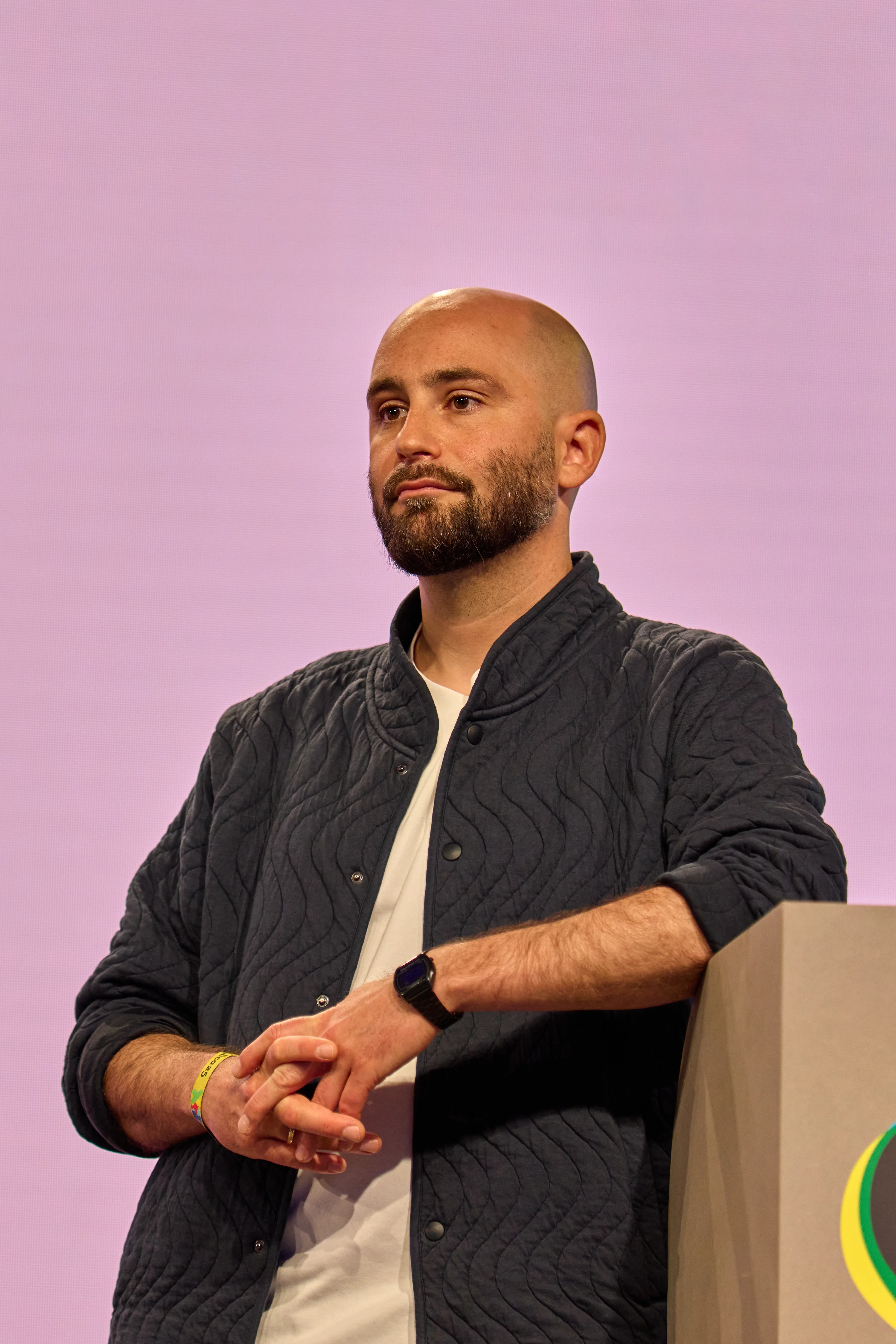
Image from Wikipedia
Image from Wikipedia
Philipp Staab
A keen observer of the digital present and one of the most prominent sociologists of work, economy, and technological change
Philipp Staab, born in 1983 in Nuremberg, is one of the most important German voices when it comes to analyzing digitalization, digital capitalism, and the social consequences of technological upheaval. As a professor at Humboldt University of Berlin and co-director of the Einstein Center Digital Future, he combines research on work, social inequality, sociology of technology, and political economy into an analytical overall picture of the present. ([de.wikipedia.org](https://de.wikipedia.org/wiki/Philipp_Staab))
Biographical Foundations: From Studies to Academic Profile Development
Staab studied sociology, political science, and psychology in Kassel and at the Université Paris Nanterre; he earned his doctorate in Kassel in 2013. Early on, his academic focus turned to the transformation of work and society, particularly regarding the tertiary sector and the associated shifts between industry, services, and social insecurity. This biographical development continues to shape the consistent line of his research today. ([de.wikipedia.org](https://de.wikipedia.org/wiki/Philipp_Staab))
His academic career has taken him to institutions such as the Hamburg Institute for Social Research, the Institute for the History and Future of Work, and the University of Kassel, as well as a visiting professorship in St. Gallen. Since 2019, he has shaped the ECDF professorship "Sociology of the Future of Work," and since February 2024, he has held the professorship "Sociology of Work, Economy, and Technological Change" at Humboldt University. These stations illustrate a consistently developed career at the intersection of research, teaching, and public debate. ([de.wikipedia.org](https://de.wikipedia.org/wiki/Philipp_Staab))
Career and Academic Authority: Research with Contemporary Relevance
Staab's academic profile is clearly directed towards analyzing the forces reshaping modern societies: digitalization, platform economy, political economy, social inequality, and critical infrastructures. On his own website, he describes his approach as contemporary analytical; he works on questions concerning the development of digital capitalism, ecological social conflict, and the political crises of modern societies. Thus, his research is not outside the debates of the time, but at the center of their frictions. ([philippstaab.de](https://philippstaab.de/))
This authority is also visible institutionally: At Humboldt University, Staab is not only a professor but also the deputy director of the Institute for Social Sciences. The dual anchoring in the university and research environment lends weight to his positions as they remain both theoretically grounded and empirically connected. ([hu-berlin.de](https://www.hu-berlin.de/personen/prof-dr-philipp-staab))
Publications and Discourse Power: Digital Capitalism as a Key Concept
A central reference point of his work is the book Digital Capitalism. Market and Power in the Economy of Scarcity published in 2019. Subsequent reviews and professional debates have picked up this work as a defining analysis of the shift of power in the digital age; Staab describes the economic and political logic of platform markets and their consequences for work, competition, and regulation. Thus, the term digital capitalism becomes an analytical tool for him, rather than just a mere buzzword. ([philippstaab.de](https://philippstaab.de/))
His recent publications include Adjustment. The Leitmotif of the Next Society (2022), Markets and Power in Digital Capitalism (2024), and System Crisis. Legitimacy Issues in Green Capitalism (2025). The topics show a clear expansion: from digital platforms to techno-industrial strategies to questions of ecological transformation and societal crisis management. Staab thus remains close to the fault lines of the present and continuously develops his research. ([philippstaab.de](https://philippstaab.de/))
Musical Reception? No – Scientific Relevance Instead of Discography
As Philipp Staab is not a musician but a sociologist, there is no discography, no hit singles, and no chart history in the classical sense. His "reception," however, takes place in scientific publications, professional journals, university portals, and journalistic discussions. This form of visibility points to a different kind of cultural impact: not through pop culture but through concepts, theses, and debates. ([de.wikipedia.org](https://de.wikipedia.org/wiki/Philipp_Staab))
Professionally, his approach is often read through the connection of digital economy, labor sociology, and political theory. In academic contexts, his work is discussed as a contribution to analyzing platform power, market structure, and social inequality; critical reviews and essays also engage with the reach of his arguments. It is precisely here that his influence lies: in the precise adaptation to the forces of order in the digital present. ([link.springer.com](https://link.springer.com/article/10.1007/s11616-021-00696-7?utm_source=openai))
Style, Method, and Analytical Signature
Staab's scientific style is clear, pointed, and theory-driven. He combines social-structural analysis with a political-economic perspective while remaining closely tied to empirical developments such as platform work, digital infrastructures, and new forms of economic power. This combination of conceptual clarity and contemporary relevance makes his work relevant for both specialized audiences and a broader, socially interested readership. ([philippstaab.de](https://philippstaab.de/))
His engagement with the question of how capitalism is reorganizing under digital conditions is particularly striking. Rather than treating technology merely as a story of progress, Staab examines the redistribution of control, the role of monopolies, the changing nature of work, and the political governability of markets. This gives his work a clear methodological line and high authority in debates about digitalization and the future of work. ([link.springer.com](https://link.springer.com/article/10.1007/s11616-021-00696-7?utm_source=openai))
Cultural and Social Influence
Staab's significance lies not only in his publications but also in the fact that he provides central concepts for public debates. His research on digital capitalism, sustainability, and critical infrastructures resonates with a society searching for orientation amid economic, technological, and ecological upheavals. In this way, he acts as a scientific translator of complex developments into understandable contexts. ([de.wikipedia.org](https://de.wikipedia.org/wiki/Philipp_Staab))
The university and journalistic resonance further indicates that his topics extend far beyond the academic realm. Interviews and profiles continually revisit his analyses on the future of work, digitalization, and societal adaptation to crises. His strength lies in not only describing developments but also in making their political and social consequences visible. ([hu-berlin.de](https://www.hu-berlin.de/de/pr/nachrichten/archiv/september-2019/nr-19916?utm_source=openai))
Current Projects and Research Focus
Currently, Staab focuses on digital capitalism, ecological social conflict, and crisis processes in modern societies. His website clearly shows that he is expanding the connection between work, social structure, sociology of technology, and political economy. This thematic breadth reflects a research agenda that does not stand still but continuously re-measures the present. ([philippstaab.de](https://philippstaab.de/))
His engagement with industrial digital platforms and artificial intelligence in the context of the transformation of work is particularly relevant. Additionally, he expresses interest in future questions of modern societies in light of climate change. Thus, Staab remains one of the few sociologists who think together about technological dynamics and social stress limits. ([de.wikipedia.org](https://de.wikipedia.org/wiki/Philipp_Staab))
Conclusion: Why Philipp Staab Remains Compelling
Philipp Staab is compelling because he describes the major shifts of the present with conceptual precision and socio-political seriousness. His work helps to understand digital power, the transformation of work, and ecological conflicts not as isolated phenomena but as interconnected structural problems. Those who follow his research are not only reading sociology but experiencing a seismographic analysis of the future. ([philippstaab.de](https://philippstaab.de/))
For this reason, it is worth closely following his lectures, discussions, and publications. Philipp Staab remains one of the most important voices for anyone wanting to understand how work, economy, and technological change shape and influence one another in the present. ([philippstaab.de](https://philippstaab.de/))
Official Channels of Philipp Staab:
- Instagram: no official profile found
- Facebook: no official profile found
- YouTube: no official profile found
- Spotify: no official profile found
- TikTok: no official profile found
Sources:
- Philipp Staab – Digitalization – Work – Political Economy
- Humboldt University of Berlin – Prof. Dr. Philipp Staab
- Wikipedia – Philipp Staab
- Humboldt University of Berlin – Thinking Scenaristically about the Future
- Humboldt University of Berlin – Four new professorships established
- Institute for Social Sciences – Media Contributions of ISW to Covid-19
- transcript – Publication on Philipp Staab
- Wikipedia: Image and text source
Upcoming Events
System Crisis – Philipp Staab